From Chavismo's archenemy to signing secret contracts in the new Venezuela: Exxon Mobil prepares its return to oil production
The preliminary agreement contemplates signing contracts to operate up to six oil fields across different regions of the country.
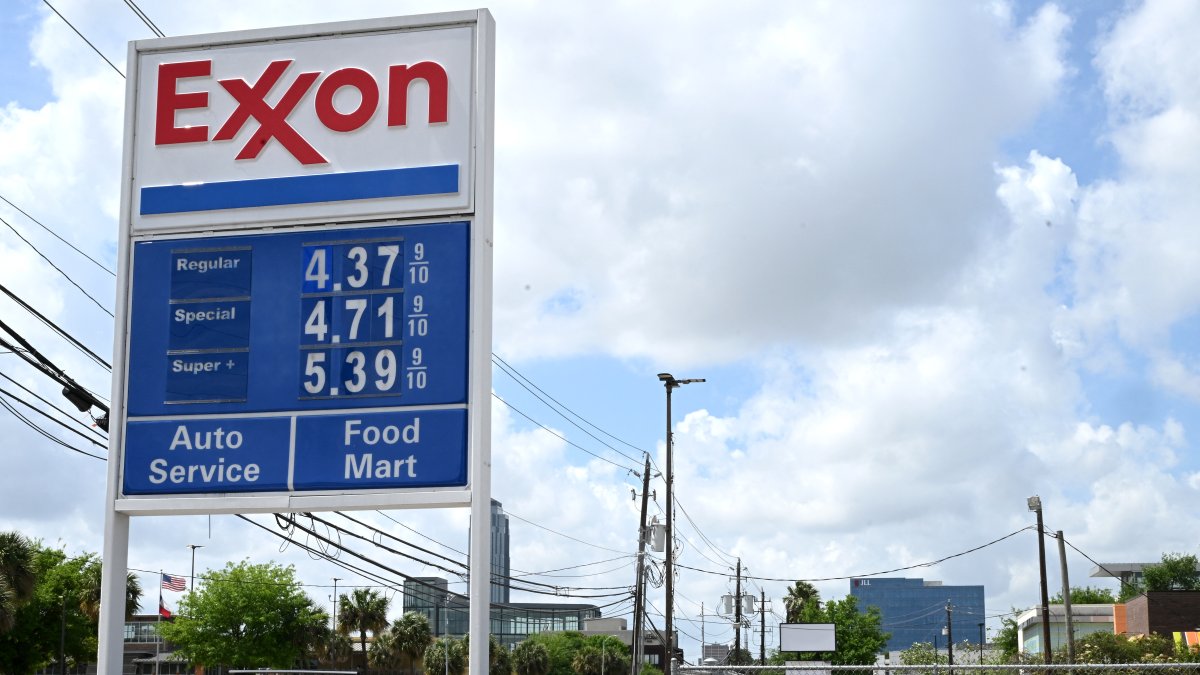
An Exxon Mobile gas station in Houston, in March 2026.

Exxon Mobil, the largest energy company in the United States, is in advanced negotiations to acquire oil production rights in Venezuela. The corporation is returning to the country nearly two decades after being effectively expelled by the socialist regime.
The strategic move represents a significant triumph for the Donald Trump administration, which has promoted opening Venezuela's vast natural resources to U.S. capital investment.
As revealed by a New York Times exclusive, based on the testimony of sources familiar with the talks, the preliminary pact contemplates signing contracts to operate up to six oil fields across various regions of the country.
This rapprochement marks a radical shift in the multinational's stance, whose executive management had formally described Venezuela as an "ineligible to invest" nation earlier this year.
The political transition in Caracas, coordinated by the White House following the displacement of Nicolás Maduro, propitiated a new framework of legal certainty for the private sector.
From international litigation to technical advantage in heavy crude oil
The historical relationship between Exxon Mobil and the Venezuelan State was marked by legal confrontation after the expropriations decreed in 2007 by Hugo Chávez.
Unlike other firms in the sector, Exxon rejected Chavismo's compensation terms, left the region, and filed lawsuits in international courts, resulting in a pending arbitration award of nearly US$1 billion.
Subsequently, the company concentrated its investments in Guyana, developing offshore fields in areas under territorial dispute, which made it a favorite target of Caracas' socialist rhetoric.
Recent geopolitical circumstances modified the risk landscape for the oil company's board of directors. Conflicts in the Middle East and instability in Iran raised international crude oil prices, forcing corporations to diversify their global supply sources.
Likewise, the expansion of operations by its main competitor, Chevron, in the Orinoco Oil Belt increased the opportunity cost for Exxon if it remained on the sidelines of the market with the largest proven reserves on the planet.
The oil company's chief executive, Darren Woods, acknowledged the firm's change in outlook to Wall Street and industry analysts. Woods argued that the firm's extensive technical experience in extracting extra-heavy oil from Canadian tar sands gives the organization an immediate competitive advantage in the Venezuelan subsoil, where the hydrocarbons have similar geological properties.
"The investment and returns look promising," Woods said of the economic profitability evaluations carried out on Venezuelan soil. The executive added a favorable assessment of the current operating environment, saying, "So, I'm optimistic about what's going on, the opportunity there."

World
Victory for US pressure: Longest-serving Chavista prisoners released and freedom announced for 300 others
Andrés Ignacio Henríquez

Politics
The Department of Justice activates a new criminal case against Maduro to prevent him from being released from prison
Andrés Ignacio Henríquez
LATEST