Electricity collapse in Cuba unleashes massive protests: Pot-banging, fires and regime repression
The electricity crisis on the island worsened this week after the shutdown of Unit 1 of the Felton Thermoelectric Plant in Holguin, one of the country's main generation units. The fuel that Russia had sent in March also ran out.
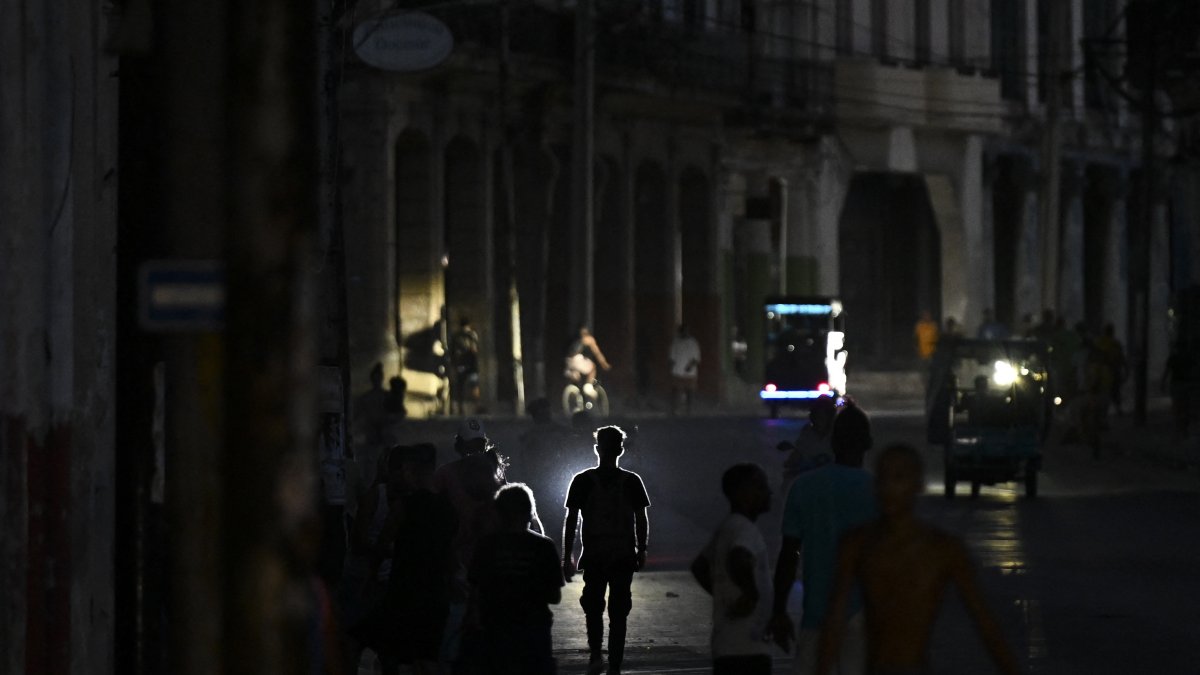
People walking during a blackout in Havana (File).

Havana staged protests on Wednesday night and early Thursday morning stoked by prolonged blackouts, lack of water and the general deterioration of living conditions in the country. According to reports on social networks from activists, independent journalists and residents of different capital municipalities, this was the third consecutive night of complaints against the regime this week.
The protests began in broad daylight in San Miguel de Padrón, a working-class municipality of the Cuban capital, and spread to different parts of the city as electricity blackouts continued, lasting up to 20 hours a day.
Demonstrations and spontaneous gatherings were reported in areas of Diez de Octubre, Playa, Marianao, Guanabacoa, Boyeros, Plaza de la Revolución (Puentes Grandes and Vedado), Cotorro, Habana del Este (Cojímar, Alamar), Regla, La Lisa, Cerro, among other parts of Havana.
While this was happening in the Caribbean capital, other provinces remained practically disconnected from the energy system for long days that exceeded 24 hours, even 28 hours, without electricity service.
Politics
Towards an intervention in Cuba? Washington raises the pressure in the Caribbean
Andrés Ignacio Henríquez
Massive internet downtime in the midst of protests
The state monopoly ETECSA controls the entire telecommunications infrastructure of the island, which facilitates centralized cuts whenever the regime seeks to curb the spread of images and testimonies of the protests.
This tactic has been used on other occasions, such as in the mobilizations of July 11, 2021 (the largest the regime has faced in recent years) and after Hurricane Ian in September 2022.
Repression: "There is no fuel for ambulances, but there is for patrols"
Even with the communications cuts, during the night reports of demonstrations and clashes with repressive forces circulated on multiple platforms.
Videos and testimonies spread on social media showed police patrols, police motorcycles and repressive deployments in different parts of the capital. Police beat people in Vedado, a central part of the capital, and in another protest, demonstrators could be seen resisting being loaded onto a military truck.
Cuban journalist and academic José Raúl Gallego wrote on Facebook: "At no time, not even in the worst moment, have the thousands of trucks, patrols and motorcycles that the regime uses to repress citizens stopped."
The journalist added: "There is no fuel for ambulances, but there is for patrols" and attributed the availability of resources for repression to the reserves controlled by the Armed Forces and the Ministry of the Interior.

The regime's historical justification
The electricity crisis in Cuba worsened this week after Unit 1 of the Felton Thermoelectric Plant in Holguin, one of the country's main generation units, went offline. In addition, rising temperatures due to the imminent arrival of summer have made the heat unbearable and increased the demand for electricity, which the state-owned Unión Eléctrica (UNE) is unable to meet.
Cuba on Wednesday again accused the United States of the "particularly tense" situation of its electrical grid, affected by prolonged blackouts, while Washington again offered $100 million in aid for the island.
The communist government claims that the energy crisis is a consequence of an oil blockade imposed by the administration of Donald Trump since the beginning of the year.
The United States, on the other hand, argues that the situation is due to domestic economic mismanagement.
Just this Wednesday in a special appearance, Vicente de la O Levy, Minister of Energy and Mines admitted that there are 20 to 22 hours a day of blackouts in Havana. The supply crisis has been aggravated by the lack of fuel supplies from abroad since the supply of crude oil from Venezuela and Mexico was suspended.
The fuel that Russia had sent in March also ran out, the official added.
Politics
US offers $100 million in direct aid to Cubans: Decision remains in the hands of the regime
Andrés Ignacio Henríquez
U.S. offers $100 million in direct aid to Cubans
The proposal, made official by the State Department, seeks to alleviate the severe supply crisis the island is experiencing, although its execution depends exclusively on the official leadership allowing the aid to enter without confiscating it.
The initiative is not isolated. According to official information, Washington has previously made numerous private offers to the regime to provide generous aid, ranging from food and medicine to technical support for a free, high-speed satellite internet service.
So far, Havana's response has been rejection or silence, while the population faces chronic blackouts and shortages, leaving millions on the brink of survival.
LATEST