Secretary of war tells Congress that Cuba poses national security threat
Pete Hegseth endorsed concerns raised by Rep. Mario Díaz-Balart about Havana's growing cooperation with Russia and China.
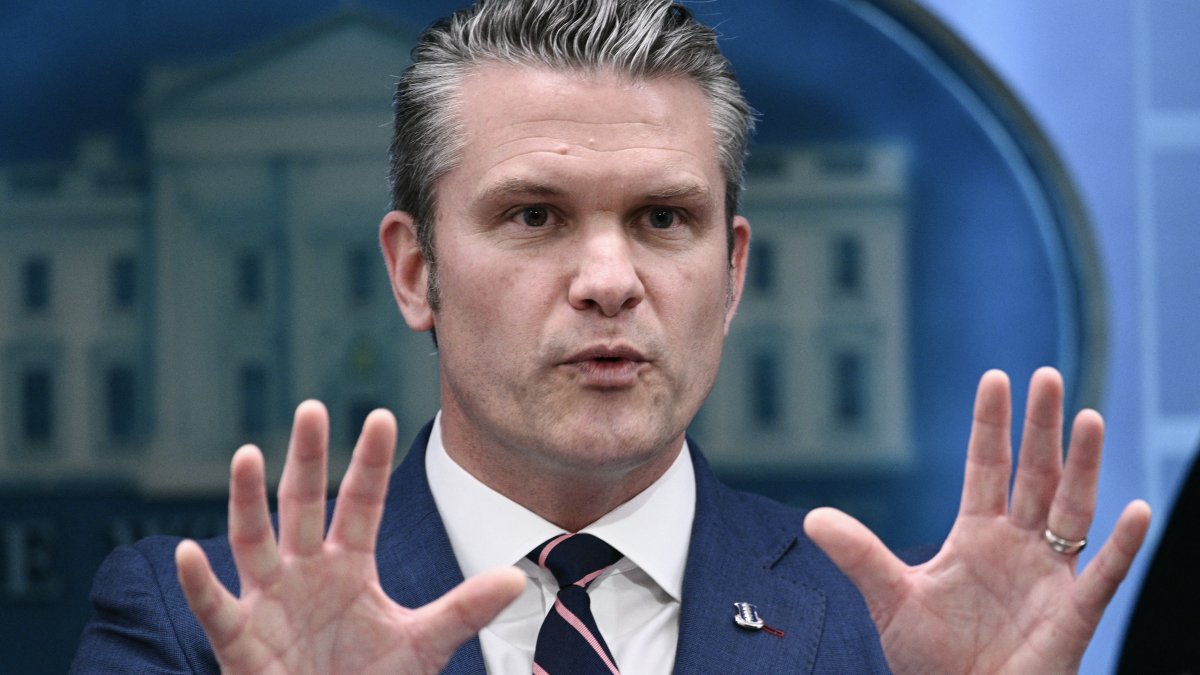
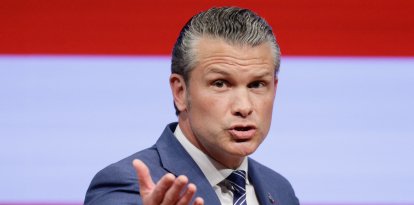
Pete Hegseth during an appearance at the White House in April 2026 (File).

Secretary of War Pete Hegseth told Congress on Tuesday that the Cuban regime constitutes a national security threat during a hearing marked by rising geopolitical tensions in the Western Hemisphere and the Donald Trump administration's hardening stance toward Havana.
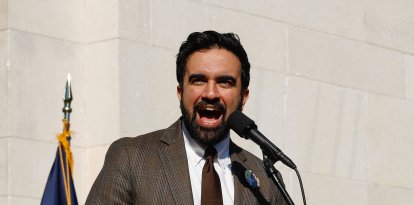
The statement came during an appearance before the House Appropriations Committee, in an exchange with Cuban-American Republican Rep. Mario Díaz-Balart, who insisted on the need to strengthen pressure on the Caribbean dictatorship.
"Do you believe that the Cuban regime possesses a national security threat to the United States?" asked Díaz-Balart.
"I do," Hegseth answered pointedly.
Cuba, Russia and China at the center of the debate
During the hearing, Díaz-Balart described Cuba as "the only state sponsor of terrorism in the Western Hemisphere" and noted that Havana maintains close relations with governments and actors considered strategic adversaries of Washington.
The Republican legislator specifically mentioned the military cooperation between Cuba and Russia, including the recurrent arrival of Russian military vessels to Cuban ports and Moscow's interest in strengthening intelligence capabilities on the island.
Among the topics addressed was the historic Lourdes spy center, located on the outskirts of Havana and used for decades by the Soviet Union to intercept U.S. communications during the Cold War.
Although Hegseth avoided offering classified details, he acknowledged that Washington maintains concerns about the presence of infrastructure linked to rival governments just a short distance from U.S. territory.
"We’ve long been concerned that a foreign adversary using that kind of location that close to our shores is highly problematic," the war secretary said.
Politics
¿Hacia una intervención en Cuba? Washington eleva la presión en el Caribe
Andrés Ignacio Henríquez
Allegations of espionage and international operations
The congressman also recalled the presence of Cuban military and intelligence personnel in Venezuela backing Nicolás Maduro.
Another point discussed was the involvement of Cuban nationals in the war in Ukraine. The Republican legislator cited Ukrainian intelligence reports according to which thousands of Cubans have been recruited to fight alongside Russia.
Hegseth said he was not familiar with concrete figures on such recruitments, although he admitted that Cuba maintains international ties with governments at odds with Washington.
Washington's pressure on Havana grows
The secretary of war’s statements come amid a renewed tightening of U.S. policy toward Cuba.
In recent weeks, key figures in the Trump administration have raised the tone against officialdom on the island. Secretary of State Marco Rubio recently called the country's economic model “unviable” while other Republican officials have advocated a strategy of “maximum pressure” against Havana.
In parallel, military observers and specialized media sources have reported an increase in U.S. reconnaissance operations near Cuba since the beginning of the year, including flights of P-8A Poseidon aircraft and MQ-4C Triton drones in the western Caribbean.

The tension also coincides with growing concerns in Washington about the expansion of Russian and Chinese influence in Latin America, especially in countries allied with Moscow and Beijing.
LATEST