Venezuela initiates massive debt restructuring: obligations exceed US$150 billion
The news generated an immediate reaction in the markets, slightly boosting the price of Venezuelan bonds.
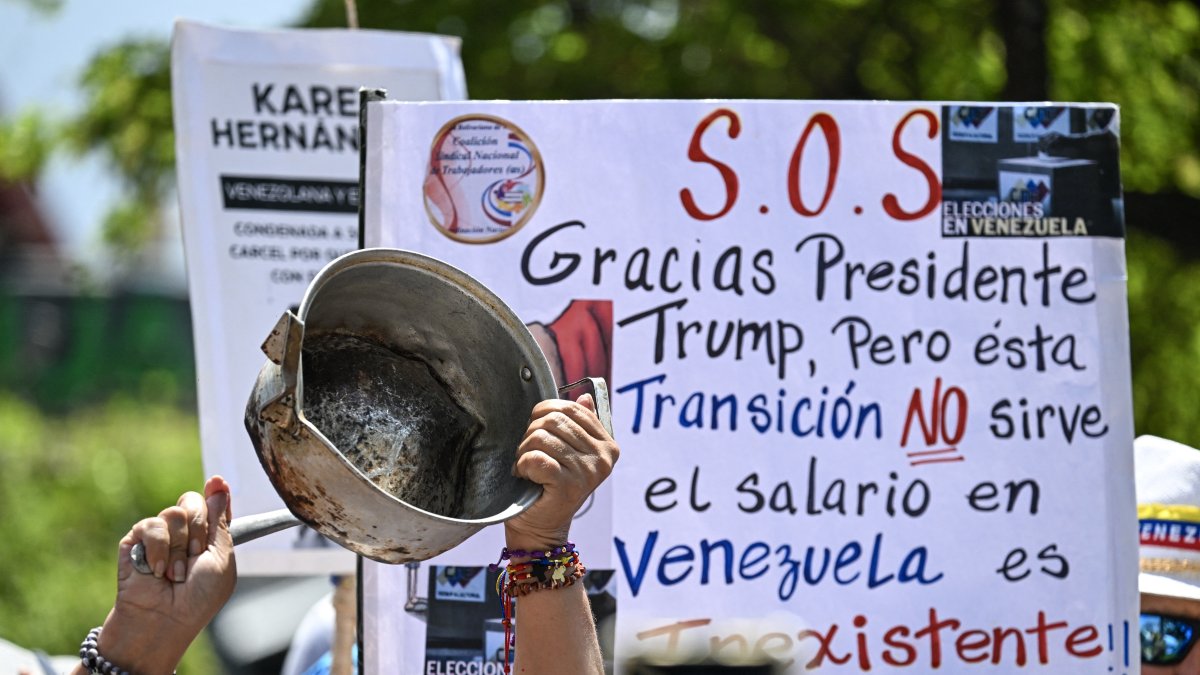
Protests in Caracas due to the economic crisis plaguing the country.

Venezuela's interim regime formalized on Wednesday the launch of a restructuring process for the external public debt of the Republic and state-owned Petroleos de Venezuela (PDVSA). The announcement marks the beginning of an attempt to normalize relations with international markets after years of default and financial isolation.
According to an official statement issued by the regime, this process is defined as "comprehensive and orderly," with the stated objective of obtaining "substantial relief" from the financial burdens weighing on the State.
The news generated an immediate reaction in the markets, slightly boosting the price of Venezuelan bonds in the expectation of a definitive resolution to one of the largest and most complex cases of default in modern economic history, caused by the failed policies of chavismo.
A financial maze of accumulated liabilities.
Although the amount of bonds in default amounts to some US$60 billion, Venezuela's accounting reality is much more severe. Industry analysts, quoted by Reuters, estimate that the total accumulated debt -which includes accrued interest, arbitration awards for expropriations and commercial commitments—could comfortably exceed $150 billion.
The country has systematically defaulted on its foreign debt commitments since the end of 2017. In its official justification, the government argues that its willingness to pay was "prevented as of 2017 as a product of financial sanctions," despite having demonstrated, by its own terms, years of prior solvency.
To manage this complex board, the regime has appointed the firm Centerview Partners as a financial advisor. A detailed macroeconomic framework and public debt sustainability analysis is expected to be presented to the international financial community next month, which will serve as the basis for negotiations with creditors.
The markets' view and Washington's role
The response from large bondholders has been one of cautious welcome. Pramol Dhawan, head of emerging markets portfolio management at PIMCO, noted that after nearly a decade in default, a formal restructuring process is an "important step forward."
However, Dhawan cautioned that any lasting solution will require a "credible macroeconomic framework that gives creditors confidence in Venezuela's ability to meet restructured obligations."
A determining factor in this process has been the recent policy shift in Washington. Last week, the U.S. Treasury issued a license allowing U.S. firms to collaborate in a potential Venezuelan debt restructuring.
However, legal sources warn that additional regulatory actions will be needed for the swap and payment process to be fully executed under the current legal framewo rk.
A revival under suspicion
The Chavista regime's communiqué appeals to a rhetoric of national reconstruction, claiming that the resources released through debt relief will be used for social welfare and job creation.
The official text assures that the decision seeks to "free the country from the burden of accumulated debt, guaranteeing its future and a rebirth of prosperity."
However, for international observers, the challenge is not only financial but institutional. The sustainability of any agreement will depend on the capacity of the State to reactivate oil production and the transparency in the management of the new cash flows.
With a debt that quadruples the current size of its economy, Venezuela faces the titanic task of convincing a skeptical market that this time the commitment to financial responsibility is real and definitive. Something that he foresees very complicated to achieve without a democratically elected government for the country.
World
Trump shares a "51st state" map of Venezuela and throws the transition back into the spotlight
Emmanuel Alejandro Rondón
Politics
Trump assures that all political prisoners in Venezuela will be released
Andrés Ignacio Henríquez

LATEST