ANALYSIS
Canada: Alberta separatists say they now have enough signatures to push for independence referendum
The secessionist movement gained strength Monday after Stay Free Alberta claimed to have collected nearly 302,000 signatures, well above the legal minimum to force a referendum.
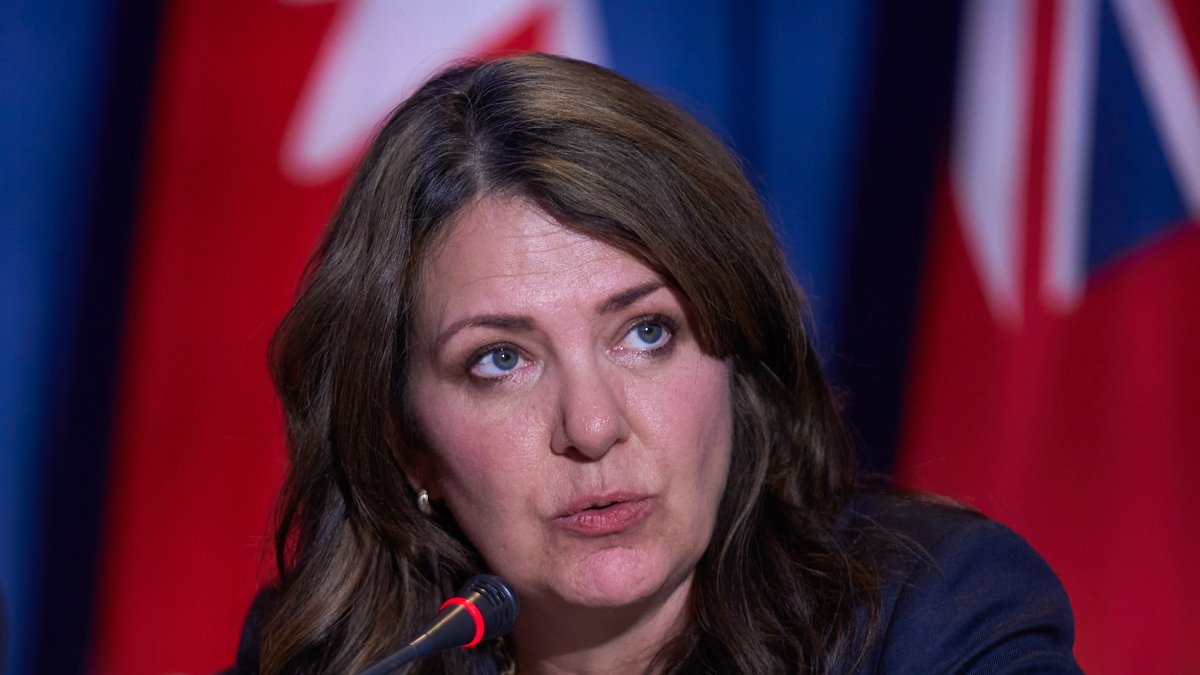
Danielle Smith, premier of Alberta.

A group of Albertans claimed Monday to have far surpassed the number of signatures needed to force a referendum on the possible exit of the province of Alberta from Canada.
The Stay Free Alberta organization, led by Mitch Sylvestre, delivered nearly 302,000 signatures to the Elections Alberta office which were collected over the past four months. The legal threshold to activate the process was approximately 177,732 signatures.

"This day is historic in Alberta history," Sylvestre said as he arrived at the office to deliver the paperwork, leading a caravan of seven trucks. "It's the first step to the next step; we've gotten by Round 3 and now we're in the Stanley Cup final."
The process is not automatic. Elections Alberta must verify the validity of the signatures in the next few weeks. In addition, a judge ordered in early April a 30-day pause in validation due to a lawsuit by several First Nations, who question the legality of a secession process that could affect their territories and rights.
The door is open to a referendum
Although Alberta Premier Danielle Smith has reiterated that she is not in favor of seceding from the country, she has repeatedly indicated that she would respect the outcome of a valid citizen petition and that she would be willing to include the independence question on the ballot next October, along with other previously planned propositions.
Last year, Smith stated that "For the last 10 years, successive Liberal governments in Ottawa, supported by their new Democrat allies, have unleashed a tidal wave of laws, policies, and political attacks aimed directly at Alberta's free economy, and in effect against the future and livelihoods of our people."
World
Carney strengthens his hold on Canada: Liberals win parliamentary majority after special elections and a wave of defections
Emmanuel Alejandro Rondón
"They have blocked new pipelines with [bill] C-69, cancelled multiple oil and gas projects, and banned the very tanker ships needed to carry those resources to new markets," she added.
For the premier, "the vast majority of these individuals are not fringe voices to be marginalized or vilified. They are loyal Albertans. They are, quite literally, our friends and neighbors who’ve just had enough of having their livelihoods and prosperity attacked by a hostile federal government."
Alberta, an underappreciated province
In the 1980s, the policy of then-Prime Minister, Pierre Trudeau was one of "control." In October of that year, the National Energy Program (NEP) was implemented, which served him well in intensifying the struggle for natural resources between the east and west of the country. For Albertans, Trudeau's actions were nothing more than an attempt to redistribute the wealth generated in Alberta.
The western provinces saw in this program a strategy of the federal government to keep energy prices low, to the benefit of the eastern provinces.
Another program that hit Albertans very hard was the Petroleum Incentives Program (PIP), which paid up to 80% of exploration expenditures to Canadian-owned companies, which worked in the north and overseas territories, thus diverting oil exploration away from Alberta.
In the 1980s, Pierre Trudeau's Liberals branded Albertans as un-Canadian, while much of this province's money circulated in the eastern provinces, most of them engaged in the production of goods and services.
LATEST