The US naval blockade in the Gulf of Oman has already cost Iran 4.8 billion dollars
The Pentagon claims that 31 tankers loaded with 53 million barrels of Iranian crude have been stranded since April 13, unable to reach their destinations.
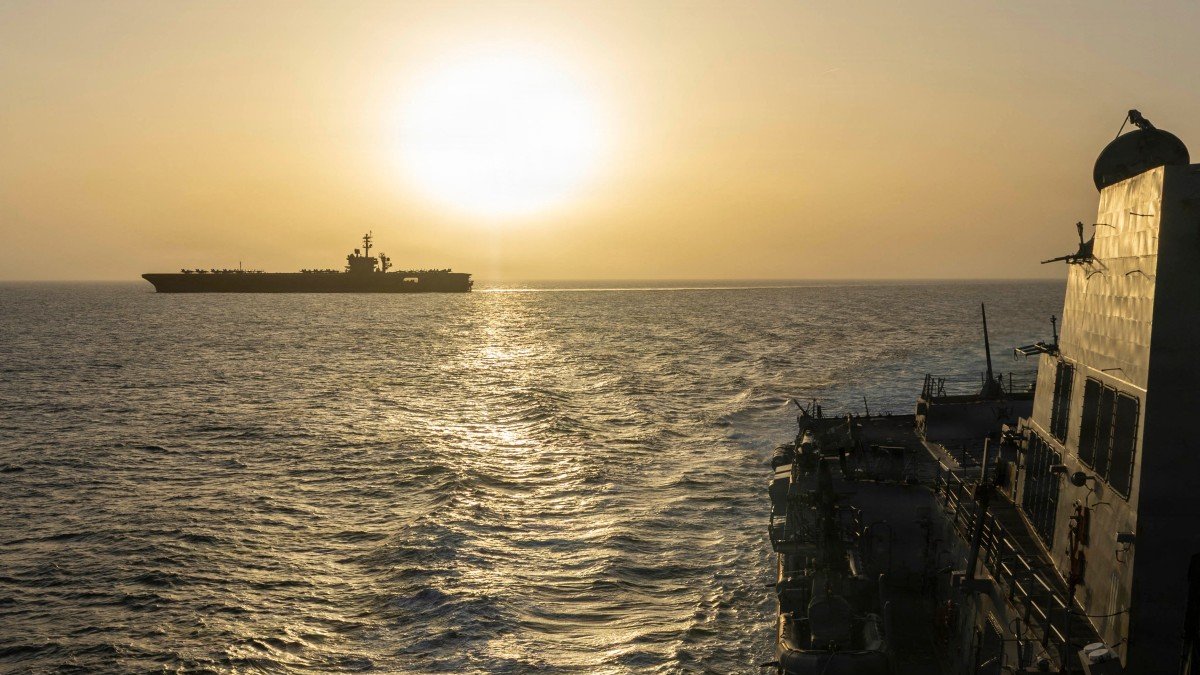
The USS Abraham Lincoln (left) conducts blockade operations in the Arabian Sea

The economic suffocation strategy that the Trump administration set in motion against the Iranian regime is yielding concrete results. The oil export revenues that Tehran has stopped receiving since mid-April are around $4.8 billion, a figure that the US War Department itself acknowledged this week and which confirms the magnitude of the maritime siege deployed in the Gulf of Oman.
The data was released by Axios this Friday, citing Pentagon sources. According to the report, since the operation began on April 13, the U.S. Navy has intercepted and forced to divert more than 40 vessels attempting to cross the fence with Iranian oil or other merchandise considered contraband. Two vessels were directly seized.
The bottleneck has already caused 31 tankers, loaded with 53 million barrels, to remain detained without being able to continue their journey to the final destination. The figure takes on another dimension if one considers that Iranian storage terminals on land are full, which has forced Tehran to improvise a momentary solution, using old tankers as floating depots.

World
Irán ofrece a EEUU un nuevo enfoque de acuerdo: abrir el Estrecho de Ormuz y luego avanzar con los vidriosos temas nucleares
Emmanuel Alejandro Rondón
Some others, according to sources consulted by Axios, are choosing more extensive and expensive routes to China to dodge U.S. fleet interdiction.
Analyst Gregory Brew of the Eurasia Group warned that Iran has "several weeks, or perhaps as much as a month" left before it runs out of storage capacity, at which point it would have no choice but to shut down wells.
For the Trump administration, the blockade is the main tool of pressure on the negotiating table at a stage of the war that analysts describe as a hot "cold war," with weekly if not daily diplomatic advances and setbacks. The logic of the US blockade is basically to respond with its own medicine to Iran, which blocked the Strait of Hormuz, leaving ships trapped.
Economy
Why is diesel a much bigger economic problem than gasoline since the war with Iran broke out?
Emmanuel Alejandro Rondón
Meanwhile, Iran's creativity in circumventing the U.S. blockade is also beginning to be documented. Samir Madani, co-founder of TankerTrackers.com, a platform specializing in tracking oil tankers, explained to Axios that a large tanker called "HUGE" managed to evade interdiction by sailing close to the coasts of Pakistan and India until it reached the Strait of Malacca, in Malaysian waters, where crude oil is usually transferred to other ships bound for Chinese ports.
Madani, however, anticipated a more dramatic scenario in the coming weeks as Iran runs out of storage capacity: the Iranians, he said, could be waiting for just the right moment for a massive, overnight "Great Escape" once they have enough stocks stored near the border with Pakistan.
LATEST