Why is diesel a much bigger economic problem than gasoline since the war with Iran broke out?
Although the headlines of the world press are monopolized by gasoline prices, experts agree that what really moves the global economy is diesel. And it looks unlikely to recover its pre-war value per gallon any time soon.
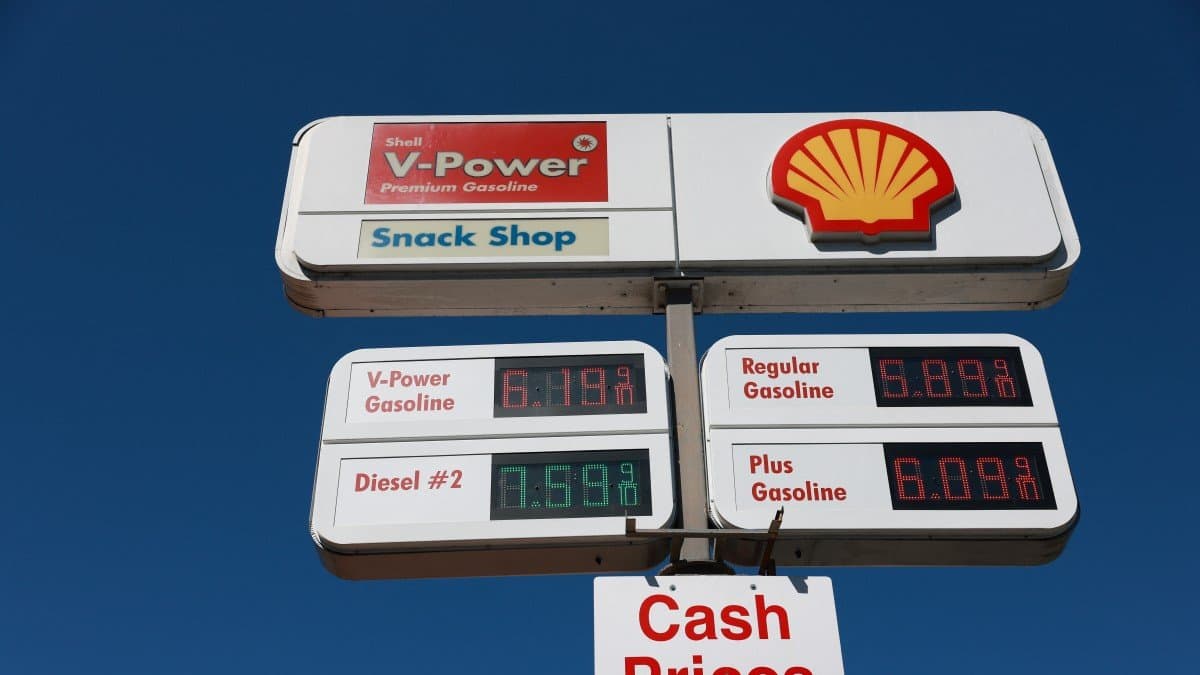

Since war broke out between Iran, the United States and Israel the prices of oil and its derivatives rose sharply across the globe, causing, by gravity, a rise in the cost of living. However, despite the fact that press headlines focus mostly on gasoline prices, experts are clear that what is really affecting the global economy is none other than diesel, whose price rose considerably more than gasoline and will hardly recover its pre-war value, even with a quick peace agreement.
A report in The New York Times addressed the problem by interviewing experts who described the reason why diesel is shaking the global economy to its foundations.
Since the conflict with the Iranian regime began last February 28 (less than a month), the average price of a gallon of diesel in the United States has risen about 45%, while gasoline has risen about 35%. The federal government's Energy Information Administration has estimates that worsen the outlook, as they detailed that diesel could average $5.80 per gallon this month, compared to $4.30 for gasoline.
The gap, experts explained, is due to the fact that these two fuels, although derived from crude oil, are not interchangeable and do not have the same uses. Generally, gasoline is used to propel passenger cars, while diesel is used to move large trucks, tractors, ships, trains and heavy construction machinery; being the engine that moves the global transportation business.
That is to say, while the price of gasoline affects the pocket of the everyday citizen directly, diesel does the same in a more considerable way, but indirectly, because it is the fuel that moves food from farms to supermarkets, construction materials from manufacturers to construction sites, and imported products from ports to warehouses.
"It's diesel that really runs the economy, and kind of runs the world," Joe DeLaura, global energy strategist at Rabobank, explained to the NYT.
So why did it go up more than gasoline?
While gasoline is better supplied in the United States, diesel is a much more complex product for the country. The Persian Gulf countries not only produce oil, they produce a type of crude oil that is virtually ideal for making diesel and jet fuel (another type of fuel facing serious shortages).
Before the war, those countries exported large quantities of both products to the rest of the world, but with the conflict, those exports either brutally decreased or outright collapsed.
World
El petróleo se disparó este fin de semana: Trump, Irán y Ormuz llevan al mercado al límite
Andrés Ignacio Henríquez
"You've lost that supply in a market that was already tight, and there's no way to replace that," Jason Gabelman, an analyst at investment bank TD Cowen, told the NYT.
"This is why diesel more than doubles, while gasoline basically moves up in tandem with crude," DeLaura stressed. "You have a shortage of diesel, you have a shortage of jet fuel, you have a shortage of fuel oil. Gasoline is relatively well supplied."
"The U.S. can produce quite a bit, but we can't fuel the world," he said.
To complicate the situation further, China—which has refineries with the capacity to make up part of the shortfall left by Middle East—decided at the start of the war to restrict its fuel exports to protect its own domestic supply. All in all, the abundant oil produced in Texas or New Mexico is better designed to make gasoline.
Nor can refineries solve the problem overnight. Changing the ratio of diesel to gasoline that a refinery produces requires millions of dollars in investment and a considerable amount of time and patience, two intangible elements that are in short supply in the modern world. "You can't bend science enough to just get all diesel out of a refinery," Patrick De Haan, an analyst at GasBuddy, also told the NYT.
Another noticeable difference between gasoline and diesel is that users of the two fuels are quite opposite. While a citizen may choose public transportation one day to commute to work, the trucker or farmer cannot part with diesel. Thus, the demand for the latter, in economic terms, is much more rigid.
Will it go down soon? Spoiler: no
Imagining a favorable scenario where a peace deal is signed quickly and it is agreed to reopen the Strait of Hormuz for maritime traffic, energy prices will surely start to ease. But even so, experts warn that diesel will take longer to normalize than gasoline, because supply was more deeply disrupted and because distributing it to every corner that needs it is logistically more complex.
On a relatively encouraging note, prices dropped modestly in the last week in the face of expectations of a peace agreement. However, as long as the Strait of Hormuz remains blocked, the real engine of the global economy will continue to pay the highest price for this war and, therefore, the ordinary citizen's pocket will be tremendously affected by higher prices.
🛠 Do you think there is an error in this article?
Recommendations







LATEST