France: Lafarge cement company convicted of ‘funding terrorism’ in Syria
The court found that these funds helped enable groups to “prepare terrorist attacks,” including those that rocked the country in January 2015.

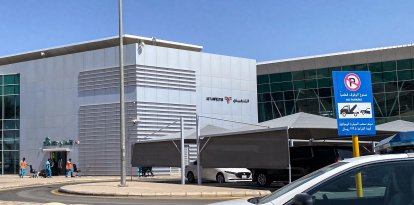
French cement company Lafarge

This Monday, a court in Paris handed down a harsh sentence against French cement company Lafarge and eight of its former executives for the crime of funding terrorism. The French justice system found them guilty of paying jihadist groups between 2013 and 2014 in order to keep their cement plant operational in the midst of the Syrian civil war.

Former CEO Bruno Lafont was sentenced to six years in prison. In addition, according to AFP, fines equivalent to some $6.65 million were set for both the company and four of the convicted former executives.
This is not the first time that Lafarge has faced consequences for these payments. In 2022, the company was already sanctioned in United States, where it agreed to pay a record fine of $778 million after pleading guilty to conspiring to provide material support to organizations that are listed as terrorists by Washington.
Million-dollar payments to operate in ISIS territory
According to the Paris court ruling, Lafarge allocated nearly $5.6 million between 2013 and 2014, through its subsidiary Lafarge Cement Syria (LCS), to jihadist intermediaries and groups. These payments were explicitly aimed at keeping the Jalabiya plant active, located in northern Syria, in an area controlled by armed factions.

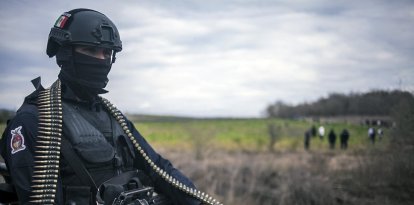
While other companies were leaving the country because of the risks of war, Lafarge chose to stay and pay three jihadist organizations, including the Islamic State (ISIS). The court found that these funds helped enable groups to "prepare terrorist attacks," including those that rocked the country in January 2015.
Judge Isabelle Prévost-Desprez was particularly harsh in her assessment: "This form of funding of terrorist organizations, and mainly of the Islamic State, has been instrumental in enabling the terrorist organization to take control of Syria's natural resources." The magistrate stressed that the company went so far as to establish a real "business partnership with the Islamic State," highlighting the high amount of payments made.
Lafarge justifies the payments as a lesser evil in the midst of the Syrian war
According to the defense, the payments served both to purchase inputs needed to produce cement and to make "security payments" that allowed the 1,000 or so employees and goods to cross checkpoints in the jihadist-dominated region.
LATEST