ANALYSIS
On the global chessboard: China is surrounded by Washington in Venezuela, Cuba and Iran
China has suffered concrete energy, diplomatic and strategic losses, and it faces an increasingly challenging geopolitical environment.

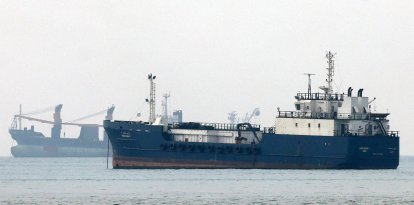
A man holds a Chinese flag over a ship.

From Caracas to Havana to Tehran, the pulse between United States and China has ceased to manifest itself only via tariffs and technological warfare. Today, it is a territorial, energy and strategic power contest, where Washington's recent actions have undermined key pillars of Beijing's foreign policy.
This report uses data, sources and analysis to examine what China has lost in Latin America and the Middle East, what risks it faces, and how Beijing's model of expansion is under pressure on several simultaneous fronts.
Venezuela: The symbolic and strategic coup
Jan. 3, 2026 marked a turning point. A U.S. military operation ended with the arrest of Nicolás Maduro and his wife, Cilia Flores, in an action that Washington said would neutralize threats to hemispheric security. For China, the scene was, as diplomats in Beijing described it, a "painful setback" in front of a high-ranking emissary of President Xi Jinping who was in Caracas.
The relationship between China and Venezuela was not minor. For more than two decades, Caracas was one of Beijing's closest allies in the region, cemented by multibillion-dollar loans in exchange for oil. Several economic analysts assert that China financed oil and infrastructure projects worth tens of billions of dollars since 1999, and by 2025 Caracas owed Beijing nearly $60 billion in unfulfilled oil deals.
China came to buy almost all the crude oil (heavy oil that requires complex refining processes) that Venezuela still produced, and although that volume represented a modest fraction of China's energy imports, its importance was strategic and diplomatic.
After Maduro's capture, Beijing reacted with diplomatic toughness. The Chinese government declared that the operation constituted "a clear violation of international law" and demanded the release of Maduro. However, unlike previous confrontations with Washington, this time China avoided escalating militarily or materially. For some analysts, Beijing opted to preserve stability and trade negotiations with the U.S. rather than deepen the crisis.

Cuba: The end of China's base in the Caribbean?
While Venezuela represented a political and energy partner, Cuba was emerging as a geostrategic point for Chinese projection in the Western Hemisphere.
Recent declassified reports by U.S. intelligence revealed that China had operated signal collection (SIGINT) facilities in Cuba since at least 2019, taking advantage of the island's proximity to U.S. military facilities in southern Florida.
According to an analysis published by CSIS in December 2024:
- The historic Lourdes listening station, created in the Soviet era, was reused by China.
- Other facilities, such as Calabazar and Wajay, as well as a new station in El Salao, were identified as part of an intelligence network.
- The main objective was to monitor U.S. military communications and activities in the southeastern United States.
In early 2026, Washington, which was concerned about this presence and the influence of the Havana regime on other countries in the region, increased economic sanctions on Cuba and deployed naval patrols that hindered fuel supplies to the island. The resulting energy crisis caused widespread blackouts in the Caribbean nation on several occasions during 2026, and exacerbated a systemic crisis, the result of more than 67 years of communism, that the country was already experiencing.

Iran: The logistical wall that Trump wanted to tear down
While Latin America was a geopolitical front, Middle East represented another critical artery for the Chinese strategy: connecting Asia with Europe by avoiding maritime routes dominated by the United States.
In 2021, Beijing and Tehran signed a 25-year strategic agreement worth $400 billion, covering energy, infrastructure and logistics corridors. For China, Iran was not just an oil supplier. TankerTrackers estimates suggest that it came to supply up to 20% of the crude oil consumed by China, often laundered in Southeast Asian ports to circumvent sanctions. The Islamic republic represented the overland heart of a variant of the New Silk Road connecting Eurasia without passing through the Strait of Malacca.
However, a series of attacks on critical infrastructure, including a fire at an oil depot in Shahran on March 8, 2026, damaged key logistical nodes, complicating Iranian energy exports to Asia.
For Washington, the military and diplomatic pressure sought precisely this: to break that logistical alliance that could give China a strategic advantage in Eurasian connectivity.
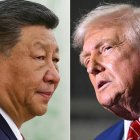
The cumulative impact on Beijing
- Energy and economy
- Weakened international influence network
- Strategic prestige under scrutiny
- Reputational risk in peripheral alliances
Official reactions and projections
China has vigorously condemned U.S. actions on all these fronts, invoking international law and accusing Washington of hegemonism and unilateralism. For now, however, Beijing has avoided direct military escalation, opting for more discreet strategies: strengthening relations with alternative partners, boosting bilateral trade and emphasizing multilateral forums such as BRICS and the U.N. to counter the Western narrative.
Analysts point out that China's goal is to preserve economic stability and avoid a direct shock that could harm its domestic growth. According to Frank A. Rose, former assistant secretary of state for arms control and international security, "China is seeking to balance its response; it wants to protect its interests without getting into confrontations that could weaken its export economy and domestic stability."
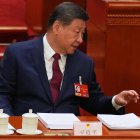
China's rise no longer assured
The confrontation between Washington and Beijing is no longer just a trade or technological duel. It has morphed into a long-distance strategic competition using territories, energy resources and networks of allies.
China has suffered concrete energy, diplomatic and strategic losses, and it faces an increasingly challenging geopolitical environment. The cumulative impact of U.S. intervention in Venezuela, pressure in Cuba and attacks on infrastructure in Iran exemplify a change of era: China's rise is no longer assured, and its expansion model is being tested simultaneously on several critical fronts on the world map.
LATEST