Diaz-Canel conditions $100 million aid from the US and demands an end to sanctions
Washington's objective is to prevent the aid from ending up in state warehouses or in the black market operated by the military.
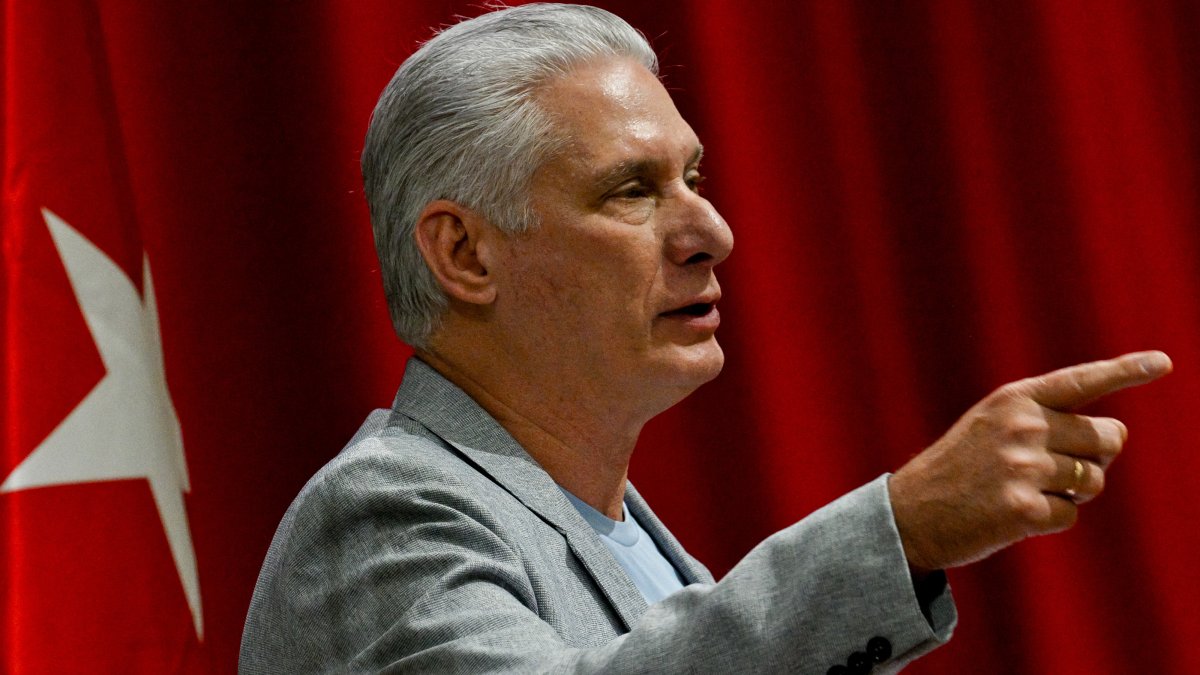
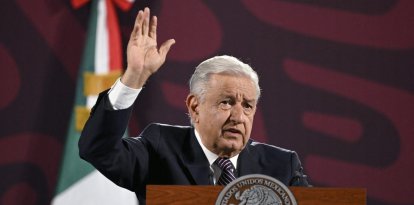
Cuban dictator Miguel Diaz-Canel.

Cuba's top brass has broken its silence following the State Department's official announcement of a $100 million direct assistance package for the island's population.
Miguel Díaz-Canel, through his X account, responded to the U.S. proposal by maintaining the rhetorical line of confrontation, although without definitively closing the door to supplies.
Washington's offer, pushed by Secretary of State Marco Rubio, has a non-negotiable condition: that the resources be managed by independent organizations, such as the Catholic Church, to prevent the Communist Party from diverting the goods to its own elites.
Díaz-Canel, however, has described the gesture as a contradiction of a government that, in his words, "collectively punishes" Cubans in a "merciless" manner.
The demand to lift the "blockade" as a priority
In his response, Díaz-Canel avoided committing to the independent distribution mechanism proposed by the Trump administration. Instead, he suggested that the "easiest and most expeditious" way to solve the humanitarian crisis the country is going through is not the sending of donations but the lifting of the alleged economic sanctions.
The Cuban leader affirmed that the shortage situation on the island is "coldly calculated and induced" by Washington's policies. However, he admitted that the current shortages have critical priorities that coincide with the content of the U.S. offer: fuel, food and medicine.
"If there is truly a willingness on the part of the U.S. government to provide aid in the amounts it announces and in full conformity with universally recognized practices for humanitarian aid, it will find no obstacles or ingratitude on Cuba's part," the regime leader said.
This mention of "recognized practices" is usually interpreted in Havana's diplomatic language as a demand that the Cuban state maintain control over the logistics and destinationof the shipments.
The role of intermediaries
One of the major sticking points in this negotiation is who will deliver the aid. The White House has been emphatic that the money and goods must be distributed in coordination with the Catholic Church and other institutions that do not respond to the regime's directives.
Washington's objective is to prevent the aid from ending up in state warehouses or in the black market operated by the military forces.
Diaz-Canel responded to this point by assuring that his government's experience working with the Catholic Church is "rich and productive."
With this statement, the regime attempts to neutralize the U.S. argument that external channels are needed due to lack of confidence in official institutions.
The U.S. administration, for its part, maintains that the communist systemis a "corrupt and incompetent" structure that has condemned citizens to destitution.
The $100 million offer seeks to directly empower the Cuban citizen in the face of a state that controls every aspect of basic distribution.
The diplomatic chessboard is now in a phase of technical definitions. While the U.S. maintains that the decision to save lives "lies with the regime," Havana responds that there will be no obstacles as long as its protocols are respected.
Politics
US offers $100 million in direct aid to Cubans: Decision remains in the hands of the regime
Andrés Ignacio Henríquez
LATEST