Supreme Court keeps abortion pill available by mail and telemedicine
Currently, about two-thirds of abortions on U.S. soil are performed with medication, and about one-quarter involve telemedicine care.
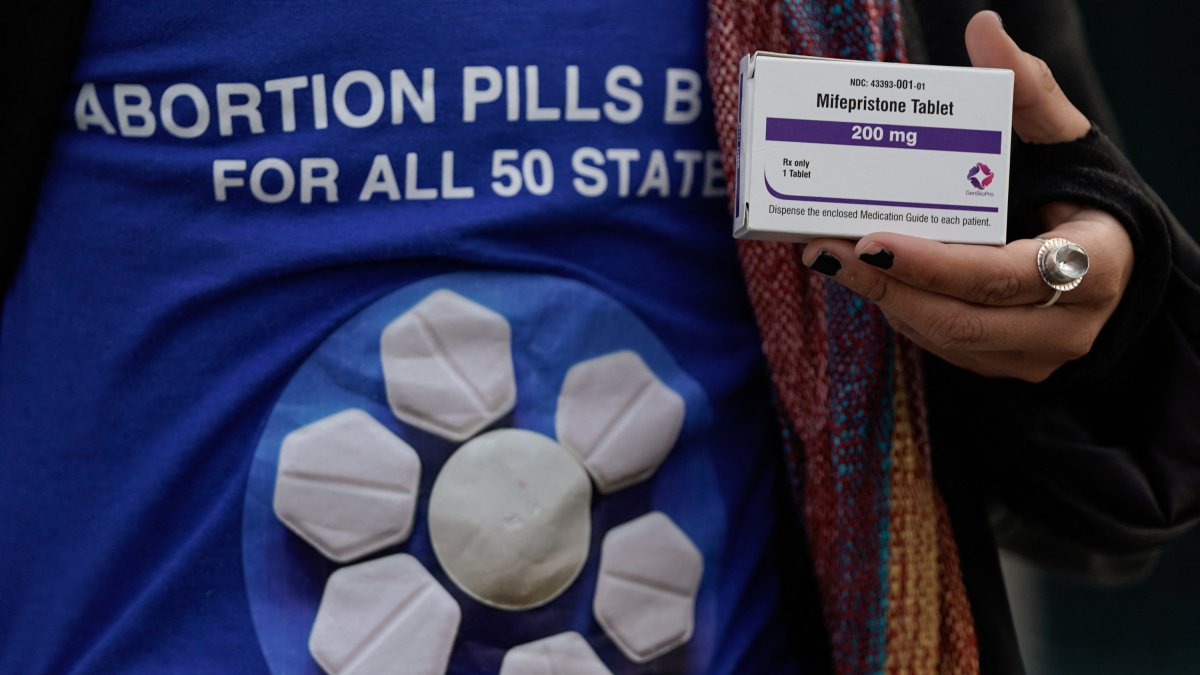
An image of the abortion pill for reference

The Supreme Court ruled Thursday that Mifepristone, the main drug used for abortions in the U.S., can continue to be prescribed through telemedicine consultations and dispensed at home by postal mail.
The high court's emergency decision vacated a previous ruling by the Fifth Circuit that sought to tighten access to the abortion pill nationwide. Now, the judicial process must continue in lower courts and may eventually return to the Supreme Court.
Mifepristone was approved by the Food and Drug Administration (FDA) in 2000 for abortifacient use under certain restrictions. Two decades later, in 2021, the agency removed the requirement for patients to pick up the drug in person at an office, allowing it to be mailed. Shortly thereafter, in 2022, the Supreme Court struck down the constitutional guarantee to abortion by reversing the landmark ruling Roe v. Wade, returning to each state the power to regulate this practice.
Since then, the judicial disputes have been intense, extensive and recurrent. The state of Louisiana, with much more pro-life legislation than other states, sued the FDA, claiming that the relaxation adopted in 2021 was based on unreliable information and facilitated illegal abortions within its borders.


Politics
Moms.gov: The new federal portal to support pregnant women, new moms and families
Diane Hernández
The state attorney general, Liz Murrill, claims that about 1,000 illegal abortions are performed each month in Louisiana through mail orders. In response to Murrill, several medical entities rejected the safety questions and forwarded dozens of research papers endorsing the abortion pill.
On May 1, the Fifth Circuit Court of Appeals ruled in favor of Louisiana. Laboratories Danco and GenBioPro, makers of the drug, immediately went to the Supreme Court, arguing that the ruling opened up the possibility for each state to review federal regulations on any drug on its own. The companies called the ruling a "dangerous precedent."
As reported by The New York Times, the Supreme Court then issued a brief order, without much substantive detail - a common occurrence in emergency rulings - suspending the Fifth Circuit's ruling while the case runs its course in lower courts.
Justices Clarence Thomas and Samuel Alito, the two justices considered "most conservative" within the high court, voted in dissent, but other justices nominated by Trump or also considered conservative joined their "liberal" peers, demonstrating, again, that the Supreme Court remains one of the institutions with the highest degree of independence and unpredictability within the USA.
Alito called the majority's decision "extraordinary" and rebuked its lack of motivation.
According to the NYT, a telling detail is that the Donald Trump administration chose not to file any brief with the Supreme Court, refraining from taking a position on a sensitive and controversial issue less than seven months before the midterms.
While much of the Republican electorate rejects abortion, restrictive positions often cost votes in contested districts and these elections promise to be particularly close in both the House and Senate.
The fact, even though the case is not closed, is that the Supreme Court has momentarily validated the most common and fastest way to access abortion in the U.S. Currently, about two-thirds of abortions on U.S. soil are performed with medication, and about a quarter involve telemedicine care.
LATEST