Venezuela's interim regime began to expel guerrillas out of its territory after Maduro's capture
"The information we have is that they are advancing in operations in the border area and some members of the ELN cartels, of the dissidents, no longer feel safe in that area," revealed the Colombian Defense Minister.
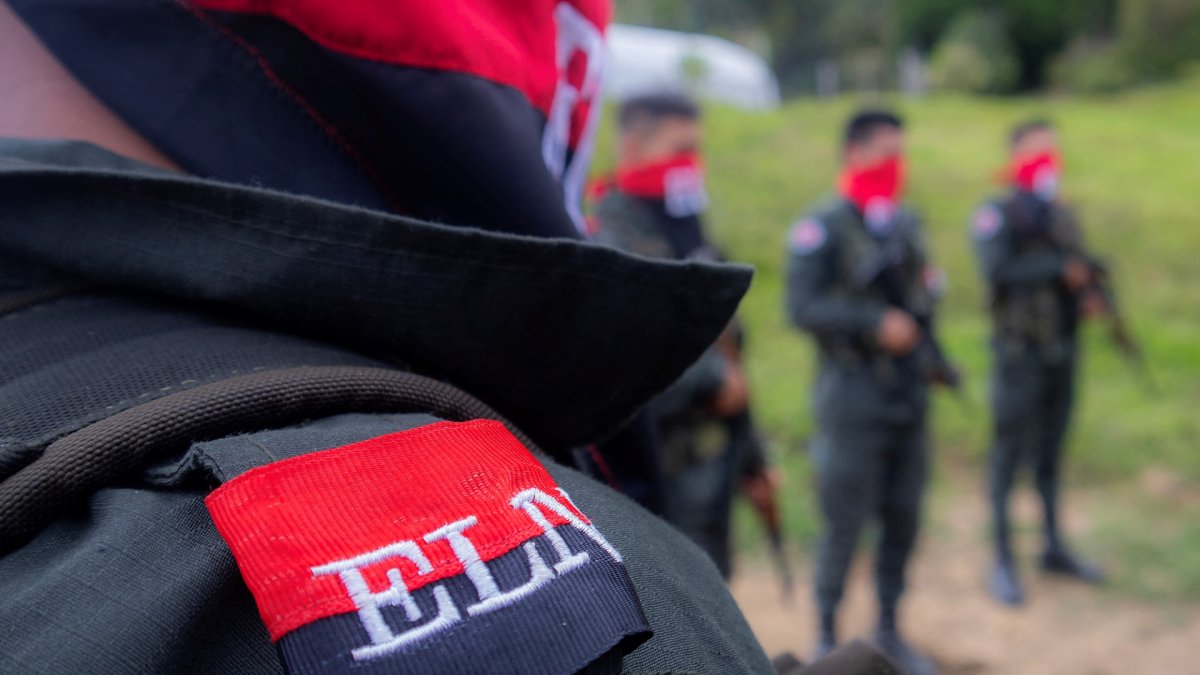
ELN members in a file image

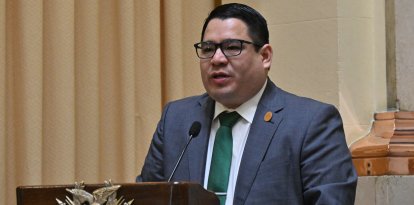
Colombian Defense Minister Pedro Arnulfo Sanchez revealed in an interview that the new political scenario in Venezuela is changing the security dynamics on the common border by pushing his country's guerrillas back into Colombian territory.
In an interview granted to AFP from Paris, the senior Colombian official argued that the operations deployed on the Venezuelan side, under the interim regime of Delcy Rodríguez, have generated a perceptible change among Colombian criminal groups, who now prefer to leave Venezuela for their own survival.
"The information we have is that they are advancing in operations in the border zone and some members of the ELN cartels, of the dissidences, no longer feel safe in that area," said Arnulfo Sanchez.
For years, narco-terrorist organizations like the National Liberation Army (ELN) and factions of the FARC used Venezuelan territory as a key strategic point of refuge, taking advantage of a border of more than 2,200 kilometers marked by scarce state presence and complicity and illegal economies linked to drug trafficking, clandestine mining and smuggling.
Chavismo, in particular, has been a strong ally of Colombian guerrillas in recent decades. However, this new context emerged after the capture of dictator Nicolás Maduro by US forces in early January, which led to the arrival to interim power of then Vice President Delcy Rodríguez, who is now being tutored by Washington to lead a peaceful political transition in the country.
According to Arnulfo Sanchez, military pressure in border areas by Venezuelan forces is forcing these groups to retreat.
"[These operations are driving them] towards the Colombian side, or in an area a little closer to the border," he said.

World
'Peace through strength': Hegseth says some Caribbean cartels halted operations after dozens of strikes on drug boats
Emmanuel Alejandro Rondón
The minister also revealed to AFP that this movement has already allowed Colombian forces to carry out offensive operations, such as the recent one in Catatumbo, where at least 15 ELN members were killed.
Intelligence with the U.S., a key piece for Colombia
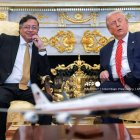
The shift in the regional chessboard coincides with the rapprochement between Bogota and Washington. After a meeting at the White House, the presidents Gustavo Petro and Donald Trump agreed to strengthen cooperation against organized crime.
Arnulfo Sanchez clarified that the US support will not involve the deployment of troops.
The joint work will focus "mainly on intelligence" to combat criminal groups under Colombian norms and international humanitarian law, he noted.
Areas of cooperation also include the evaluation of anti-drone capabilities, armored vehicles and advanced intelligence technology.
The official also stressed that Colombia has already initiated a process of diplomatic articulation with Caracas on security matters, although he avoided going into details.
For the minister, the change of power in Venezuela represents "a unique opportunity" to rebuild channels of communication and reduce the so-called "gray zones" on the border.
"We hope that we can transcend in terms of security," he said.
LATEST