Venezuelan opposition and activists warn Delcy Rodríguez’s amnesty law is limited and insufficient
"There is a lack of universality in the face of political persecution, a lack of dismantling of the repressive regulatory framework and a lack of institutional guarantees of non-repetition."
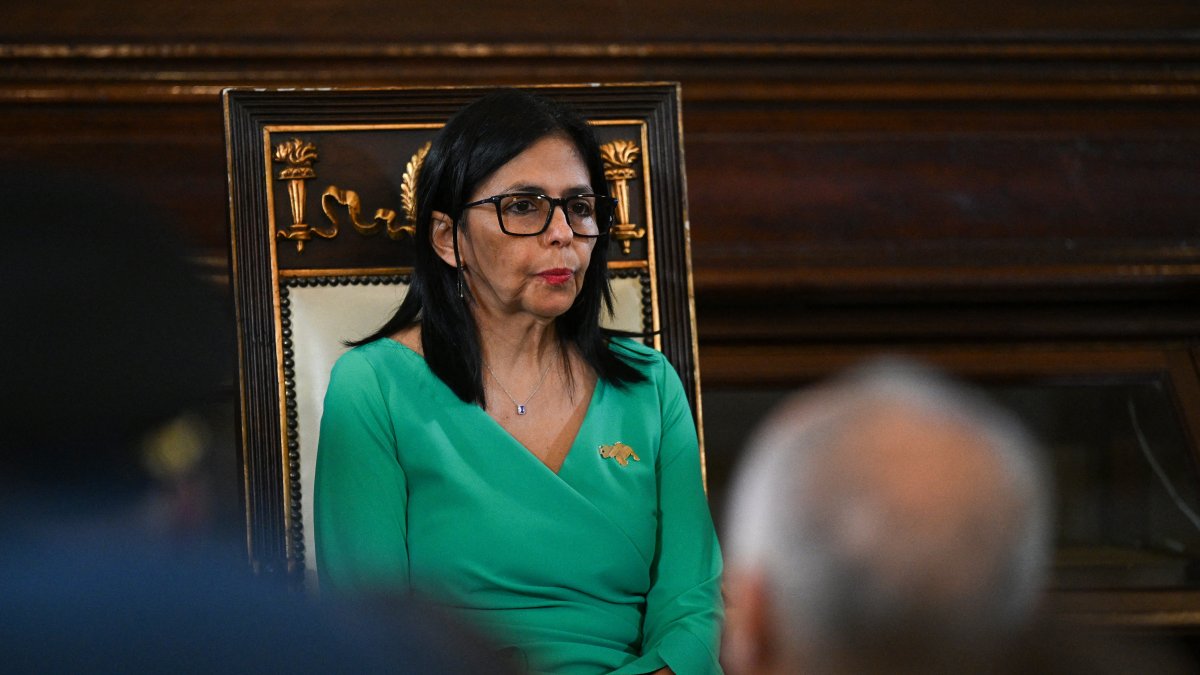
Delcy Rodríguez, new leader of chavismo, was sworn in this January 5

24 hours after the Venezuelan National Assembly approved - in its first discussion - an amnesty law for political prisoners in the South American country, Venezuelan activists, opposition politicians and analysts began to denounce loopholes and potential problems with a legislation considered essential for the political transition in the country after the capture of dictator Nicolás Maduro last January 3 by order of President Donald Trump.
The text, which was not officially published but made public because legislator Luis Florido shared it on his 'X' account, limits the amnesty to ten specific events between the period of 1999 and 2026. That is to say, since the arrival to power of the former socialist dictator Hugo Chávez and the capture of his successor, Nicolás Maduro.
- April 11, 2002 coup d'état: attempted overthrow of Chávez that removed him from power for almost 48 hours.
- Oil strike (2002-2003): national strike against the government that paralyzed the economy.
- Protests of February-March 2004: riots, clashes and repression between demonstrators and security forces.
- 2004 recall referendum: political tension and protests surrounding the consultation to remove Chávez from office.
- May 2007 protests: demonstrations following the closure of the RCTV channel.
- Presidential elections of 2013: post-election violence after Maduro's narrow victory.
- Protests of 2014: wave of anti-government demonstrations with deaths and hundreds of arrests.
- Protests of 2017: cycle of massive mobilizations against the government in the midst of an institutional crisis.
- Political crisis of 2019: protests following the proclamation of an interim government and increased repression.
- Presidential elections of 2024: riots, arrests and allegations of repression following the elections.
An insufficient amnesty
Although the amnesty includes several episodes, several Venezuelan opposition leaders are warning that the law leaves out other important events in recent years.
Delsa Solorzano, an opposition politician who recently came out of hiding, warned that the bill "strictly limits its application to ten specific moments" and excludes: "Those who have been convicted under the Simon Bolivar Law and the Law Against Hate, among other instruments of repression in force. Military jurisdiction cases. Any repeal of the repressive legal framework that allowed and continues to allow persecution for political reasons. This being so, by not expressly repealing these laws, the door remains open for new arrests, even after an eventual application of the amnesty."
#ATENCIÓN #ACTUALIZACIÓN #AMNISTÍA
— Delsa Solorzano (@delsasolorzano) February 6, 2026
Leyendo en este momento el primer borrador de la propuesta de Amnistía.
Debemos advertir que se trata de un texto sumamente incompleto y potencialmente peligroso. En ese sentido, formulamos las siguientes observaciones:
El proyecto consta de…
"Likewise, the bill does not guarantee the safe return of exiles, does not lift political disqualifications and does not establish mechanisms of integral reparation for the victims," warned Solorzano.
In statements to VOZ, Venezuelan political scientist and analyst Walter Molina Galdi explained that the proposal can hardly be interpreted as an instrument of national reconciliation and warned that, on the contrary, it seems aimed at preserving the repressive Chavista political system itself. In his opinion, an amnesty that is neither truly universal nor accompanied by institutional guarantees of non-repetition runs the risk of becoming a mechanism of "self-protection of power" and not a decisive step towards a necessary political transition for the country.
"There is a lack of universality in the face of political persecution, a lack of dismantling of the repressive normative framework and a lack of institutional guarantees of non-repetition. Without these elements, the amnesty can hardly be the starting point for a real democratic reconciliation," said Molina.

World
La Asamblea Nacional chavista aprueba en primera discusión la ley de amnistía para presos políticos en Venezuela
Luis Francisco Orozco

World
US diplomatic chief in Venezuela meets with Delcy Rodriguez and sets the course for the transition
Emmanuel Alejandro Rondón
Andrés González, director of the consulting firm Politiks, also warned about a detail of the text: the amnesty does not recognize the repressive role of Chavism in these 27 years of regime, nor does the possibility of reparation for political victims.
"The draft Amnesty Law that is circulating is restrictive, excluding and arbitrary. It would leave out a lot of people, such as the cases of Operation Gideon and the drone in 2018. It also does not recognize the responsibility of the State with the victims nor does it talk about reparation mechanisms," Gonzalez stated.
For now, although the initiative was approved in the first discussion, the initiative itself must still go through a public consultation and, subsequently, a second discussion to be approved. That is to say, there is time to correct the text, but any modification will only be possible if the Chavista regime has the political will to make it, or Washington, which in theory is the guardian of the transition, applies pressure to make necessary changes for many Venezuelan activists.
The bill, as stated by pro-government legislator Jorge Arreaza, also excludes people convicted of serious human rights violations, crimes against humanity, war crimes, corruption, drug trafficking and intentional homicide. So far, there are still 600 political prisoners in Venezuela. Jorge Rodriguez, head of the pro-Chavez National Assembly and brother of current leader Delcy Rodriguez, told relatives of the unjustly imprisoned on Friday that next week they should all be "released."
LATEST