European Parliament refers trade agreement with Mercosur to EU Court of Justice
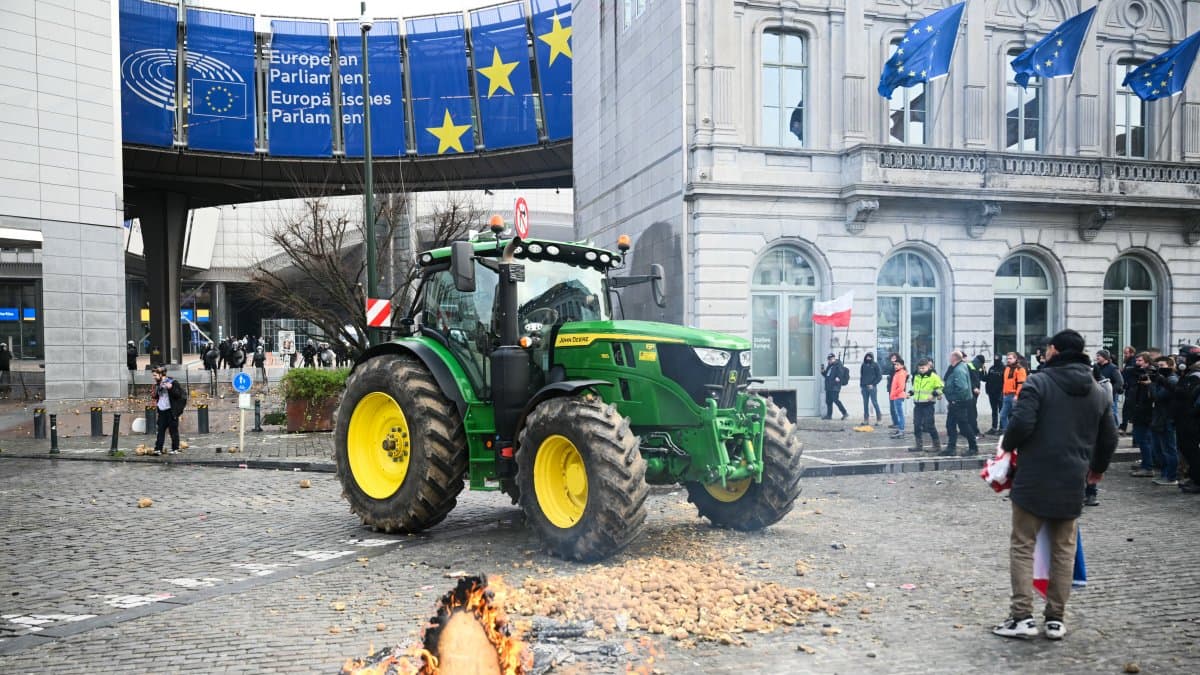
The move was celebrated by hundreds of farmers gathered in front of the parliamentary headquarters in Strasbourg, France, to protest against this deal, which has generated concern in the European agricultural sector.

The European Parliament on Wednesday referred the agreement signed by the E.U. with Mercosur to the bloc's justice system. It is a decision that could put the brakes on the creation of one of the world's largest free trade zones.
The measure was celebrated by hundreds of farmers gathered in front of the parliamentary headquarters in Strasbourg, France, to protest against this deal, which has generated concern in the European agricultural sector.
In a close vote (334 votes in favor, 324 against and 11 abstentions), the MEPs agreed that the E.U. Court of Justice should analyze whether the agreement recently signed in Paraguay respects the treaties of the community bloc.
In principle, the decision postpones the formal application of the treaty for several months, although the European Commission, the E.U.'s executive arm, may decide to implement it provisionally.
For now, the body did not comment on this point, but expressed on Wednesday its "deep disappointment" at the decision made by parliamentarians.
"According to our analysis, the issues raised by the Parliament in this motion are not justified," criticized a spokesman for the European Commission, Olof Gill.
Rejection from the agricultural sector
With more than 700 million consumers, the treaty would create the world's largest free trade area, between the 27 E.U. member states and Brazil, Argentina, Paraguay, and Uruguay. It also eliminates tariffs on more than 90% of bilateral trade.
It will allow the E.U. to export more vehicles, machinery, wine and spirits to Latin America, while facilitating the entry into Europe of Latin American beef, sugar, rice, honey and soybeans.
However, the agreement has been met with resistance in several European countries, led by France.

Of particular concern are the repercussions in the agricultural and livestock sectors, which have been protesting for months for fear of being impacted by cheaper imported products that do not necessarily comply with European health standards.
French Foreign Minister Jean-Noel Barrot welcomed the MEPs' decision and said the European Parliament "expressed itself in coherence with the position"of France.
Germany criticizes the decision
According to German Chancellor Friedrich Merz, the European Parliament "failed to recognize the geopolitical situation," with growing discrepancies between the E.U. and Donald Trump's U.S. administration.
The referral of the agreement to the Luxembourg-based E.U. Court of Justice could delay the vote by the European Parliament to ratify this treaty by a year and a half. It had been in negotiations for more than 25 years.
🛠 Do you think there is an error in this article?
Recommendations


LATEST