WSJ editorial board defends aggressive attack on Venezuelan narco-ship
According to the board, the action was "a reminder to Mr. Maduro of what the U.S. can do if its patience with his criminality runs out."

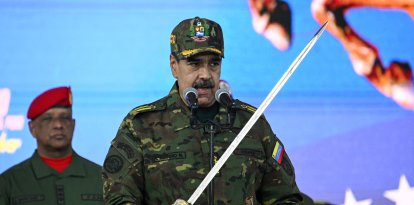
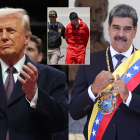
Dictator Nicolas Maduro in a file image.

Following the airstrike that destroyed a Venezuelan speedboat linked to the Tren de Aragua criminal group, the editorial board of The Wall Street Journal clearly endorsed President Donald Trump's offensive against the drug cartels in Caribbean waters.
In an editorial published Wednesday, the newspaper called the action a "good move" and said Washington should not limit itself in its fight against cartels and should continue to take exemplary actions against narco-terrorist groups.
On Tuesday, President Trump released a video on social media showing the vessel exploding after a precision bombing. According to the administration, the target was carrying drugs, and the 11 crew members belonged to the Tren de Aragua, a criminal group designated by the United States as a foreign terrorist organization and linked to the Maduro regime. "There's more where that came from," warned President Trump, as did Secretary of State and White House security adviser Marco Rubio, who said in Mexico that the attacks will continue.
"The attack is a break from the usual Coast Guard protocol of stopping suspected drug traffickers on the high seas, going aboard for search and seizure, and making arrests for a trial at a later date," the editorial reads. "That’s the way civilized countries do things, according to Mr. Trump’s critics. But Venezuelan capos don’t follow Marquess of Queensberry rules, and the U.S. doesn’t have to refrain from sending them a more convincing kinetic message."
World
El mundo MAGA respalda la confrontación contra Maduro, su cártel y el Tren de Aragua
Emmanuel Alejandro Rondón
The WSJ's board also noted that, while a crackdown on drug traffickers will not end the drug epidemic in the US because "consumption is a demand problem," criminal cartels represent a serious problem for the Western Hemisphere right now because "criminal cartels also have diversified into a range of grisly businesses, including kidnapping, extortion, human trafficking and murder."
Likewise, the board acknowledges that the Maduro regime is a criminal group that kidnaps, murders, and persecutes dissidents while financing itself through drug trafficking.
"In Venezuela, they’re tools of the dictatorship as well, since the regime of Nicolás Maduro uses them to repress the population and gives them impunity for their organized crime. Elsewhere in the region, the gangs overwhelm weak institutions, even in countries that want to fight back. This makes them a threat to U.S. national security. Allowing them to grow powerful has invited chaos and tyranny."
The media outlet recalls that the Cartel de los Soles, led by dictator Maduro and Venezuelan generals, is also a designated terrorist organization that leads a "vertically integrated cocaine operation, from coca leaf to delivery on American streets."
Thus, a war against Maduro and his cartels means a potential geopolitical benefit for Washington because, according to the editorial, "it’s likely to disrupt, at least in the short run, the Maduro dictatorship’s dollar income from trafficking, which it relies on to remain in power, even more than oil."
"It’s also a reminder to Mr. Maduro of what the U.S. can do if its patience with his criminality runs out," the media outlet sentenced.
LATEST