ANALYSIS
Chavismo, between defiance and diplomatic pleas before Washington
The actions of the White House led Maduro and his allies to mix gestures of force with diplomatic appeals, between military maneuvers and denunciations at the UN.

Maduro and Diosdado Cabello

U.S. pressure against Nicolás Maduro's regime has unleashed a double reaction in Caracas: on the one hand, Chavismo is trying to project military force with deployments and calls for mobilization; on the other, it is resorting to international organizations to denounce what it describes as a "threat to regional peace".
Maduro thanks Petro and announces new deployments
This Thursday, during the graduation ceremony of a contingent of fighters, Nicolas Maduro took advantage of the event to reinforce his narrative of resistance. He publicly thanked Colombian President Gustavo Petro for ordering the dispatch of 25,000 military personnel to the Catatumbo border, considering that the measure strengthens coordination between the two countries.
Maduro assured that the "binational zone number one," which covers from the Venezuelan side Táchira and Zulia to Guajira, must be defended against "narco-terrorist gangs." As part of that plan, he announced that 1,003 new fighters will be deployed in the border area.
The dictator also denied that Venezuela represents a military risk for the region, clarifying that his country does not have atomic weapons or nuclear submarines. "What we do have is a powerful weapon: our Bolivarian history!" he exclaimed. At the same time, he said that Venezuela is receiving "an impressive world solidarity because no country in Latin America and the Caribbean has ever been threatened with a nuclear submarine." He concluded with a promise of resistance: "Nobody is going to stop Venezuela. We will continue to advance economically and socially."
Cabello: "We are preparing for the worst"
On Wednesday, Interior Minister Diosdado Cabello warned that Chavismo takes international pressure "very seriously" and is preparing for scenarios of direct confrontation.
"We do not underestimate any threat. Nor do we overestimate it(...). We always prepare for the worst," he said in his weekly program broadcast on state television.
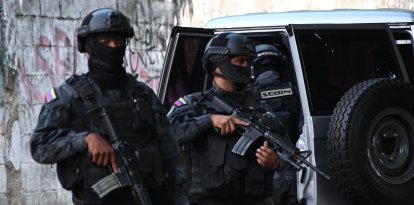
Cabello framed these words amid the mobilization promoted by Chavismo with the Bolivarian National Militia. According to him, the enlistment days have been "historic." At the same time, Minister of Defense Vladimir Padrino López stated that recruitment will continue at more than a thousand points across the country this weekend.

Caracas goes to the UN
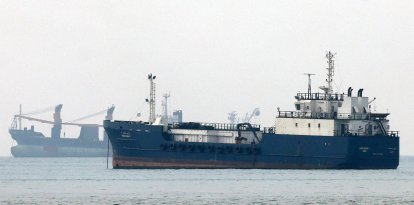
In parallel to the discourse of force, the dictatorship also resorted to the United Nations to denounce the U.S. naval deployment in the Caribbean. In a letter, it accused Washington of planning to send "a missile cruiser" and "a fast-attack nuclear submarine" to the region, which it described as a "serious threat to regional peace." The dictatorship invoked the Treaty of Tlatelolco, which declares Latin America a nuclear weapons-free zone, in an attempt to place the issue on the international agenda.
Pressure from Washington and isolation of the regime
The U.S. military deployment in the Caribbean is part of a regional strategy to cut the cocaine routes from Venezuela to Central and North America.
LATEST