Cuarón, Del Toro, Iñárritu, Quinn, Saldaña: Hispanics who made Oscar history
Mexican actor José Ferrer was the first Hispanic artist in history to win an Oscar.
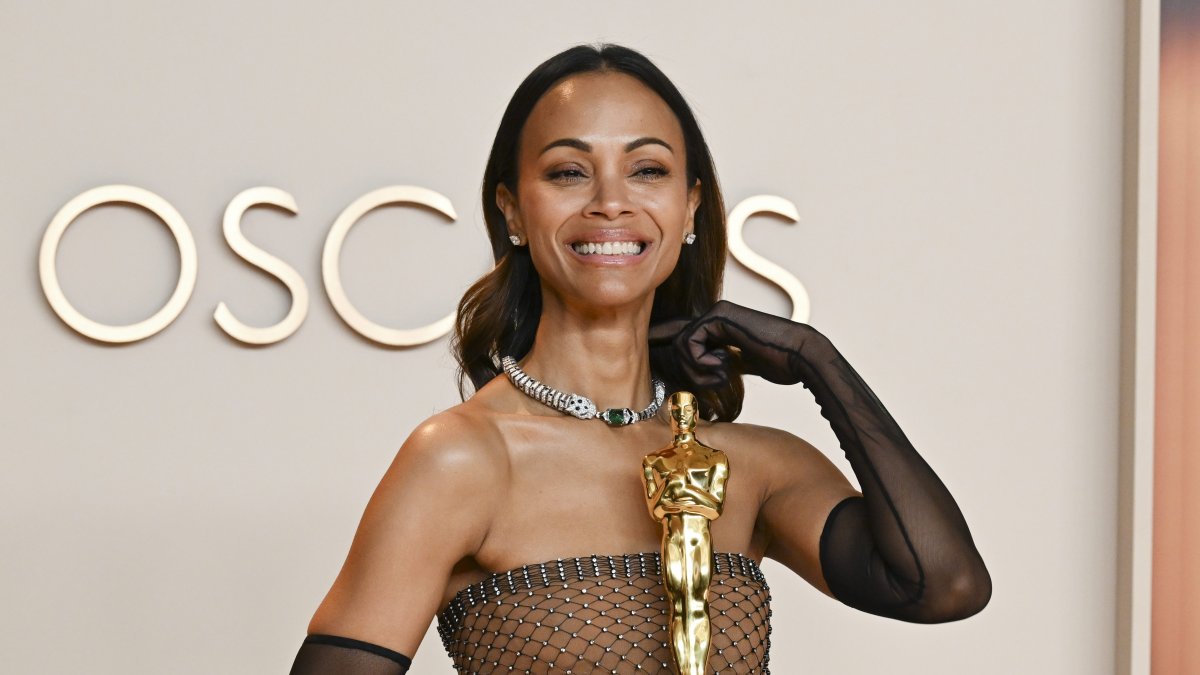
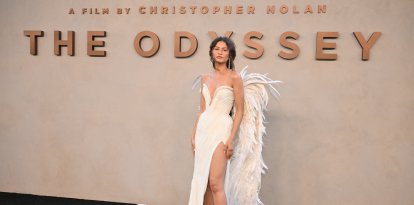
Zoe Saldaña poses with the Oscar for Best Supporting Actress won in 2025.

Over the years, Hispanic talent has gone from being a mere anecdote to a major player in the film world. This evolution has been reflected through the ever-increasing recognition that Hispanics achieve in the most important awards of the film industry: the Oscars.
Since Puerto Rican José Ferrer became the first Hispanic artist to win an Oscar in 1951, many others have been recognized by the Academy of Motion Picture Arts and Sciences in different categories for their work and skill in front of and behind the camera.

José Ferrer (Best Actor in 1951)
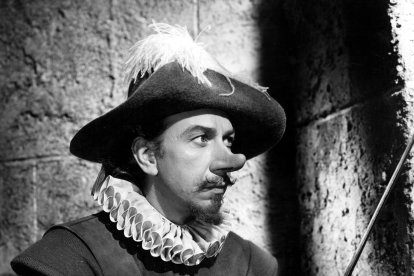
José Ferrer in “Cyrano de Bergerac” (1950). Archive image
With his performance as Cyrano de Bergerac in the comedy of the same name directed by Michael Gordon in 1950, Ferrer won the Oscar for Best Actor at the 1951 awards. He competed for the same award two years later, for his role as Henri de Toulouse-Lautrec in “Moulin Rouge” (1952), as well as being nominated for Best Supporting Actor for playing King Charles VII of France in “Joan of Arc” (1948).
Anthony Quinn (Best Supporting Actor in 1953 and 1957)
Being part of the cast of “Viva Zapata!” (1952), Anthony Quinn picked up the Oscar for Best Supporting Actor at the 1953 gala for his performance as Eufemio Zapata, brother of revolutionary leader Emiliano Zapata. Four editions later, in 1957, the Mexican actor won the award again thanks to his role as the French painter Paul Gauguin in “Lust for Life” (1956).
Benicio del Toro (Best Supporting Actor, 2001)
In the 2001 edition, Puerto Rican Benicio del Toro was recognized with the Best Supporting Actor Oscar for his portrayal of the character of Javier Rodriguez in “Traffic” (2000). This year, he aspires to win the same award for his role in “One Battle After Another” (2025).

Entertainment
Benicio del Toro seeks another Oscar after 25 years with his portrayal of a Hispanic sensei
Santiago Ospital
Rita Moreno (Best Supporting Actress in 1962)
Rita Moreno's portrayal of Anita in the musical film “West Side Story” (1961) earned her a win over actresses like Judy Garland in Best Supporting Actress at the 1962 Academy Awards. The Puerto Rican performer became the first Hispanic woman to receive a distinction from the Academy of Motion Picture Arts and Sciences.
Lupita N'yongo (Best Supporting Actress 2014)
Born in Mexico City in 1983, Lupita N'yongo achieved fame after portraying Patsey in “12 Years a Slave” (2013). The Academy of Motion Picture Arts and Sciences valued her work by awarding her the Oscar for Best Supporting Actress at the 2014 gala, a category in which she competed with Jennifer Lawrence and Julia Roberts.
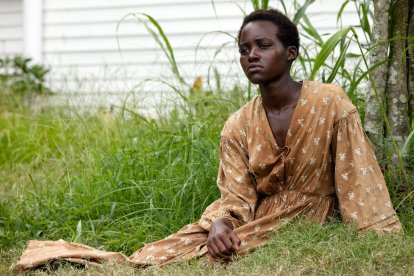
Lupita Nyong'o in “12 Years a Slave” File image
Ariana DeBose (Best Supporting Actress in 2022)
Born in North Carolina and the daughter of a Puerto Rican father, Ariana DeBose succeeded Moreno in the role of Anita in the remake of “West Side Story” (2021), directed by Steven Spielberg. That performance earned the actress the same award that Moreno won six decades earlier, the Best Supporting Actress Oscar at the 2022 awards. DeBose's rivals were Judi Dench and Kirsten Dunst.
Zoe Saldaña (Best Supporting Actress in 2025)
In the last edition, one of the most fashionable actresses triumphed. Zoe Saldaña, of Dominican origin, took home the Oscar for Best Supporting Actress after impersonating lawyer Rita Mora Castro in “Emilia Pérez” (2024). At the ceremony, Saldaña paid homage to her Hispanic heritage by addressing the audience in Spanish.
Zoe Saldaña poses with the Oscar for Best Supporting Actress won in 2025
Alfonso Cuarón (Best Director in 2014 and 2019)
His work at the helm of “Gravity” (2013), starring George Clooney and Sandra Bullock), made Alfonso Cuarón the first Hispanic filmmaker to win the Oscar for Best Director, in the 2014 edition. Five years later, he won the award again for the film “Roma” (2018).
Alejandro González Iñárritu (Best Director in 2015 and 2016)
There were two times (consecutively) that Alejandro González Iñárritu won the Oscar for Best Director. First came at the 2015 awards, with his film “Birdman or (The Unexpected Virtue of Ignorance)” (2014), starring Michael Keaton, Emma Stone and Edward Norton and which also won the award for Best Picture. A year later, the Academy of Motion Picture Arts and Sciences again honored the Mexican filmmaker for his work on “The Revenant” (2015), starring Leonardo DiCaprio.
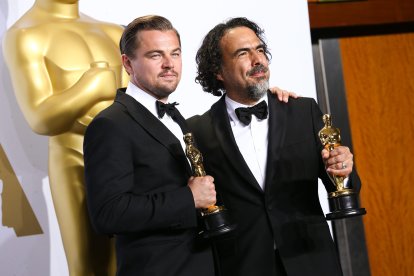
Leonardo DiCaprio and Alejandro G. Iñárritu with the Oscar award for “The Revenant”
Guillermo del Toro (Best Director 2018)
For “The Shape of Water” (2017), which was also named Best Picture, Guillermo del Toro picked up the Oscar for Best Director at the 2018 gala. In addition, for “Guillermo del Toro's Pinocchio” (2022) he also received the award for Best Animated Feature in 2023, and in this year's edition, his film “Frankenstein” (2026) is nominated for Best Picture.
Best International Film (1986, 2010, 2018, 2019 and 2025)
In total, five Hispanic-produced films have won the Oscar for Best International Film (or Best Non-English Language Film, as the category was formerly known):
- “La Historia Oficial” (Argentina, 1985). It won the award in 1986.
- “El Secreto de sus Ojos” (Argentina, 2009). Won the award in 2010.
- “Una Mujer Fantástica” (Chile, 2017). Won in 2018.
- “Roma” (Mexico, 2018). Won the award in 2019.
- “Ainda Estou Aqui” (Brazil, 2024). Won in 2025.
Other categories
In secondary categories, Hispanics also figure among the honorees. For example, Argentine composer Gustavo Santaolalla won the Best Soundtrack Oscar twice: for “Brokeback Mountain” (2005) at the 2006 gala and for “Babel” (2006) at the 2007 awards.
Uruguayan singer Jorge Drexler won the Best Original Song Oscar in 2005, while Mexican Eugenio Caballero was awarded the Best Art Design Oscar in 2007.
Mexicans Guillermo Navarro (Pan's Labyrinth, 2007) and Emmanuel Lubezki (“Gravity,” 2014; “Birdman or (The Unexpected Virtue of Ignorance),” 2015; and “The Revenant,” 2016) won the Best Cinematography Oscar, as did Chilean Claudio Miranda (“Life of Pi,” 2013).
Mexican set designer Emile Kuri was recognized for his talent in “The Heiress” (1949) and “20,000 Leagues Under The Sea” (1954) with the Best Art Direction Oscar. The same award received by his compatriots Eugenio Caballero, for his work on “Pan's Labyrinth” (2007), and Brigitte Broch, for “Moulin Rouge!” (2001).

LATEST