Trinidad and Tobago backs US military deployment in the Caribbean and offers support in case of a conflict against Maduro
In a statement, Prime Minister Persad-Bissessar expressed her unequivocal support for the U.S. military presence, stressing that the Republican administration's decision is focused on dismantling drug cartels.

Trinidad and Tobago Prime Minister Kamla Persad-Bissessar with Nicolas Maduro at a CARICOM meeting (Archive).

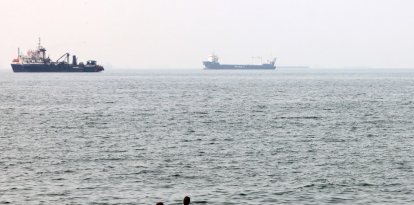
Amid rising tensions in the Caribbean, Trinidad and Tobago expressed its support for the deployment of destroyers and amphibious ships from the U.S. Navy in international waters near Venezuela, an operation led by the Trump administration to combat drug trafficking.
The deployment includes missile destroyers along with an amphibious squadron, designed to counter multiple threats. This operation responds to Washington's accusations against the Maduro regime, which it accuses of leading Cartel de Los Soles, designated as a terrorist organization by the Republican administration.

World
Defense researcher Erich Saumeth: "I don't think Venezuela is in a position to respond to the U.S. device"
Luis Francisco Orozco
In this context, the Trinidad and Tobago Prome Minister Kamla Persad-Bissessar, has stated that her government not only supports this mission but is willing to collaborate with the United States in the event that the regime of Nicolás Maduro in Venezuela attacks Guyana within the framework of the dispute over the Esequibo region.
Breaking: PM Kamla Persad-Bissessar backs US military in Caribbean to combat “terrorist drug cartels.”
— Kejan Haynes (@KejanHaynes) August 23, 2025
Says T&T won’t consult CARICOM on issue.
Warns if Maduro attacks Guyana, US will get access “unflinchingly" to Trinidad and Tobago territory. pic.twitter.com/mTbvFF4PTF
Strong backing for U.S. deployment
In a statement issued Saturday, Persad-Bissessar expressed unequivocal support for the U.S. military presence, stressing that the Republican administration's decision is focused on dismantling drug cartels. “The only persons who should be worried about the activity of the U.S. military are those engaged in, or enabling criminal activity. Law-abiding citizens have nothing to fear,” the prime minister said, according to the official statement.
She further clarified that U.S. operations are conducted in international waters and do not violate the sovereignty of any nation: “Despite the misinformation being peddled, the U.S. military is operating legally in international waters within the region and have not breached any nation’s sovereignty.”
Engagement with Guyana in the face of the Venezuelan threat
The prime minister also addressed the border dispute between Venezuela and Guyana over the Essequibo region, a 62,500 square-mile territory rich in resources, and was controversial in warning that any aggression by Caracas against Guyana would trigger a response from her government: “I want to make it very clear that if the Maduro regime launches any attack against the Guyanese people or invades Guyanese territory and a request is made by the American government for access to Trinidadian territory to defend the people of Guyana, my government will unflinchingly provide them that access.”
Likewise, she highlighted the good historical relations with Venezuela: “Trinidad and Tobago has always had good relations with the Venezuelan people and that will continue."

World
Guyana calls for strengthened regional cooperation to fight Cartel de los Soles
Virginia Martínez
The fight against transnational crime
Persad-Bissessar linked the backing for the U.S. operation to the crisis of violence plaguing Trinidad and Tobago and other Caribbean countries. "Due to drug, human and firearms trafficking, Caribbean countries, and in particular Trinidad and Tobago, have experienced massive spikes in transnational crime, gang activity, murders, violence and financial crimes."
The Trump administration's decision
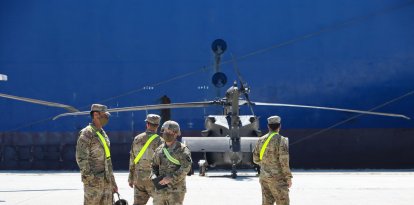
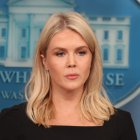
The U.S. deployment also includes an approximately 4,000 troops on both land and sea and was ordered by the Pentagon as part of a counter-narcotics operation in the southern Caribbean, according to report Reuters. The White House, through Press Secretary Karoline Leavitt, has indicated that the goal is to curb drug trafficking and bring those responsible to justice, accusing the Maduro regime of leading Cartel de Los Soles.
Is the president considering BOOTS on the ground in Venezuela?
— Ernest Beier (@ezpcsystem) August 20, 2025
US spox Leavitt does not exclude the possibility:
"President Trump has been clear and consistent that he's prepared to use every element of American power to stop drugs from flooding in to our country. pic.twitter.com/ZmjDrbLhES
The response by Maduro's regime
In response, Maduro announced the mobilization of more than 4.5 million militiamen to "defend the national sovereignty" of the country, calling the U.S. presence an imperialist threat.
Regional reactions and the silence of CARICOM
Guyana, which faces general elections on Sept. 1, issued a statement on Friday noting its "grave concern" over transnational crime and narcoterrorism, pledging to work with bilateral partners to dismantle criminal networks.
However, the bloc CARICOM (Caribbean Community), currently chaired by Jamaican Prime Minister Andrew Holness, has so far issued no statement.
Some Caribbean countries, such as Antigua and Barbuda, Dominica, Grenada, and St. Vincent and the Grenadines, are part of the ALBA-TCP, an alliance committed to the Bolivarian model, which expressed its support for the Nicolás Maduro regime and rejected "pretensions" of foreign intervention.
LATEST