The world after Davos
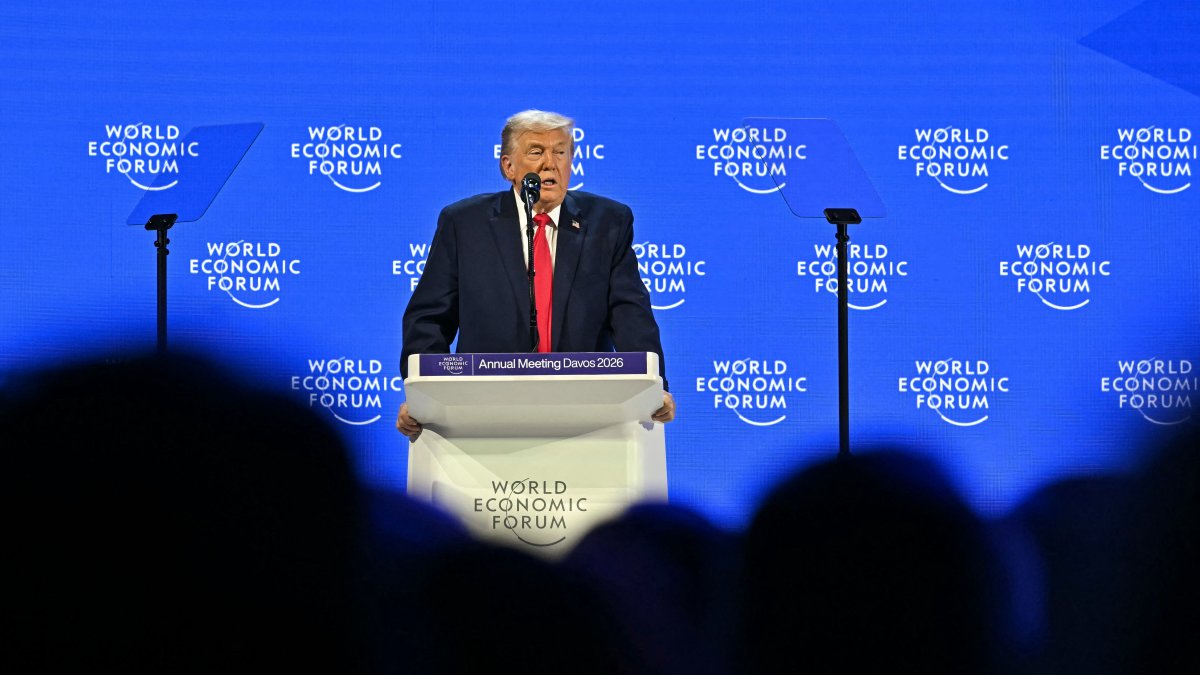
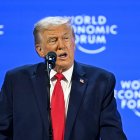
After Donald Trump's speech at the World Economic Forum, one thing has become clear: between 1989 and 2026 we have not lived in a new international order, but in the World of Davos. And that world is over. From now on we live after Davos.
Trump at the World Economic Forum
Europeans will never admit it, but it took an American president coming to Europe to shake us out of the strategic complacency and mental laziness in which we had been ensconced since 1989.
Almost four decades after the fall of the Berlin Wall and more than 30 years after the implosion of the Soviet Union, we continue to call the world that emerged from that historic victory "the post-Cold War order." The name says it all: unable to define the new, we continue to live on the negation of the old. We have not known how to think about the world we gain.
Paradoxically, it has been Donald Trump, that "crazy braggart and boor," according to most European leaders, who has put light where there was only inertia. After his speech at the World Economic Forum, one thing has become clear: between 1989 and 2026 we have not lived in a new international order, but in the World of Davos. That world is over. From now on we live after Davos.
The historical contrast is obvious. The order that emerged after World War II was bipolar, dangerous and brutal, but stable. The United States and the USSR competed openly, albeit with military confrontation contained by nuclear balance. It was also an ideological battle between liberalism and totalitarianism, between capitalism and communism. The Soviet defeat was not only geopolitical: it demonstrated the structural incapacity of socialism to generate prosperity.
The World of Davos was something else. With real socialism discredited, globalization and turbo-capitalism were imposed as dogma. Under the undisputed leadership of the United States, the planet became one big market: mobile capitals, offshored factories, optimized supply chains. Military force ceased to matter; nuclear weapons became irrelevant; armies, especially in Europe, were reduced to symbolic dimensions.
It was also a post-heroic, post-border world. National borders came to be seen as archaic; mass immigration was celebrated as cultural enrichment; rootedness was replaced by a liquid identity. The European Union became the epitome of this vision: a technocratic project determined to dilute history, culture and sovereignty in the name of a superior moral abstraction.
The Soviet defeat was not only geopolitical: it demonstrated the structural incapacity of socialism to generate prosperity.
The World of Davos was, moreover, a world that learned to detest its own history, to censor in the name of political correctness and to embrace the new causes of the global left: climate dogma, identity obsession, the permanent guilt of the West. It was the world of Gates and the Clintons, of Greta Thunberg and Ursula von der Leyen, of the rich preaching climate austerity while traveling in private jets. That was the World of Davos. Until now.
For Europeans and Canadians, Donald Trump is a biblical punishment incarnated to destroy the world the United States built after winning World War II. The Canadian prime minister said it with surprising lucidity in Davos: "We are not in a transition, but in a rupture." He was right, though not in the way he thinks. The world order that is broken is, as he himself acknowledged, a fiction: the fiction of an equality guaranteed by the United States...at America's expense.
Trump has been saying the same thing since his first term, now with fewer complexes. During the Cold War, Washington agreed to pay the price of Western defense. At Davos World, that price became unsustainable for the American middle class: military sacrifices, deindustrialization, job losses and social deterioration. America said enough was enough.
At Davos, many breathed a sigh of relief after listening to Trump. At least there would be no immediate war over Greenland. But European elites would be wrong to celebrate it as a victory of their own. They haven't slowed anything down. They still don't understand Trump. They confuse objectives with tactics. Trump will take Greenland without firing a shot. In due time.
Politics
Trump and NATO reach preliminary framework agreement on the future of Greenland
Joaquín Núñez
The Davos Man refuses to accept that Trump is to him what the meteorite was to the dinosaurs: the extinction event. His vice president, J.D. Vance announced as much. We are facing a revolution, but not of the millionaire billies, but of the "hillbillies": citizens demanding that their leaders protect them from the forces that have impoverished them for decades.
That revolution is called America First. Trade as a geostrategic weapon. Transactional foreign relations. An end to unilateral altruism. Trump is not returning to Yalta or to the division of the world into ideological spheres. He proposes something more uncomfortable for Europe: a less ideological, more realistic world; less internationalist, more national. It is what is already known as the Donroe Doctrine.
Davos Man, unable to adapt, digs in. He becomes Davosgnon Man: primitive, tribal and on the verge of extinction. He reacts blindly.
Just look at the European reaction to Greenland. What has been the argument? "Greenland for Greenlanders." Exactly the principle that Trump defends. But Europe cannot uphold it because it has been hollowing out sovereignty and power for years.
Trump, like the universe, abhors a vacuum. Europe has generated strategic vacuums everywhere: through unwillingness and inability to act. Hence Greenland falls due to Danish inattention and European inanity. The European military deployment for "show of force," a handful of soldiers here and there, has been, as one Italian minister put it, a bad joke.
The world to come, the world after Davos, will combine 21st century technologies, A.I. included, with 19th century geopolitical principles. Or earlier. Davos Man thought he had surpassed Thucydides. Reality has not.
While the United States and China compete for artificial intelligence or space, European leaders concentrate on preventing caps from separating from plastic bottles. Added to the stifling of innovation is an increasingly authoritarian drift that stifles dissent from the Brussels establishment.
There are dates that mark historical hinges: Oct. 12, 1492, July 14, 1789. I am convinced that Jan. 21, 2026 will be one of them.
The World of Davos is dead...
The world after Davos has just begun.
LATEST