ANALYSIS
Is socialism coming to an end in Bolivia? The right wing has a wide lead days before the presidential election
Two opponents to Luis Arce's government are very close to the presidency after almost 20 years of the left in power. Meanwhile, the South American country is immersed in one of its worst crises in recent history.
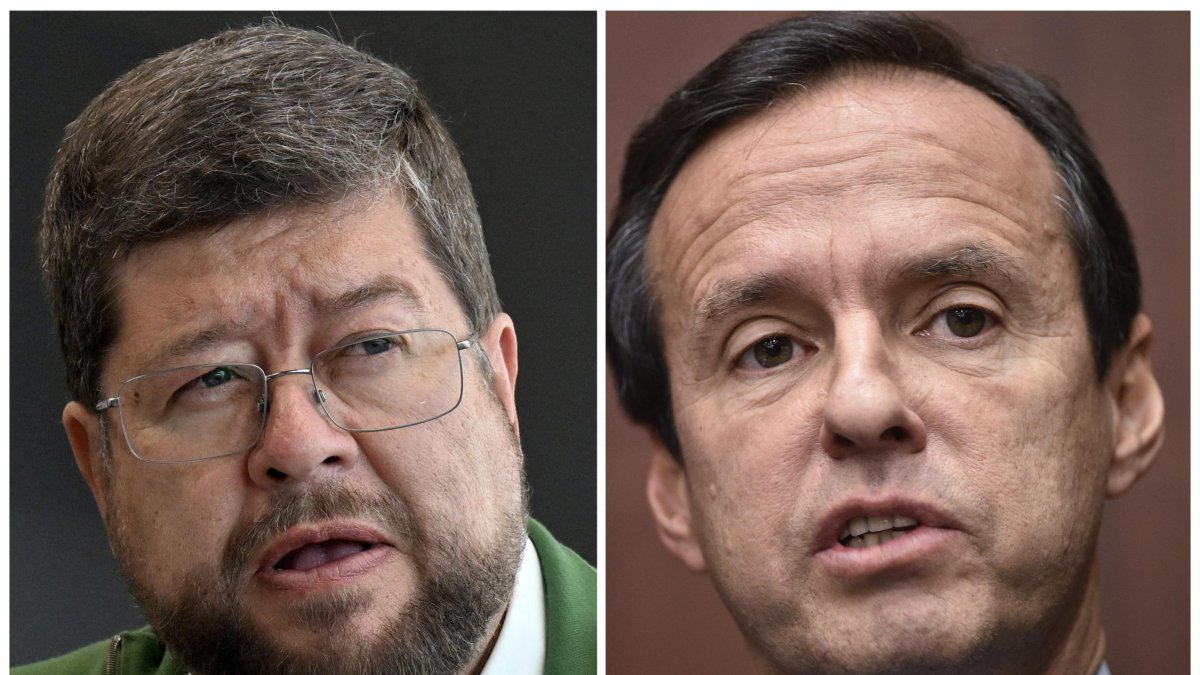
Bolivian presidential candidates: Samuel Doria Medina (L) and Jorge Quiroga (R).

Two opposition candidates to Bolivia's leftist government, which is very close to losing power after nearly 20 years, lead polls published Sunday, the last official surveys before Sunday's presidential election.
Center-right businessman Samuel Doria Medina, running for the Unity Bloc (Bloque de Unidad) party, is leading the polls by Ipsos-Ciesmori and Captura Consulting, with 21.2% and 21.6%, respectively.
He is closely followed by former right-wing president Jorge "Tuto" Quiroga (2001-2002), of the Libre coalition, who is projected with 20% of the vote in both polls.
If the trend is confirmed next Sunday in the election, the two candidates will go to a runoff on Oct. 19 to see who will occupy the Casa Grande del Pueblo, the seat of the Bolivian government.
Change of course in foreign policy
In an interview on CNN's "Oppenheimer Presenta" recorded this week, Doria Medina assured that in an eventual presidency he would "freeze" relations with the Venezuelan and Cuban regimes until "democracy" existed in those countries, he said.
He also anticipated that he would bet on a strong link with the United States and promised to go after a zero tariff on Bolivian products, or at least one that would favor the country's battered economy.
The businessman, who after several electoral attempts in the last two decades is now leading the polls, defined himself as "the complete opposite" of former leftist President Evo Morales.
World
WJP: Bolivia is the most corrupt country in the region and second in world ranking
Diane Hernández
Quiroga, on the same CNN program, was blunt in his definitions of his eventual foreign policy: he would break relations with Venezuela, Cuba and Iran.
However, he admitted that he would analyze Bolivia's permanence in BRICS (the forum for cooperation among a group of leading emerging economies made up of Brazil, Russia, India, China and South Africa). He also criticized Mercosur and said he would maintain an "aggressive position" to seek free trade agreements with several countries, including the U.S., if he became president.
Quiroga is betting on the support of multilateral organizations such as the World Bank, the Inter-American Development Bank (IDB) and the International Monetary Fund (IMF).
Regarding the legal situation of his political adversary Evo Morales, he spoke bluntly. "The law will be complied with," he said, referring to the cases pending against the former coca grower leader that could result in prison time.
No U.S. ambassador for 16 years
In 2008, Morales expelled U.S. diplomatic representative Philip Goldberg and the Drug Enforcement Administration (DEA) for allegedly conspiring against his government.
In response, then-President George W. Bush expelled Bolivian Ambassador Gustavo Guzmán and withdrew a tariff benefit plan favoring textile exports from Bolivia.
The decline of MAS
Since 2005, Movement for Socialism (Movimiento al Socialismo or MAS), under the hand of the controversial Evo Morales for three terms (2006-2019) and then Luis Arce (2020-2025), won all its elections in the first round, with more than 50% of the vote.
However, 2025 has seen the party's continuity threatened for the first time, as Bolivia is immersed in a serious economic crisis. Dollar shortages, food price instability and long lines to buy gasoline have become Bolivians' main concerns in recent months.
The government of Arce (Morales' minister of economy for eight years) has practically exhausted the foreign currency reserves to sustain a policy of subsidies, according to official data. It imports fuels to distribute them at a lower price in the domestic market.
Annual inflation reached 24.8% in July, the highest figure at least since 2008.
In addition to the economic situation, there is a strong popular discontent, marches by citizens and political instability exposed by constant corruption scandals in the presidential cabinet and changes of ministers.
The situation as a whole has punished MAS in the polls. Fractured in the last months by a fight between the current president and Morales, the "party of the people" appears in seventh place with a paltry 1.5%, with the former Minister Eduardo del Castillo as its representative.
World
Bolivia: Judge orders arrest of Evo Morales for alleged trafficking of minors
Virginia Martínez
The end of socialism in Bolivia?
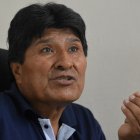
Evo Morales, who aspired to run for a fourth term, has officially announced that he will stop his bid for the presidency following a court ruling that disqualified him. For more than a year, the indigenous leader has sought, even by force, to push for a place in the election.
Morales is now promoting a campaign for the null vote, which according to Ipsos-Ciesmori is supported by 14.6% of the electorate. Since October, he has been sheltering in the coca-growing area of Chapare, in the center of the country, from an arrest warrant for a case of child trafficking and rape, which he denies.
"I am sure that it is a change of cycle, that socialism is coming to an end and that the great democratic opposition is going to have simple majorities, absolute majorities and two-thirds to, in each case, achieve the radical change that Bolivia needs," assured vice presidential candidate Juan Pablo Velasco, running mate of former President Jorge "Tuto" Quiroga.
LATEST