LIVE | Netanyahu: US was not 'dragged' into war against Iran by Israel
The cost of gas soared 35% after the Iranian regime attacked a hub in Qatar, while a barrel of crude oil posted gains of up to 5%. Markets fear further impact after Trump threatened to strike Iranian energy hubs.

An F-18 fighter during Operation Epic Fury.
Energy once again became the focus of the Middle East conflict, not only because of the steady rise in prices but also because it resulted from direct attacks by both sides on key energy facilities in the region.
The response by Iran to Israel's strike on an Iranian gas field, the largest in the world, attacking gas and oil facilities in the region, has triggered alarms in the market about possible shortage issues and a brutal increase in prices, especially after threats by Donald Trump to strike Iran's energy hubs.
At the moment, gas has seen the most dramatic surge, shooting up its price by 35%. Oil prices have increased by around 10%, with Brent crude oil at $119.13 and West Texas International (WTI) at $98.81.
All times are Eastern Standard Time.
Netanyahu: US was not "dragged" into war by Israel
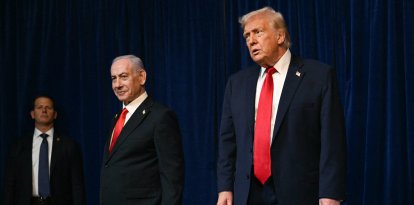
(AFP) Israeli Prime Minister Benjamin Netanyahu dismissed the claim that Israel dragged President Donald Trump into a war with Iran as "fake news."
"Does anyone really think that someone can tell President Trump what to do?" Netanyahu told reporters at a press conference.
FIFA fines Israel Football Association for “discrimination”
(AFP) On Thursday, FIFA’s Disciplinary Committee fined the Israel Football Association approximately $190,000 for "serious and repeated violations" of its obligations in the fight against discrimination.
The Israeli body "failed to take adequate action against persistent racist [behavior]," particularly in response to racist attitudes among Beitar Jerusalem fans, and "had not responded sufficiently to inflammatory and politici[z]ed public statements by football officials and clubs under its jurisdiction," FIFA explained in a statement.
Netanyahu claims Iran "can no longer enrich uranium"
The efforts of the U.S.-Israel alliance are paying off. This was stated by Israeli Prime Minister Benjamin Netanyahu, who said that Iran no longer has the capacity to enrich uranium, while asserting that the Islamist regime "is weaker than ever."
Iran is "weaker than its ever been," Netanyahu said during a press conference on Thursday. "Some will say that Israel is a global power."
"The Trump administration has no plan to implement restrictions on oil and gas exports"
Energy Secretary Chris Wright stated in a social media post that the Trump administration has no plans, at this time, to "implement restrictions on oil and gas exports."
Trump claims he asked Netanyahu to avoid attacking Iranian energy infrastructure
Trump said Thursday that he asked Israeli Prime Minister Benjamin Netanyahu not to attack gas fields in Iran again after Tehran struck energy facilities in Qatar.
"Yeah, I did, I did. I told him, 'Don't do that and he won't do that.' We didn't discuss, you know, we do independent, but get along great. It's coordinated. But on occasion he'll do something. And if I don't like it. And so we're not doing that anymore," Trump told reporters in the Oval Office, alongside the visiting Japanese prime minister.
When asked if he intends to deploy ground troops to Iran, Trump replied, "I'm not putting troops. We will do whatever is necessary to keep the price [of oil]."
U.S. WTI crude oil briefly rose 5% to above $100
The benchmark U.S. crude oil contract, West Texas Intermediate (WTI), briefly rose more than 5% on Thursday and topped $100 per barrel over fears of global supply problems due to war in the Middle East.
About 12:05 p.m. EST, WTI for April delivery was advancing 2.29%, to $98.53 per barrel, while North Sea Brent, the international benchmark, gained 2.01%, standing at $109.54 per barrel.
Washington approves over $16 billion in arms sales to Gulf nations
The United States announced Thursday the authorization of $16.46 million in arms sales to United Arab Emirates and Kuwait, two Gulf countries heavily affected by the war with Iran, the State Department reported.
Since Washington and Israel launched their offensive against Tehran on Feb. 28, Iran has responded with missile and drone launches against its Gulf neighbors, forcing them to commit significant military resources to repel the attacks.
Iranian foreign minister warns there will be no "restraint" if there are further attacks on its energy infrastructure
Iranian Foreign Minister Abbas Araghchi warned Thursday that Iran will show no "moderation" if there are further attacks on its energy infrastructure.
"Our response to Israel's attack on our infrastructure employed [a] FRACTION of our power," Araghchi said on X, adding, "ZERO restraint if our infrastructures are struck again."
ECB warns of a possible inflationary rebound due to the war
The European Central Bank (ECB) kept interest rates at 2% after its meeting on Thursday, despite warning that rising energy prices caused by the war in the Middle East "will have a significant impact on inflation," AFP reported.
The eurozone's central bank cut its growth forecast for 2026 to 0.9%, down from 1.2% estimated in December. Even so, and in line with analysts' expectations, it kept the benchmark interest rate at 2% for the sixth consecutive time.
The ECB stressed that the war in the Middle East "has made the outlook significantly more uncertain," with the risk of higher inflation and slower economic growth.
Also, the European Central Bank's board of governors stated that it is determined to "ensure that inflation stabili[z]es at its 2% target in the medium term."
Six countries say they are ready to "contribute" to security in the Strait of Hormuz
Germany, the United Kingdom, France, Italy, Japan and the Netherlands condemned Thursday recent Iranian reprisals against energy infrastructure in the Gulf, and said they were "willing to contribute" to security in the Strait of Hormuz, de facto closed by Tehran, AFP reported.
"We call for an immediate comprehensive moratorium on attacks on civilian infrastructure, including oil and gas installations," the six countries said in a joint statement.
"We express our readiness to contribute to appropriate efforts to ensure safe passage through the Strait," the countries added.
Under normal conditions, about 20% of the oil and liquefied natural gas consumed in the world transits through the strait.
Wall Street opens down due to fears of escalation in Middle East
The New York Stock Exchange opened lower on Thursday, weighed down by concerns over fresh attacks on energy infrastructure in the Middle East, which have pushed oil prices higher and rekindled inflation fears.
In the first minutes of trading, the Dow Jones was down 0.76%, Nasdaq was down 1.10% and the S&P 500 had lost 0.83%.
U.S. may lift sanctions on Iranian oil that had already been shipped, Treasury says
U.S. Treasury Secretary Scott Bessent said Thursday that Washington could lift sanctions on Iranian oil that is already loaded and sailing, amidst soaring energy prices due to the war in the Middle East.
Bessent's statements to Fox Business came after a new rise in oil and gas prices following Iran's attack on the world's largest liquefied natural gas plant, located in Qatar, and its threats to destroy regional energy infrastructure.
Bessent added in the interview that the government is also studying releasing more crude from its strategic reserves.
U.N. Secretary General tells U.S. and Israel that "it’s high time to end this war"
U.N. Secretary-General Antonio Guterres on Thursday called on the United States and Israel to stop their war with Iran before it gets out of control, warning of "potentially tragic consequences" for civilians and the global economy, AFP reported.
"To the United States and to Israel: it's high time to end this war that is risking to get completely out of control," Guterres told reporters at an E.U. summit in Brussels. "To Iran, stop attacking your neighbours. They were never parties to the conflict," he added.
Hegseth: "There is no definite deadline" for the end of the war with Iran
U.S. War Secretary Pete Hegseth said Wednesday that there is no "definitive deadline" for concluding the offensive that the United States and Israel have been conducting against Iran for the past three weeks.
"Well, we wouldn’t want to set a definitive time frame on that," Hegseth told reporters. "But as we’ve said, we’re on plan," and it will be up to President Donald Trump to decide when to stop the operation, he added.
"It will be at the president's choosing, ultimately, where we say, 'Hey, we've achieved what we need to on behalf of the American people to ensure our security,'"
Hegseth also referred to a report that claimed the Pentagon had asked Congress for more than $200 billion extra to fund the conflict.
The war secretary said that figure "could change," adding, "It takes money to kill the bad guys."
"We're going back to Congress and our folks there to ensure that we're properly funded," he added.
Iranian MPs propose tolls for navigation through the Strait of Hormuz:
Several Iranian lawmakers have proposed a plan to impose tolls and taxes on ships passing through the strategic Strait of Hormuz, local media reported.
The officials have said that the conditions for navigation through the waterway will not return to what they were before the Middle East war began with the U.S.-Israeli attacks on Iran on Feb. 28.
"We in the parliament are working out a plan according to which countries will pay tolls and taxes to the Islamic Republic if the Strait of Hormuz is used as a safe route for transit, energy and food security," Tehran lawmaker Somayeh Rafiei was quoted as saying by ISNA news agency.
"The strait's security will be established with strength, authority and greatness by the Islamic Republic of Iran, and countries will have to pay a tax in return," he said.
Macron calls attacks on energy centers in Middle East a "reckless escalation" and urges Iran and U.S. to open negotiations
French President Emmanuel Macron warned Thursday of a "reckless escalation" as Iran struck a series of Gulf energy sites following an Israeli attack on its South Pars gas field.
Speaking upon his arrival at E.U. talks in Brussels, Macron warned that if Middle East energy "production capacities themselves are destroyed, this war will have a much more lasting impact," calling for "direct talks between the Americans and Iranians on this issue."
Saudi Arabia doesn't rule out military action against Iran
Saudi Arabia is not ruling out military action in response to repeated Iranian missile and drone attacks, Foreign Minister Prince Faisal bin Farhan said.
"We have reserved the right to take military action if deemed necessary," he warned.
Energy prices soar after attacks on energy hubs in Middle East
The price of gas soared by 35% and that of oil by around 5% following attacks by both sides on energy centers in the Middle East.
After the close of Asian stock markets and the first trades on European markets, gas has seen the most spectacular rise. As for crude oil, a barrel of Brent is paid at $119.13 and West Texas International (WTI) at $98.81..
Drone crashes into a Saudi oil refinery in the Red Sea port of Yanbu
Adrone crashed into the Saudi Samref oil refinery in the industrial zone of the port of Yanbu, in the Red Sea, the Defense Ministry reported, adding that a damage assessment was underway.
On Thursday morning, the ministry announced on X thatit had intercepted a ballistic missile targeted at the port.
The Samref refinery is owned by Saudi state energy giant Aramco and Mobil Yanbu Refining Company, a subsidiary of the U.S. company ExxonMobil.
Two refineries in Kuwait set ablaze in drone attacks
Two refineries of the Kuwaiti national oil company suffered fires after drone strikes, Kuwait's Information Ministry said Thursday.
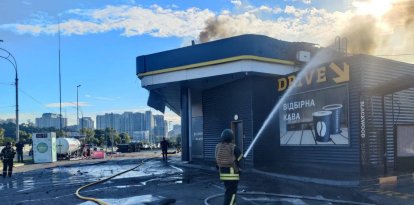
The first refinery hit was the Mina Al Ahmadi refinery, hit by a drone, which caused a fire.
Shortly after, another fire was declared as a result of a drone strike on "one of the operating units of the Mina Abdullah refinery, belonging to the Kuwait National Petroleum Company (KNPC)," said the ministry on Platform X.
Trump threatens to destroy Iran's gas fields after attacks on Qatar
Donald Trump threatened to destroy Iranian gas fields if Tehran continues its attacks on Qatar, the world's second-largest exporter of liquefied natural gas, in an escalation that sent oil prices soaring again on Thursday.
If Iran "recklessly decides to attack" Qatar, then the U.S., "with or without the aid and consent of Israel, will massively destroy the entire South Pars gas field," the U.S. president wrote on his Truth Social platform.
He also confirmed that Wednesday's attack on that Iranian field in the gulf was Israel's responsibility and that the United States had "no knowledge" of that action.
World
Trump says US was not informed of Israeli strike on Iran's gas field, warns Tehran after Qatar retaliation
Emmanuel Alejandro Rondón
Iran will "boycott the United States," but "not the World Cup"
Iran will "boycott the United States," but "not the World Cup" Iranian soccer federation president Mehdi Taj said Wednesday.
According to the program, Iran must play the group stage matches in the United States, but is now studying the possibility of moving those matches to Mexico.
"We will prepare for the World Cup. We will boycott the United States, but not the World Cup," Taj said Wednesday in a video published by the Fars news agency.
Qatar claims damage from Iranian attack on its gas facility was 'considerable'
Qatar's state-owned energy company claimed that Iran's Thursday missile attacks on the Gulf country's main gas facility caused "considerable" damage.
Qatar Energy said in a statement that several of its liquefied natural gas (LNG) facilities "were targeted by missile attacks, causing large fires and considerable damage" following an earlier attack.
The company said Wednesday's attack on Ras Laffan Industrial City had caused considerable damage to the plant. The Qatari civil defense controlled two of the three fires set by the missiles, said the Interior Ministry, which reported no casualties from the missiles.
Three women and one foreign worker killed in West Bank and Israel by Iranian missiles
Three women were killed by falling Iranian missile debris in a Palestinian town in the West Bank, medical services reported Thursday, shortly after the Israeli military reported Iranian shells were fired.
Meanwhile, a foreign worker was killed by Iranian missile fire into Israel.
Everything that's happened in the Middle East war so far, here

LATEST