ANALYSIS
Persecution in Colombia: After a manipulated and biased trial, former President Uribe is convicted in alleged witness bribery case
The verdict represents the first time a former Colombian president has been criminally convicted, although there is still a legal road ahead.

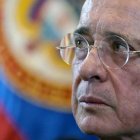
Álvaro Uribe in 2023.

In a decision that marks a before-and-after in Colombian politics, Bogota's 44th criminal judge, Sandra Liliana Heredia, declared former President Álvaro Uribe Vélez guilty of the crimes of procedural fraud and bribery in criminal proceedings and acquitted him of the charge of simple bribery on Monday, July 28. The ruling, issued after more than nine hours of hearing, set off alarms among conservative sectors that consider it a maneuver promoted by the left to weaken the main symbol of the fight against terrorism in Colombia.
The Democratic Center and its allied sectors have denounced the process against Álvaro Uribe as being marred by irregularities, driven by political motivations, and intended to tarnish his image, thereby turning the judicial system into an instrument of persecution. The defense of the former president maintains that ideological interests influence the judge's decision more than conclusive evidence.
The judicial process has not yet ended. The judge's decision corresponds to the first instance and must be reviewed by the Supreme Court of Bogotá. However, if this second ruling is not issued before October 16, the case could be time-barred, meaning it would be annulled due to the expiration of the statute of limitations. According to the judge, Uribe sought to alter the testimonies of former paramilitaries Juan Guillermo Monsalve and Carlos Enrique Vélez, through lawyer Diego Cadena and with the collaboration of other intermediaries such as Enrique Pardo Hasche.
A trial with political origins
The case began in 2012, when former President Álvaro Uribe denounced Senator Iván Cepeda, a leftist figure from the Polo Democrático Alternativo party. Uribe accused him of manipulating witnesses to link him to paramilitary groups. However, the Supreme Court not only dismissed that accusation but also initiated proceedings against Uribe himself. Thus began a lengthy judicial battle that has been ongoing for more than ten years.
According to the Attorney General's Office, in 2018, Uribe allegedly sent his lawyer, Diego Cadena, to La Picota prison to persuade former paramilitary leader Juan Guillermo Monsalve to alter his testimony, stating that the former president had no ties to paramilitarism, in exchange for legal benefits. The defense, on the other hand, maintains that it was Monsalve himself who wanted to recant and that Cadena only heard his new version. Cadena is currently facing another trial for the same facts.
One of the main pieces of evidence in the case are telephone calls that were intercepted by mistake. Magistrate Jorge Luis Barceló had ordered a wiretap on another line, but ended up listening to conversations of the former president. Although this evidence was obtained irregularly, the judge decided to accept it in the trial.
“Case manipulation” and defense of due process
The Democratic Center party, founded by Uribe, lamented the court ruling and reiterated its support for the innocence of former President Uribe. It stated that, while it will respectfully comply with the ruling, it will be appealed before the Superior Court of Bogotá and may even be taken to other instances such as the Criminal Cassation Chamber of the Supreme Court.
“We remind you that this is not a final decision. As long as there are pending legal remedies, former President Uribe fully retains his presumption of innocence,” the statement said.
Reactions: From accusations of revenge to calls to the street
Senator and presidential pre-candidate María Fernanda Cabal called the ruling "the ruling of infamy" and denounced that the process was used as a political platform. "It was a monument to judicial arbitrariness and the politicization of justice," she affirmed, indicating that they will go to higher instances.
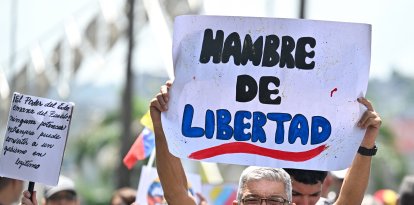
Abelardo de la Espriella, also a presidential aspirant, openly called for social mobilization. "The frame-up is consummated, but they will not be able to get rid of the symbol. EVERYONE ON THE STREETS! INNOCENT URIBE!" he said in a statement that has had a strong echo among his followers.
Other political leaders, such as Paola Holguín and Daniel Briceño, criticized what they consider a double standard in the evaluation of the testimonies and an evident sympathy of the judge for Cepeda, whom they described as a political beneficiary of the process.
Congressman Miguel Polo Polo was even more direct: "The left tried to assassinate with two shots in the head the most voted senator in Colombia; it has ruined the country, and now it condemns the president who was on the verge of ending the guerrilla movement. This shows that the left should not be given an inch,” he wrote.
Reaction from the United States: “We will not turn a blind eye to injustice.”
The ruling also sparked reactions outside Colombia. US Senator Rick Scott posted a message on social media expressing his support for Uribe:
“@AlvaroUribeVel has always been a leading voice for freedom in Colombia & across Latin America. The political persecution and brutal attacks under Petro’s socialist regime are unacceptable. They won’t silence the fight for freedom. The U.S. stands with the people of Colombia and will not turn a blind eye to injustice."
The future of Uribe and the Colombian right wing
LATEST