Mojtaba Khamenei could be dead or seriously injured: Iran's top regime leaders are considering fleeing to Russia
Mojtaba Khamenei was appointed successor after his father's death, but his leadership never really took hold.
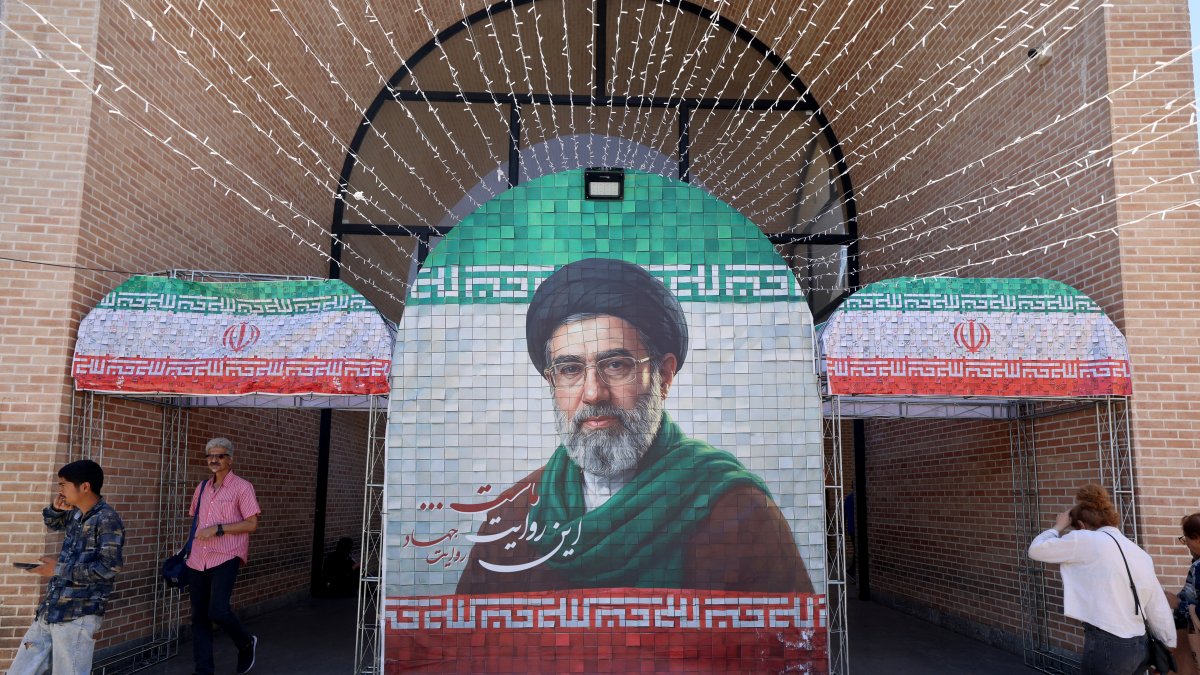
A mural of Ayatollah Mojtaba Khamenei at a Tehran subway station.

The stability of the Iranian regime is at its most critical point since the death of Ayatollah Ali Khamenei earlier this year. Uncertainty surrounds not only the power vacuum, but also the fate of his son and designated successor, Mojtaba Khamenei.
According to intelligence sources and experts in the region, Mojtaba may have passed away or be in such poor health that he is unable to exercise command, which has plunged the theocracy into an unprecedented succession crisis.
Analyst Saeid Golkar, a senior adviser to United Against Nuclear Iran, noted in an exclusive interview with Fox News that Mojtaba's absence from recent negotiations and the lack of evidence of life are alarming signs for the continuity of the system.
The disappearance of the heir occurs in the midst of Operation Epic Fury, the U.S.-Israeli offensive that has hit the nerve centers of power in Tehran.
The silence of the heir and the power vacuum.
Mojtaba Khamenei was named successor after the death of his father, but his leadership was never consolidated. Reports indicate that he was severely injured during attacks on the regime's command infrastructures. "Mojtaba is either dead or in such bad shape that he cannot even send a voice or video message," Golkar explained.
This situation leaves the Iranian state without a natural successor. For the theocratic system, Mojtaba represented the ideological and familial continuity of the Islamic Revolution. His inability to lead casts doubt on the survival of the "Bayt-e Rahbari," the invisible state or house of the leader, originally designed to endure even after the removal of its visible figures.

Although the regime was structured to survive the "decapitation" of its leadership, the simultaneous loss of the Ayatollah and his heir has generated deep fractures in the armed forces and the Revolutionary Guard (IRGC).
The lack of a clear head impedes decision-making at a time when international pressure and external military operations are at their peak.
An escape to Russia?
In the face of possible collapse, various sources suggest that the top leadership in Tehran is already evaluating exit strategies similar to that of former Syrian President Bashar al-Assad in 2024.
Analyst Saeid Golkar warned that senior figures, such as current parliament speaker Mohammad-Bagher Ghalibaf, might be seeking refuge in Moscow to try to coordinate an insurgency from abroad.
"If the situation deteriorates further, some senior figures might follow the path of Bashar al-Assad's inner circle and seek refuge in Russia," Golkar remarked to Fox News.

While the top commanders would look to Russia, the lower ranks might try to hide in Iraq or Afghanistan, using the operational networks that the Revolutionary Guard maintains in those countries.
This possibility of flight coincides with statements by Israeli Prime Minister Benjamin Netanyahu, who in an interview with CBS's 60 Minutes, called the fall of the Iranian regime a "realistic" outcome.
Netanyahu stressed that the collapse of Tehran would dismantle the "scaffolding" of terrorism that Iran has built in the region, ending the influence of groups such as Hezbollah.

LATEST