Summit in Chile: the left exhibits grandiloquent speeches and complicit silences
The content of the meeting hinted at a coordinated strategy to question, without directly mentioning him, President Donald Trump and his policies.
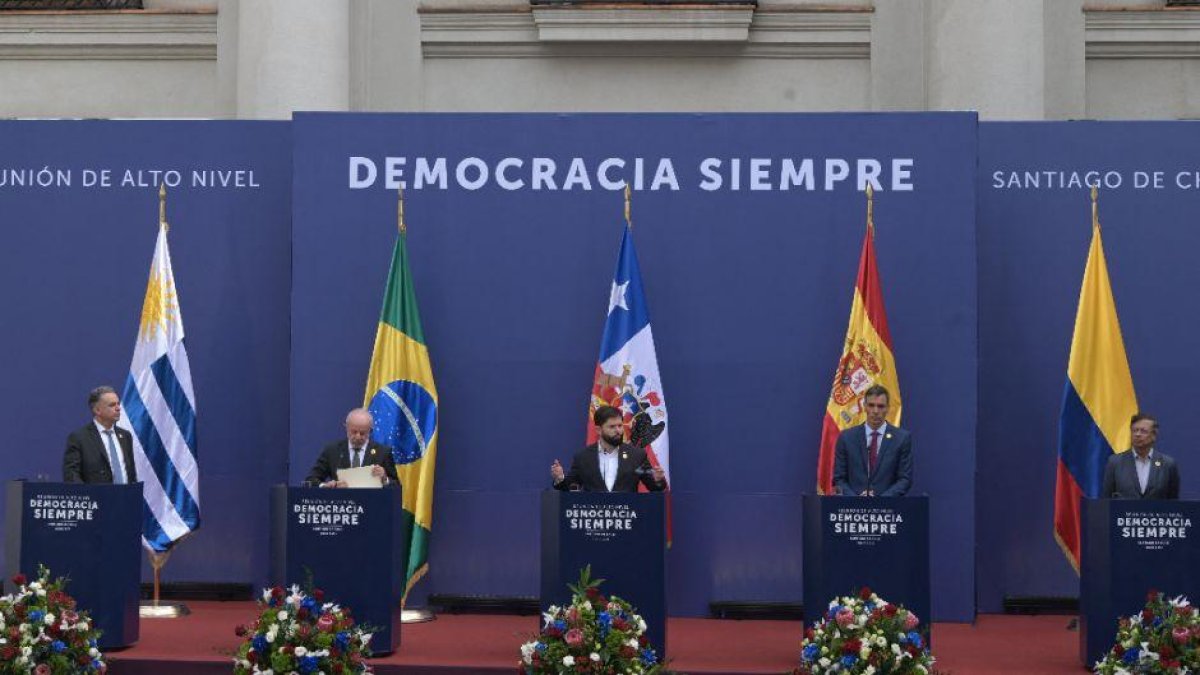
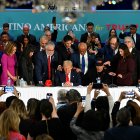
The "Democracy Always" summit at the Palacio de la Moneda in Chile.

In a summit marked by indirect finger-pointing at the United States, leaders of left-wing governments from South America and Spain met this Monday in Santiago de Chile with the declared objective of "defending democracy." However, the content of the meeting hinted at a coordinated strategy to question, without directly mentioning him, President Donald Trump and his policies in defense of U.S. economic sovereignty and interests.
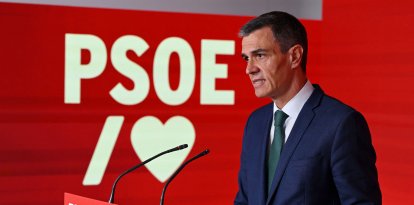
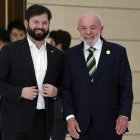
The meeting, titled "Democracy Always," was convened by Chilean President Gabriel Boric and included the participation of Luiz Inácio Lula da Silva (Brazil), Gustavo Petro (Colombia), Yamandú Orsi (Uruguay), and Spanish Prime Minister Pedro Sánchez.
Although Trump was not explicitly named, the context and references pointed to him. The summit coincided with a moment of friction between the U.S. Administration and several of the attendees. In particular, Lula denounced "unacceptable blackmail" after Trump warned of possible 50% tariffs on Brazil in response to what he called a "witch hunt" against his ally, former President Jair Bolsonaro, currently on trial for allegedly plotting a coup.
Grandiloquent rhetoric
During the opening of the event, Boric warned about the "advance of extremism" and "democratic deterioration" globally. In the final declaration, the leaders asserted that the world is living through a period of "profound uncertainty" and that it is necessary to strengthen institutions in the face of threats such as disinformation, hatred, and inequality.
However, the communiqué avoided any mention of the serious restrictions on freedom in allied regimes such as Cuba or Venezuela and omitted any reference to the internal questions faced by several of the signatory governments for weakening the rule of law, persecuting the opposition, or concentrating power.
Ideological proposals with international ambition
Among the commitments announced during the summit, the leaders proposed the creation of a network of like-minded think tanks, as well as the promotion of digital governance based on so-called "algorithmic transparency." They also proposed the promotion of an "alternative narrative" in the face of alleged "democratic regression," the establishment of a youth observatory aimed at "combating extremism," and support for progressive global taxation.
Although cloaked in technical and aspirational language, these proposals are eminently discursive in nature and largely lacking in practical feasibility.
Revealing silences
A summit without dissenting voices
Although presented as a forum in defense of democracy, the summit did not include representatives of other political currents, nor did it promote a pluralistic dialogue. The only guests mentioned—Mexican president-elect Claudia Sheinbaum, British Labour's Keir Starmer, and Canadian Mark Carney—also came from the same ideological spectrum. None attended.
Political analyst Michael Shifter warned that such meetings could be seen in the United States as a hostile signal to Washington. Many of the participating governments have a complicated relationship with the fundamental pillars of the Western democratic order: freedom of the press, free markets, and institutional independence.
Criticism in social networks
The meeting also generated strong questioning in social networks, where numerous users pointed out that, far from promoting a real strengthening of democracy, the summit seemed to be aimed at providing political legitimacy to governments facing serious credibility crises in their own countries.
LATEST