US sanctions and withdraws visa from Brazilian judge Alexandre de Moraes and his family for "persecution" of Bolsonaro
The State Department also took aim at censorship targeting U.S. citizens and companies.

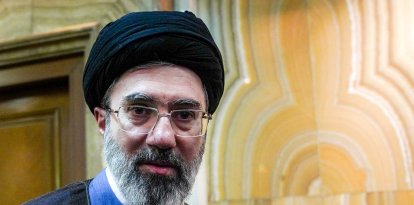
Brazil's leading Supreme Court justice Alexandre de Moraes

Secretary of State Marco Rubio announced Friday that the U.S. sanctioned and immediately revoked the visa of Brazil's controversial Supreme Federal Court (STF) Justice Alexandre de Moraes, targeted by the Trump Administration for leading a system of censorship and persecution against political dissent in Brazil as well as US citizens and companies.
Rubio reported that, in addition to the magistrate, the visas of his family members and "allies on the court" were also revoked. It was unclear who the secretary of state referred to as direct allies of Judge de Moraes.
"@POTUS made clear that his administration will hold accountable foreign nationals who are responsible for censorship of protected expression in the United States," Rubio wrote in a statement posted on 'X'. "Brazilian Supreme Federal Court Justice Alexandre de Moraes's political witch hunt against Jair Bolsonaro created a persecution and censorship complex so sweeping that it not only violates basic rights of Brazilians, but also extends beyond Brazil's shores to target Americans."
.@POTUS made clear that his administration will hold accountable foreign nationals who are responsible for censorship of protected expression in the United States. Brazilian Supreme Federal Court Justice Alexandre de Moraes's political witch hunt against Jair Bolsonaro created a…
— Secretary Marco Rubio (@SecRubio) July 18, 2025
The decision comes at a high point in relations between Washington and Brasilia, after the STF imposed new precautionary measures against former conservative president Jair Bolsonaro, an international Trump ally who is currently on trial for his alleged involvement in a coup d'état.
According to the Brazilian press, the restrictions dictated by the court oblige Bolsonaro to wear an electronic anklet and remain contactable for 24 hours, without permission to leave the country. Likewise, the measure prohibits the former president from accessing social networks or maintaining contact with diplomats or co-defendants.
Bolsonaro, leader of the Brazilian Liberal Party (PL) and emblematic figure of the Hispanic right, denounced that the measures against him are part of a broad political persecution.
Recently, the Brazilian Federal Police raided his home in Brasília and the PL headquarters, as part of the investigation led by Judge de Moraes.
Politics
Trump insiste en que Brasil "cambie de rumbo" y Lula contraataca: "Chantaje inaceptable"
Diane Hernández

President Trump himself has openly criticized the judicial process against Bolsonaro, whom he called an honest leader.
Last week, defending his ally, the U.S. president imposed an additional harsh 50% tariff on Brazilian imports. He also criticized Judge de Moraes and the government of leftist Lula da Silva for attacking U.S. tech companies.
"I have seen the terrible treatment you are receiving at the hands of an unjust system that has turned against you. This trial must end immediately!" said Trump in an open letter. "I have strongly expressed my disapproval, both publicly and through our tariff policy."
In contrast, socialist President Lula responded strongly to Trump's comments, calling them "unacceptable blackmail"and demanding respect for the Brazilian Judiciary. However, despite raising his tone, Lula also said he is ready to continue the dialogue with Washington to reach a tariff agreement.
Beyond the political dispute between Washington and Brazil, the sanctions against Alexandre de Moraes represent a historic moment for Brazilian conservative and dissident leaders, who have been denouncing for years the high court's outrages against freedom of expression.
Apropos the sanction, renowned American author Michael Shellenberger, who has closely investigated censorship cases in Brazil by the SFT, revealed that, two months earlier, Judge de Moraes had told his allies that the Trump Administration would not take action against him when Secretary Rubio announced new visa restrictions for foreign officials who censor Americans on the Internet.
His prognosis was clearly misguided.
A Trump Administration official explained to Shellenberger that the revocation of the visas is largely because senior government officials and the Brazilian elite are known to travel constantly to U.S. cities such as New York, Miami and San Francisco. As a result, Washington considers the travel restrictions to function as a useful punishment.
LATEST