USS Gerald R. Ford returns home after 11-month deployment: Participated in war against Iran and capture of Maduro
Secretary of War Pete Hegseth was at the reception and came on deck to address the crew.
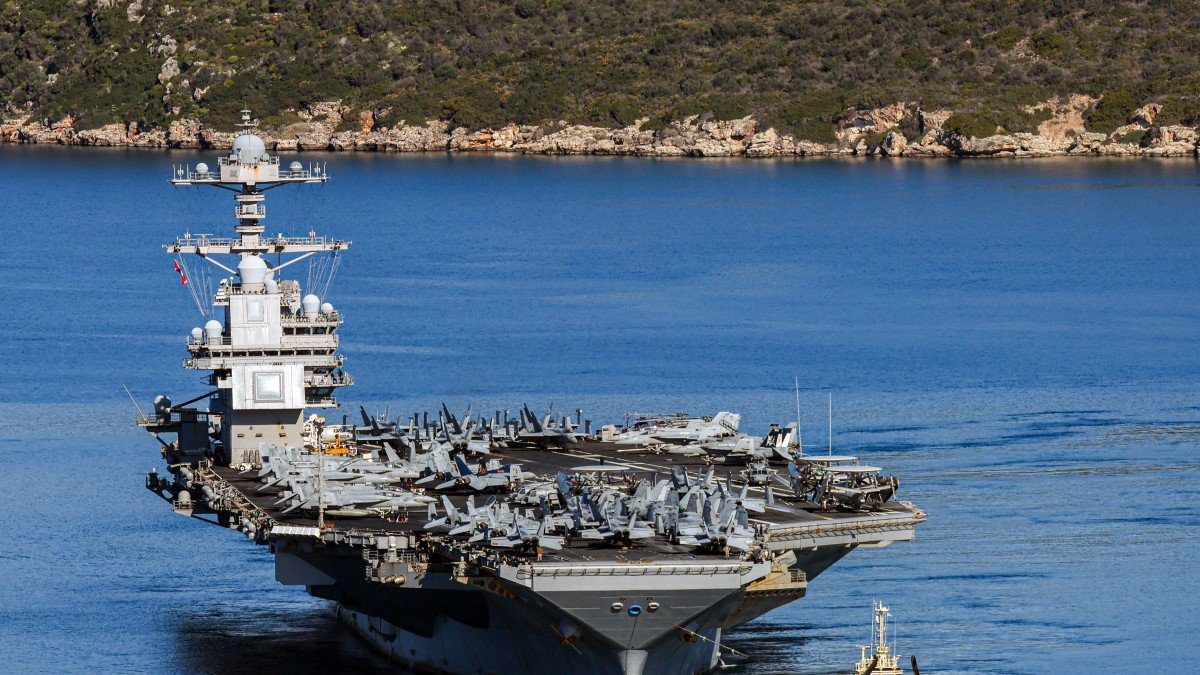
Navy aircraft carrier USS Gerald R. Ford departs Souda Bay on the island of Crete

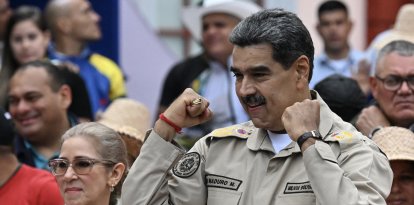
After nearly a year away from home, aircraft carrier USS Gerald R. Ford returned Saturday to its home base in Virginia. Its 5,000 crew members stepped ashore for the first time since June of last year, the close of an 11-month deployment that the U.S. Navy hasn't seen since the 1970s and that left the flagship at the center of two of the most significant military operations of the past year: the war against Iran and the capture of former Venezuelan dictator Nicolás Maduro on Jan. 3, after several months of counter-narcotics operations in the Caribbean Sea.
The Ford, considered the largest and most technologically advanced aircraft carrier in the world, docked at Norfolk Naval Station accompanied by the destroyers USS Bainbridge and USS Mahan. Waiting at the dock were hundreds of families, many with signs and flags, in a scene common to naval returns.
Secretary of War Pete Hegseth was at the reception and came on deck to address the crews.
“You didn’t just accomplish a mission, you made history,” said the head of the Pentagon. “You made a nation proud.”
World
US sends more than 10,000 troops to the Middle East as Trump presses Iran to accept peace deal
Emmanuel Alejandro Rondón

World
Trump Administration carries out new attacks on drug trafficking vessels in the Pacific
Luis Francisco Orozco
According to U.S. Naval Institute News, the Ford's 326 days at sea is the longest deployment by a U.S. aircraft carrier in the past 50 years, surpassed only by two Vietnam-era missions: the USS Midway in 1973 (332 days) and the USS Coral Sea in 1965 (329 days). The case of the USS Nimitz, which totaled 341 days between 2020 and 2021, is usually excluded from the comparison because it included long periods of isolation ashore due to the COVID-19 pandemic.
The Ford's tour was as extensive as it was varied. It sailed from Virginia in June bound for the Mediterranean, but in October was redirected to the Caribbean as part of the largest U.S. naval deployment to the region in decades. From there it participated in the January military operation that ended with the arrest of Maduro and his wife, Cilia Flores, and their transfer to New York to face drug trafficking and terrorism charges. A few weeks later, the ship changed course again, heading for the Suez Canal, entering the Red Sea and eventually joining the early days of the war against Iran.
The voyage was not without setbacks. A fire in one of the laundry areas—unrelated to enemy action—left hundreds of crew members with no place to sleep and forced lengthy repairs on the Greek island of Crete. The episode, along with the unusual length of the deployment, has reopened debate within the Navy about the physical and emotional toll these missions impose on crews as well as the accelerated deterioration of ships and their systems.
LATEST