Inside Gianni Infantino's controversial plan to sell a stake in the World Cup
These are the players on this geopolitical chessboard: FIFA vs. UEFA, each with its own allies and waiting for other key players to take a stand—such as the other federations, including the influential CONMEBOL, and the White House itself, as there is a direct link between Thrive Eternal and one of the diplomatic figures closest to President Trump.
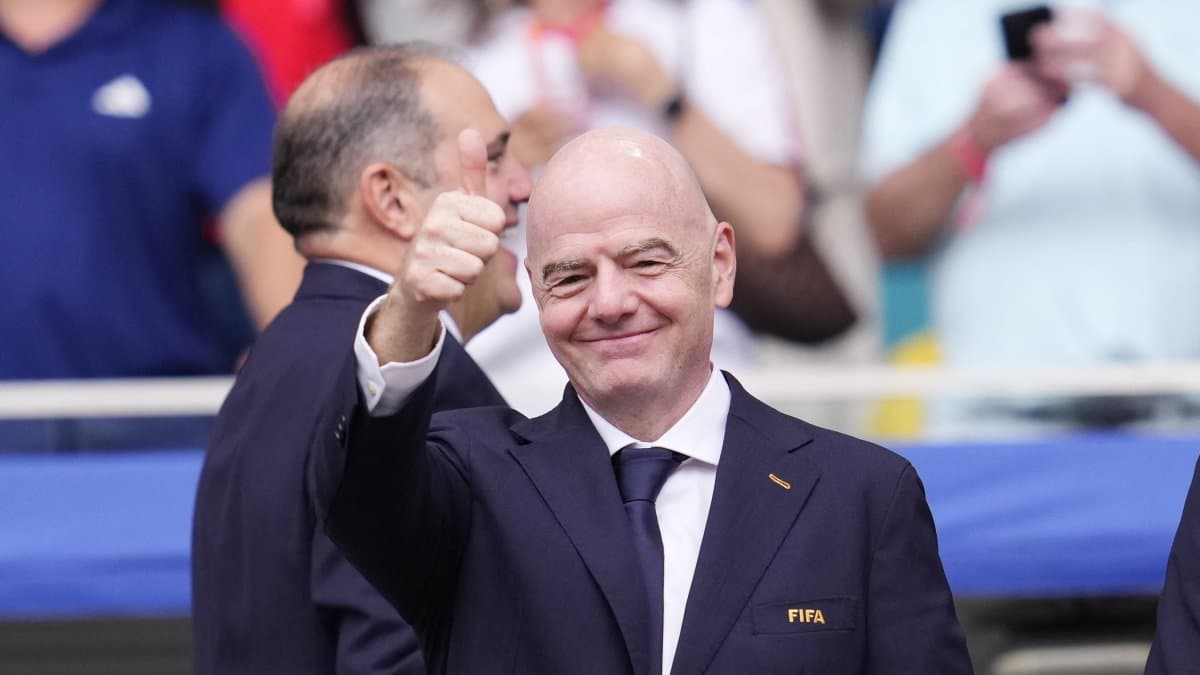

The geopolitics in soccer has reached unimaginable levels. Following a World Cup rife with media conflict, noise, criticism, and massive controversies (many stemming from legitimate allegations and others from misinformation), FIFA announced its umpteenth plan to increase revenue exponentially, embrace a more commercial approach to the sport, and shift the governance paradigm of the world's most popular sport: selling a minority stake in the FIFA World Cup and the Club World Cup to a subsidiary, FIFA Forward Enterprise (FFE), with the primary objective, according to the official statement, to triple the amount of development funds it distributes among its 211 member associations.
Following an exclusive report by the British newspaper The Times revealing Gianni Infantino's plan, FIFA issued a hastily prepared statement to the public in which it partially clarified the proposal to be sent to the organization's 211 member associations.
One of the most important details is the pledge of funding for the development of soccer worldwide, as it promises "20 million dollars optional per MA in exceptional and immediate funding for special projects through the new FIFA Fast Forward Programme (FFFP)," a figure that would increase, since that money would be for the 2027–2030 cycle, for which the allocated budget is $8 million, followed by "22 million dollars per MA for the 2031-2034 cycle; and 24 million dollars per MA for the 2035-2038 cycle."
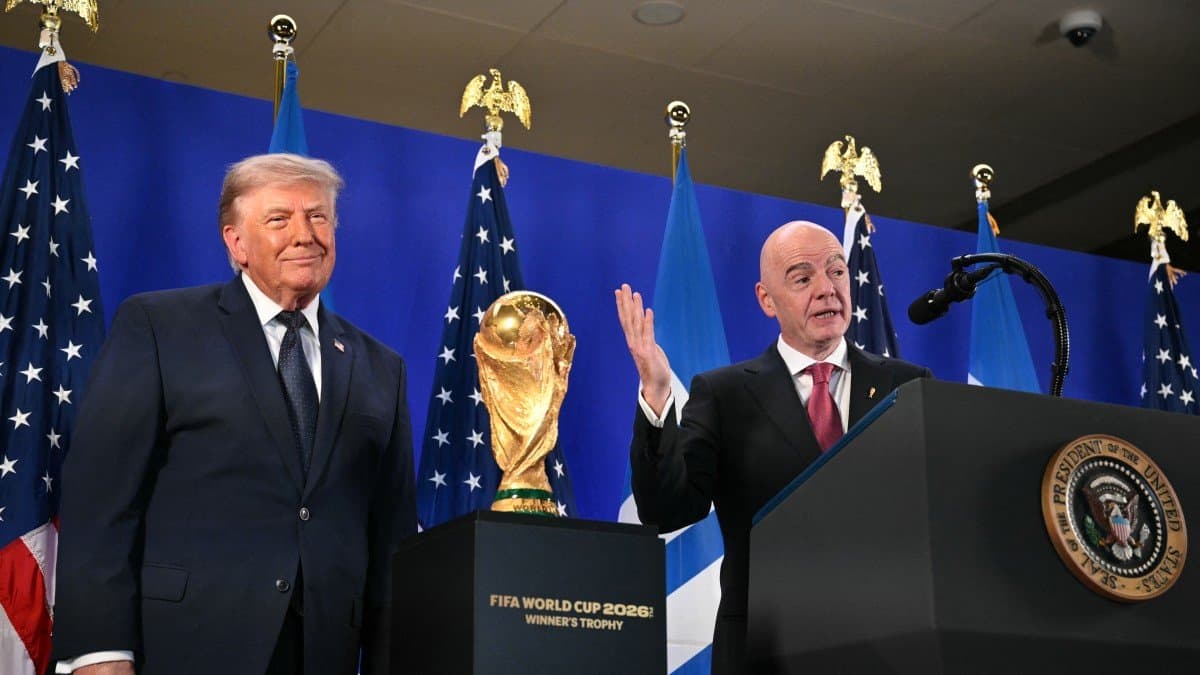
"FFE would raise up to USD 4.2 billion later this year to fund FFFP, based on an initial equity valuation of USD 20 billion, by carefully selecting long-term investors who will purchase minority, non-controlling interests in FFE. All net benefits of FFE will be reinvested back into football worldwide," reads the press release, which details two key players in the project: the global bank JPMorgan, hired by FIFA as a consultant, and the company Thrive Eternal, which is set to lead the "proposed investor group for the FFE." Thrive Eternal is a long-term investment vehicle created by Joshua Kushner, brother of Jared Kushner, son-in-law and diplomatic confidant of President Donald Trump, who has a very close relationship with Infantino.
But the statement, far from clearing up doubts, has only generated even more tension. While FIFA clarifies in its official statement that it will continue to have "sole control of FFE and exclusive authority over football governance, competitions, match calendar, and all regulatory and sporting decisions," UEFA has already sounded the alarm and has effectively declared war on the proposal.
"This crosses a line that football's governing institutions should never cross. UEFA takes it extremely seriously. So should every National Football Association. So should every stakeholder: leagues, clubs, players, supporters, governments and everyone who cares about the future of the game," the response reads. "The soul and governance of football are not assets to trade — especially with zero transparency as to who gains financially. None of us are the owners of football. It is not FIFA's to sell."
In addition to the official stance, sources familiar with the situation told the media that UEFA is prepared to boycott FIFA's international tournaments if the investment plan goes ahead, a sign of just how far the European soccer association is willing to go in this war for power and influence.
The situation has even spilled over into the political arena, with the UK's Prime Minister, Andy Burnham, speaking out on the matter and harshly criticizing Infantino's plan: "Let me be very direct about this. Football does not belong to investors. It belongs to the people who fill the stands and stand on the touchline week after week, rain or shine. The World Cup is not a product. It is the greatest competition in world sport, and it was never anyone's to sell. Dress the deal up however you like. Once you have sold a piece of it, you have sold out. Football belongs to the fans. It always has, and it always will."
Let me say this very directly.
Football does not belong to investors. It belongs to the people who fill the stands and who stand on the touchline week in, week out, rain or shine.
The World Cup is not a product. It is the greatest competition in world sport, and it was never…
These are the players on this geopolitical chessboard: FIFA vs. UEFA, each with its own allies and waiting for other key players to take their positions—such as the other federations, including the influential CONMEBOL, and the White House itself, as there is a direct relationship between Thrive Eternal and one of the diplomatic figures closest to President Trump. However, according to a source cited by Reuters, the U.S. leader's son-in-law, Jared Kushner, is not a potential investor in the plan, so Washington's potential role, if any, remains to be seen.
Politics
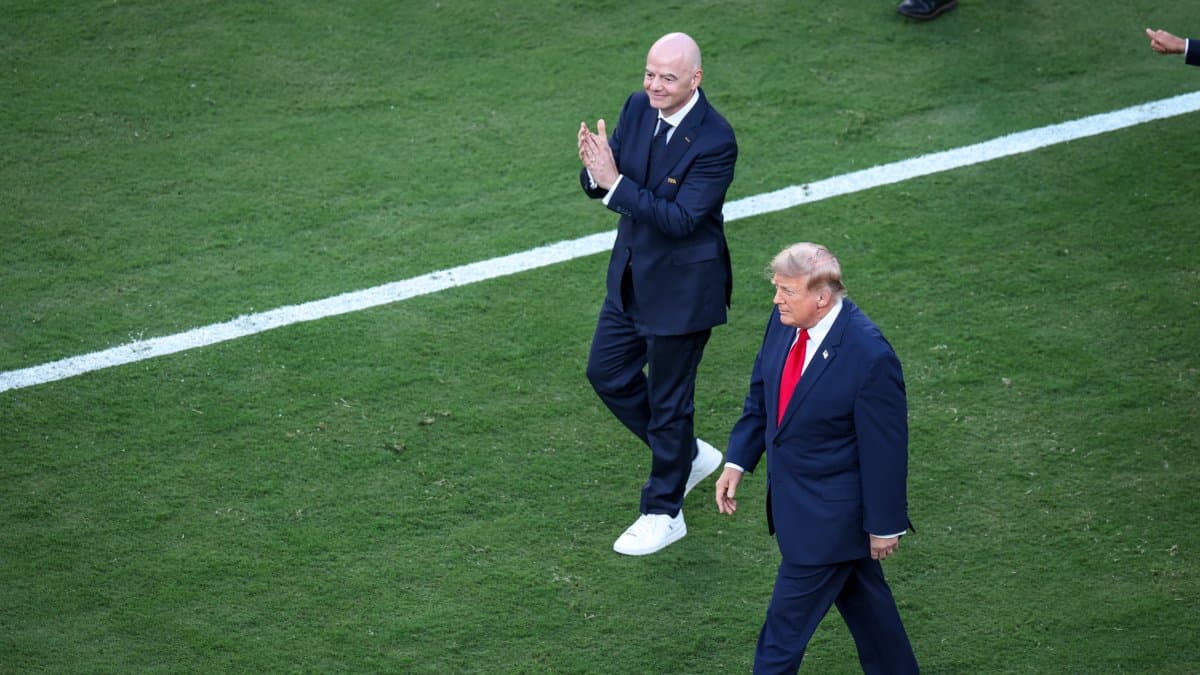
From FIFA to global diplomacy? Trump nominates FIFA President Gianni Infantino to lead the UN
Andrés Ignacio Henríquez
What would the role of a subsidiary company in the World Cup entail?
The key to the entire controversy lies in understanding exactly what the FIFA Forward Enterprise (FFE) is and what would change, in practice, if it were to see the light of day. Are we, perhaps, facing a privatized World Cup and the end of the sport as we know it? Well, on paper, it's not really about selling the World Cup itself, as many critics claim, but rather about transferring FIFA's entire commercial operation—broadcasting rights, sponsorships, ticket sales, licensing, and the operational management of the tournaments themselves—to a single business entity, also owned by FIFA, but with a minority stake held by private investors who stand to make a great, great deal of money. FIFA insists that, despite receiving private capital, it would retain majority control and exclusive authority over the schedule, competitions, and regulatory decisions.
But that is precisely where the fundamental debate begins, and where UEFA enters as a point of contention. For the European soccer association, "formal control" of FIFA is no guarantee of anything once private money seeks a return on investment within soccer's governing body. This aligns with the view of critics, who point out that no investor allocates billions of dollars without expecting something in return, and that something—which could be more matches, busier schedules, or more frequent tournaments, rarely comes through a vote on the board or by democratizing soccer, but rather seeps in gradually, through the very logic of how priorities are set and what is negotiated behind closed doors.
In short, for critics, it is not enough for FIFA to say that it retains the final say on paper, as that does not answer the question that concerns them most: who ultimately influences that final say.
Why does Infantino want to sell his most valuable asset, and why does UEFA oppose it, beyond simply "defending soccer?"
If FIFA is already one of the most profitable sports organizations on the planet, why does it need to bring private capital into the equation? Infantino's official response points to economic logic and the "democratization" of soccer. Basically, according to FIFA, the top priority is to triple development funds for the 211 member associations and ensure that this growth reaches "every corner of the world." However, behind the commercial logic lie politics and a power struggle. With FIFA becoming increasingly influential and powerful economically, and with much tighter schedules, the global governing body of soccer could challenge and isolate UEFA itself, which had already stood up to the new Club World Cup last year. This tournament expanded its field and enjoyed relative success despite criticism of the organization and the host country (the U.S.).
It is therefore no surprise that UEFA's rhetoric appeals to the "soul" of soccer and assets that "cannot be commercialized," although, deep down, there is much more at stake than the principles governing the world's most popular sport.
Relations between the two organizations have been, to put it mildly, quite strained for quite some time, and not just because of this proposal. Just a few weeks ago, during the World Cup itself, UEFA condemned Donald Trump's direct intervention in a disciplinary matter related to the tournament: following a phone call from the U.S. president to Infantino—which both admitted to—the red-card suspension was lifted, which should have ruled out U.S. forward Folarin Balogun from the Round of 16. The incident caused alarm and considerable annoyance among several European federations, which have also long questioned the expansion of the World Cup to 48 teams and the proposal to increase it to 64 teams by 2030. The controversy only died down because Belgium crushed the host U.S. 4-1.
This pent-up frustration has led various UEFA federations to consider challenging Infantino in the FIFA presidential election, scheduled for March 2027 in Rabat, Morocco. According to various reports, the potential candidates are UEFA President Aleksander Ceferin, Qatari Nasser Al-Khelaifi, president of PSG, and Dariusz Mioduski, owner of Legia Warsaw. What's interesting is that Infantino came to power in 2016 precisely with UEFA's backing, following the FIFA-Gate scandal that brought down Joseph Blatter and Michel Platini.
In this context, every new controversy involving Infantino—whether it's the Balogun case or now the sale of the FFE—also serves as political ammunition in that electoral battle. Of course, this does not invalidate the substantive arguments put forward by UEFA regarding governance and transparency, but it does require viewing them through the unmistakable lens of an organization that, in addition to defending principles, is fighting to remove its declared enemy from power.
🛠 Do you think there is an error in this article?
Recommendations

LATEST