Extreme heat hits Los Angeles: Up to 112°F, storms, and flood risk
Southern California's inland regions are facing temperatures nearing 44 °C, while authorities have issued warnings for heat stress, high fire risk, monsoon-style storms, and possible coastal flooding due to unusually high tides.
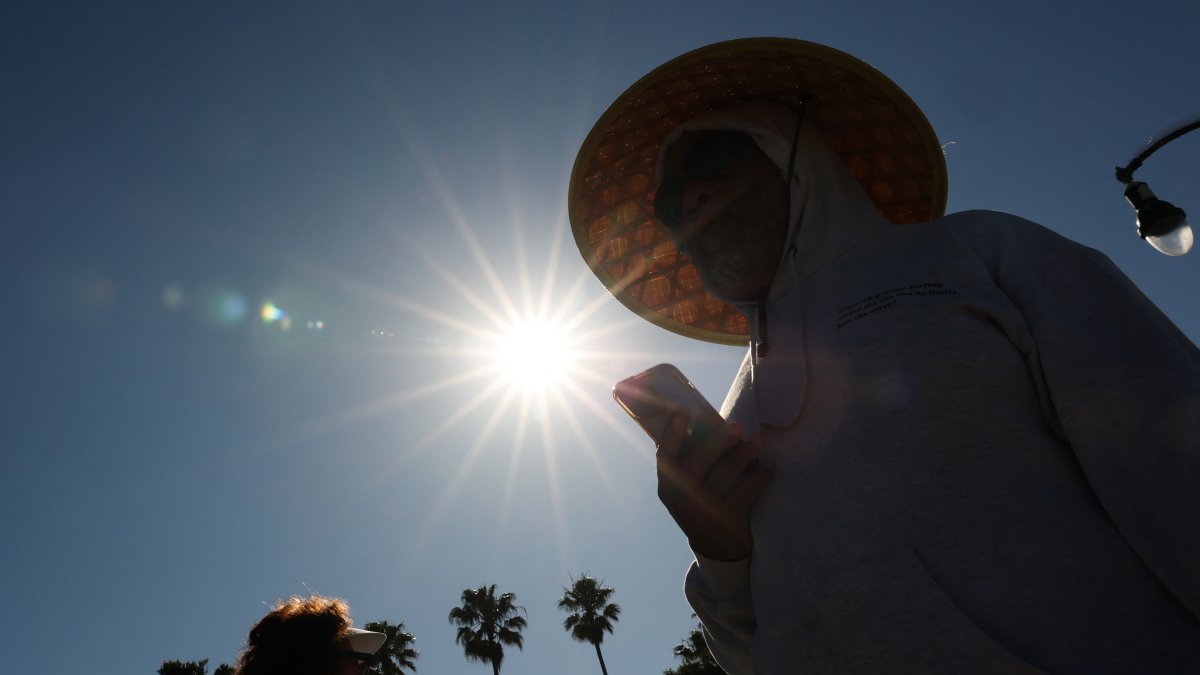
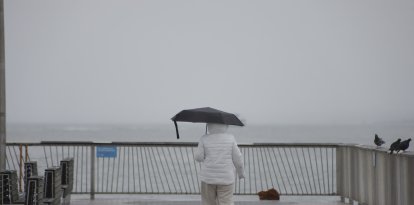
A person tries to shield themselves from the sun in California

Southern California is experiencing another spell of extreme heat that on Sunday pushed temperatures up to 112°F (44.4 °C) in some areas on Sunday and has kept warnings in effect for heat-related illnesses.
The heat wave is primarily affecting inland areas, while authorities are also monitoring a high risk of wildfires, the arrival of monsoon storms, and a series of high tides that could cause coastal flooding in various parts of the state over the next few days.
According to information from the National Weather Service (NWS), the most extreme temperatures are concentrated inland.
In Los Angeles County, inland areas were expected to see highs ranging between 90°F and 100°F (32°C to 37°C), while the Inland Empire could slightly exceed 100°F (38 °C).
Society
Breather for the Atlantic: Forecasters predict calmest hurricane season in 13 years
Diane Hernández
Up to 112°F in the Coachella Valley
Conditions are even more extreme in California's desert areas and some valleys.
The Victorville area could reach 109°F (43°C), while the Antelope Valley was expected to reach up to 110°F (43°C). The hottest spot among the areas mentioned would be the Coachella Valley, with temperatures reaching up to 112°F (44.4°C).
Further north, the San Joaquin Valley could also approach 110°F (43.3°C), while the Yosemite Valley would reach approximately 98°F (36.7°C).
The National Weather Service had issued a heat advisory for much of Southern California, excluding the immediate coastal strip. For the deserts and the San Joaquin Valley, however, an extreme heat warning was in effect.
Authorities recommend staying in air-conditioned spaces whenever possible, staying hydrated, limiting outdoor activities during the hottest hours, and paying special attention to those most vulnerable to the heat.
Death Valley reached 124°F
Saturday's records already showed the intensity of the heat wave.
Death Valley reached 124°F (51.1°C); Needles, 117°FC (47.2°); Palm Springs, 116°F (46.7°C); and Barstow, 111°F (43.9°C).
In Bakersfield and Ukiah, thermometers hit 108°F (42.2°C), while Lancaster, Fresno, Hanford, and Bishop recorded 106°F (41.1°C).
Temperatures also reached 104°F (40°C) in Palmdale, Chino, and Madera; 103°F (39.4°C) in Riverside; 102°F (38.9°C) in Ontario and Merced; 100°F (37.8°C) in Paso Robles; 99°F (37.2°C) in Sacramento and Modesto; and 98°F (36.7°C) in Burbank and Stockton.
In Long Beach, the temperature reached 93°F (33.9°C), and in downtown Los Angeles, 92°F (33.3°C).
The temperature recorded in Death Valley was just one degree Fahrenheit shy of the record for August 8, set in 1998 at 125°F. The average for that date in the area is 117 °F.
In Fullerton, meanwhile, Saturday’s high reached 97°F (36.1°C), breaking the previous record for August 8—set in 2018 at 96°F (35.6°C).
The coast escapes the most extreme temperatures
The situation was very different near the ocean.
The San Diego International Airport reached 81°F (27.2°C), while Los Angeles International Airport (LAX) reached 79°F (26.1°C) and Santa Barbara recorded 78°F (25.6°C).
The contrast was even more striking in Northern California: San Francisco had a high of 62°F (16.7°C) and Monterey, 66°F (18.9°C).
Health authorities have also warned about the impact of high temperatures at night, especially for people without air conditioning.
The Los Angeles County Department of Public Health recommended taking cold showers or baths, avoiding cooking with the oven or stove when this contributes to raising the temperature inside the home, and visiting libraries, cooling centers, shopping malls, or other air-conditioned locations.
Risk of fires and monsoon storms
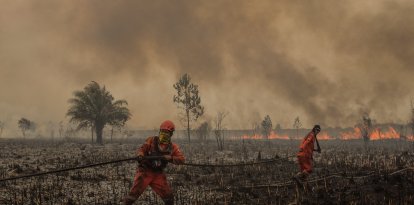
The National Weather Service warned that conditions favorable for wildfires would remain high through the end of Monday.
In addition, through early Tuesday morning, there was a risk of monsoon storms over mountainous areas of Los Angeles, San Diego, Riverside, and Ventura counties, as well as in the Antelope Valley.
The combination of high temperatures, dry vegetation, and possible storms is heightening concerns about new wildfires in the southern part of the state.
High tides threaten coastal flooding
Adding to the extreme temperatures is another phenomenon: a series of high tides that increases the risk of minor flooding at various points along the California coast.
San Francisco Bay and Monterey Bay face a risk of flooding in parking lots, parks, and on roads through the early hours of Thursday.
In San Francisco, the tide gauge was expected to record a high tide shortly after 9:00 p.m. on Sunday that was approximately 1.5 feet above normal, equivalent to about 45.7 centimeters.
The National Weather Service attributed these levels to both unusually warm ocean temperatures and the cumulative rise in sea level.
The agency further explained that the timing of high tide can vary by up to 90 minutes earlier or later depending on the location along the Pacific coast or within the bay itself.
On the beaches of Los Angeles, Ventura, and Santa Barbara counties, the risk of minor coastal flooding will begin Monday night and continue through Wednesday night.
This event thus keeps much of Southern California under a combination of threats: temperatures exceeding triple digits Fahrenheit, an elevated risk of wildfires, possible monsoon storms, and tides capable of causing minor flooding in vulnerable coastal areas.
LATEST