ANALYSIS
Brand America: When the world began to resemble the US
From a young republic born on the Atlantic coast to the country that captured the world’s imagination with Hollywood, jazz, the internet and Silicon Valley. A journey through two and a half centuries of cultural power.
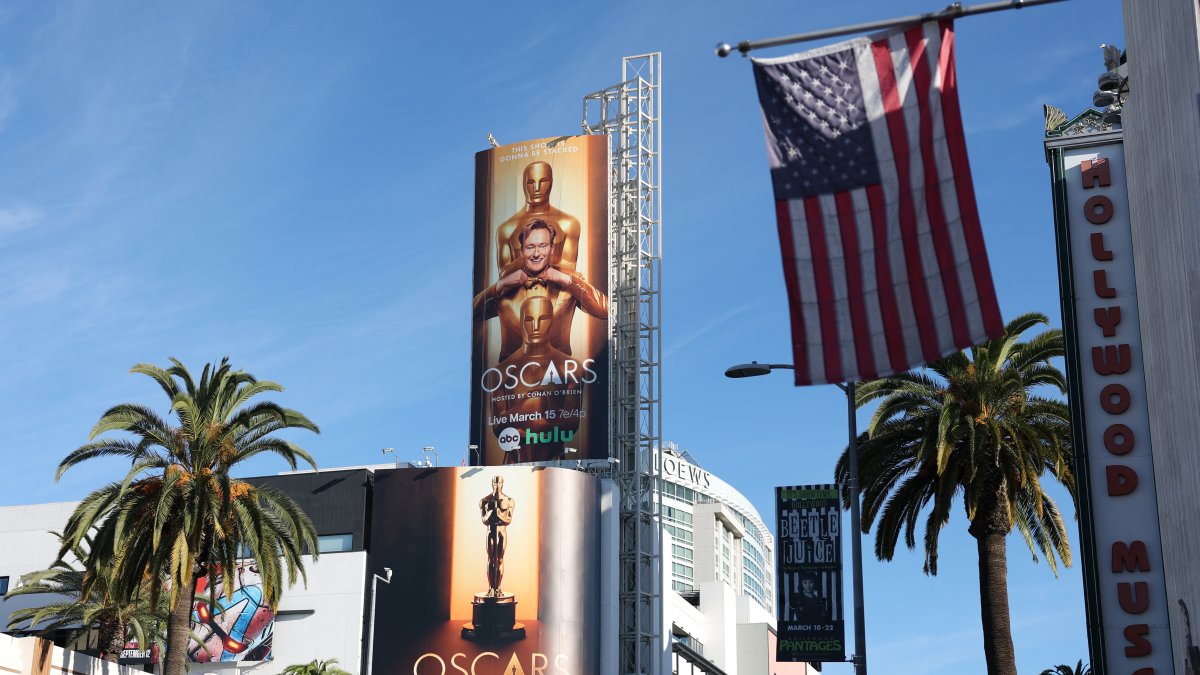
Academy Awards announcement (Archive)

On July 4, 2026, the United States will commemorate the 250th anniversary of the signing of the Declaration of Independence. But the anniversary doesn’t just invite us to look back at Philadelphia, 1776, or the Founding Fathers. It also allows us to ask a more contemporary question: How has the world viewed the United States over these two and a half centuries?
The answer lies not only in its presidents, its wars, or its economy. It also lies in a movie theater, a jazz song, an American college T-shirt, a hamburger, an iPhone, a Netflix series, a YouTube video or a conversation on social media.
The country has been a military, economic and diplomatic power. But its most profound influence may well have been cultural. Before many people around the world could explain the U.S. electoral system, they had already seen New York burn in a movie, listened to rock, rap or pop music in English, wanted a pair of Nike sneakers or learned to imagine freedom through images produced in Hollywood.
That is the unique feature of American power: its ability to turn a way of life into a global narrative.

Hollywood: The world’s dream factory
During the 20th century, Hollywood did not just produce movies. It produced images of the world.
The Western turned American territorial expansion into a myth. Film noir turned the modern city into a moral stage. War films narrated World War II from an American perspective. Romantic comedies turned New York into a sentimental capital. Superheroes transformed individual power, salvation and justice into mass mythology.
Starting in the 1920s and 1930s, the studio system of Hollywood industrialized creativity: actors, directors, screenwriters, technicians and distribution campaigns were integrated into a machine capable of manufacturing stars and exporting them to the world.
The result was an unprecedented cultural hegemony. For millions of people, the United States was first an image rather than a real country: endless highways, diners, skyscrapers, high schools with lockers, suburbs, universities, convertibles, New York City police officers and California beaches.
Hollywood turned the local into the universal.
That influence did not disappear with the end of cinema's golden age. It transformed. In the 21st century, major franchises such as Marvel, Star Wars, Jurassic Park and Fast & Furious, continued to build a shared visual language. Even as movie theaters lost their central role to streaming, the American narrative model continued to dominate much of global entertainment.
The Motion Picture Association reports that the U.S. film, television and streaming industry distributes content in more than 130 countries and that more than half of its member companies’ revenue comes from abroad.
This fact highlights a paradox: Hollywood is deeply American, yet it depends on the world. Its stories are born in Los Angeles, but they are tested in Seoul, Madrid, Mexico City, Lagos, São Paulo and Mumbai.
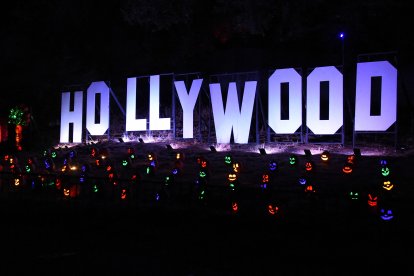
A replica of the Hollywood sign for a movie (File photo)
Music: An emotional lingua franca
If Hollywood taught the world to look at the United States, music taught it to listen.
Jazz, blues, gospel, country, rock, soul, funk, disco, hip-hop, R&B and pop are part of a cultural lineage that cannot be separated from the country’s social history: slavery, segregation, internal migration, the civil rights movement, youth culture, consumerism, protest and globalization.
Jazz was one of the first major American cultural exports of the 20th century. During the Cold War, Washington realized that music could serve as diplomacy. Starting in 1956, the State Department sent figures such as Dizzy Gillespie, Louis Armstrong, Duke Ellington and Sarah Vaughan as “jazz ambassadors” in an effort to project an image of freedom and creativity to the world in contrast to the Soviet Union.
The operation contained an obvious contradiction: many of these Black musicians represented abroad a country that, at home, still denied fundamental rights to millions of African Americans. But that was precisely where part of America's cultural strength lay: its music did not entirely hide the conflict; often, it expressed it.
Rock and roll brought that energy to global youth culture. Elvis Presley, Chuck Berry, Little Richard and Buddy Holly didn’t just change music: they changed the body, dance, fashion and the very idea of adolescence. Then came Bob Dylan, Jimi Hendrix, Aretha Franklin, Bruce Springsteen, Madonna, Michael Jackson, Prince, Nirvana, Beyoncé, Taylor Swift, Kendrick Lamar and a long list of artists who transformed American experiences into global emotions.
Hip-hop, born in the Bronx in the 1970s, is perhaps the most powerful example of that expansion. It emerged as an African American and Latino urban culture but eventually became a global language for discussing inequality, the neighborhood, identity, anger, style and aspiration.
Today, American music no longer travels solely through records, radio or MTV. It travels via streaming platforms. The IFPI estimated that global revenue from recorded music reached $29.6 billion in 2024, driven primarily by streaming. Spotify, although Swedish, operates in 184 markets and reports hundreds of millions of users, confirming that global music now thrives on transnational digital infrastructures.
The United States’ influence on music isn’t limited to exporting artists. It lies in having created many of the genres through which the world expresses youth, rebellion, desire, celebration, pain, and protest.
Politics
Trump kicks off America’s 250th anniversary celebrations and predicts a new golden age
Joaquín Núñez
Silicon Valley: From the American dream to the algorithm
For decades, American cultural power took the form of a movie screen or a three-minute song. Today, it takes the form of an interface.
Google organizes searches. YouTube distributes videos. Apple designs devices that function as status symbols. Meta connects relationships, images and public conversation through Facebook, Instagram, and WhatsApp. Amazon transformed the concept of consumption. Microsoft shaped personal and business computing. Netflix changed audiovisual habits. OpenAI and other artificial intelligence companies are beginning to reshape the production of text, images, education, work and entertainment.
The key is that the big tech companies don’t just sell products. They shape our daily experience.
Meta reported 3.35 billion daily active users across its family of apps in December 2024. YouTube has established itself as one of the largest audiovisual platforms on the planet and, according to recent data, has even surpassed Netflix in average daily viewing time in several international markets. Netflix ended 2024 with more than 300 million paid memberships in more than 190 countries, according to its annual report.
American culture no longer reaches audiences solely through a specific movie or song. It reaches them through the invisible architecture of streaming platforms: recommendations, trends, algorithms, rankings, notifications, short-form content and popularity metrics.
Hollywood used to say, “Watch this story.” Silicon Valley says, “We’ll show you what you’ll probably want to watch.”
That shift is enormous. Cultural power has shifted from content production to the organization of attention.
Society
Pitbull teams up with AI to teach civic education with Digital Founding Fathers
Diane Hernández
The “United States” brand
A pair of Levi’s jeans, a bottle of Coca-Cola, a pair of Nikes, a Big Mac, a baseball cap, a college sweatshirt, Halloween, Black Friday, the startup model, the garage as a myth of innovation, the idea of the “self-made man,” the Silicon Valley aesthetic or the promise of the “American Dream” all form part of a global lexicon.
Not all of these symbols are admired in the same way. Sometimes they inspire desire; other times, rejection. But even rejection confirms their presence.
The concept of “soft power,” popularized by Joseph Nye, helps us understand this phenomenon: a country’s ability to influence not only through coercion or money but also through attraction. In 2025, Brand Finance ranked the United States first on its Global Soft Power Index, highlighting its leadership in familiarity, influence, education, science, media and communication.
American popular culture has served as a constant invitation: come, look, listen, buy, imitate, dream.
But it has also drawn criticism. From France to Latin America, from the Middle East to Asia, many intellectuals, governments and social movements have denounced “Americanization” as a form of cultural imperialism: the replacement of local languages, traditions, aesthetics, and narratives with global products designed in English and distributed by U.S. corporations.
Therein lies the central tension of the report: The United States does not merely export culture; it exports power wrapped in culture.
Seen from the outside: admiration, dependence and resistance
The international view of the United States has never been uniform. It has combined fascination and suspicion.
The Pew Research Center noted in 2024 that a median of 54% of adults in 34 countries held a favorable view of the United States, compared to 31% who held an unfavorable view. In 2025, the same center noted that approximately half of the adults surveyed in various countries viewed the United States favorably, with very marked differences between regions.
Culture tends to be more resilient than politics. A president’s popularity may decline, but an American song may still be played. There may be opposition to a war, but a Hollywood movie may still be a hit. People may criticize the power of Silicon Valley and, at the same time, rely on its apps.
That disconnect explains part of the enduring nature of U.S. power. The country may be debated as a geopolitical actor and yet remain central as a producer of symbols.
The world does not always want to follow the United States. But it can rarely ignore it.
The challenge: A culturally multipolar world
U.S. cultural hegemony is no longer as unquestionable as it was in the 20th century.
South Korea has demonstrated through K-pop, film and TV series that another country can build a global cultural strategy. India maintains one of the world’s largest audiovisual industries. China is competing for technological and media influence, albeit within political limits. Latin America has gained prominence in global urban music. Turkey exports soap operas. Japan retains enormous influence through anime, manga and video games.
The difference is that the United States continues to occupy a structural position. It not only produces content; it also controls many of the platforms through which content from other countries circulates.
A Korean song can go global on YouTube.
A Puerto Rican artist can dominate Spotify.
A Spanish series can be a hit on Netflix.
A Nigerian creator can go viral on Instagram or TikTok.
Cultural globalization is no longer simply “the United States exporting to the world.” It is the world competing within infrastructures, formats and business models that, for the most part, were designed or scaled up from the United States.
The country that taught the world to imagine
Its influence cannot be explained solely by the Pentagon, Wall Street or the White House. It is explained by Hollywood, by jazz, by rock, by hip-hop, by Disney, by Coca-Cola, by Apple, by Google, by Netflix, by YouTube, by Instagram and by the promise, real or illusory, that anyone can reinvent themselves.
American cultural power has consisted of transforming its national experience into a global imaginary. It has led people who have never set foot in the United States to recognize its cities, sing its songs, use its devices, adopt its narrative formats and discuss its contradictions.
That power is not innocent. It shapes desires, markets and conversations. It also standardizes, displaces and concentrates. But its historical effectiveness is hard to deny.
For two and a half centuries, the country has not only sought to govern the world; it has sought to narrate it. And perhaps that is its greatest influence: having convinced much of the planet to view modernity through its screens, its songs and its platforms.
LATEST