ANALYSIS
The American flag: How it evolved from the Continental Army’s flag during the Revolution to Hawaii’s statehood in 1960 (with the Confederate flag in between)
Since the nation’s founding, the quintessential national symbol has changed as many as 27 times due to the incorporation of new territories, each adding a new star to accompany the 13 red and white stripes.

U.S. Flag

The flag is a symbol that represents a country par excellence. It is a key element and one of the first concerns of a nation seeking recognition. The United States is no exception. On the contrary, precisely because of its unique path of growth from the initial 13 colonies to the current 50 states, the flag has evolved to reflect this growth through an ingenious formula: one state, one star.
Thus, the United States has proudly flown as many as 27 flags throughout its history. Actually, 29, if we include the flag with which the 13 colonies began the American Revolution and the Confederate flag, which might have become the national flag had that side prevailed in the Civil War.
The meaning of the American flag: Stars, stripes and colors
On June 4, 1777, the Second Continental Congress passed the first Flag Resolution. In it, the “Stars and Stripes” were officially adopted as the national flag:
“Resolved, That the flag of the United States be made of thirteen stripes, alternate red and white; that the union be thirteen stars, white in a blue field, representing a new Constellation.”
Although Congress did not explain the reasoning behind the choice of colors or the flag’s distinctive elements, the institution’s then-secretary, Charles Thompson, left a detailed summary that includes the meanings behind the colors that have represented the United States ever since:
“The colors of the pales are those used in the flag of the United States of America; White signifies purity and innocence, Red, hardiness and valour, and Blue, the color of the Chief signifies vigilance, perseverance and justice.”
The first official American flag, 1775: "The Grand Union Flag"
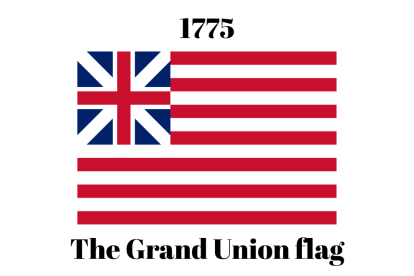
Grand Union Flag
The first official flag—since the United States did not yet exist as such, but rather as the army of the 13 rebellious colonies—consisted of 13 red and white stripes and the flag of the United Kingdom in the upper left corner. This is the same basic design as the flag of the British East India Company, which flew from 1701 to 1801. The difference lies in the number of stripes, as the Company’s flag had between nine and 13 red and white stripes. The Continental Army flew the flag until 1777.
1777: Betsy Ross
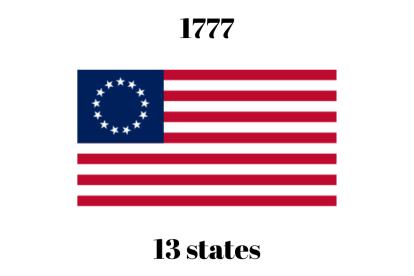
The 1777 Flag, or Betsy Ross Flag
The flag approved by Congress included 13 stars, arranged in a circle. Popular legend has it that Elizabeth Griscom, known as Betsy Ross, a flagmaker from Philadelphia, sewed the first official flag in June 1776.
According to legend, George Washington, Robert Morris and George Ross arrived at Ross’ home to discuss the design of a national flag. The original design featured six-pointed stars, but she suggested five-pointed stars and demonstrated how quickly she could cut them out. Impressed, they awarded her the honor of being the first person to sew the flag.
1794: 15 stars and 15 stripes; Vermont and Kentucky join the Union
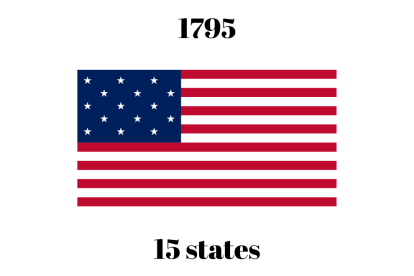
1794 Flag
In 1794, the second Flag Act was enacted, adding two stripes and two stars to accommodate the admission of Vermont and Kentucky. The flag remained in use until 1818 despite the admission of five other states (Tennessee, Ohio, Louisiana, Indiana and Mississippi) prior to that date.
1818: 20 stars and the return of the 13 stripes
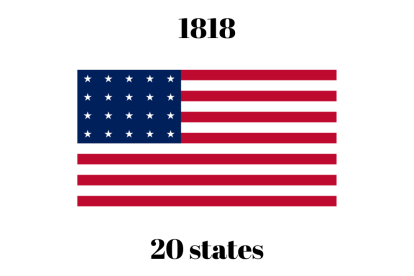
1818: 20 stars and the return of the 13 stripes
In 1818, the rule was established to add one star for each new territory, and the number of stripes on the flag was set at 13. It flew for barely a year, as it was replaced in 1819.
1819: Illinois added
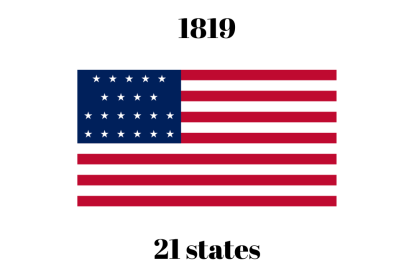
1919 Flag
1820: Alabama and Maine join
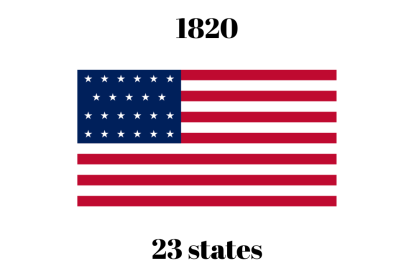
1820 Flag with Alabama and Maine
1822: Missouri
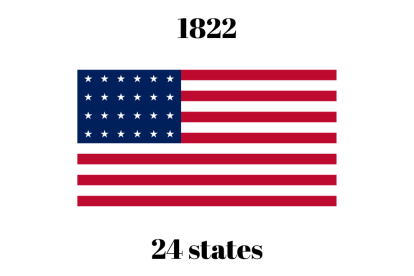
Flag of 1822 following Missouri’s admission
1836: Arkansas
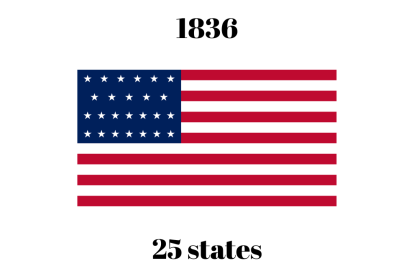
1936 flag, featuring Arkansas
1837: Michigan
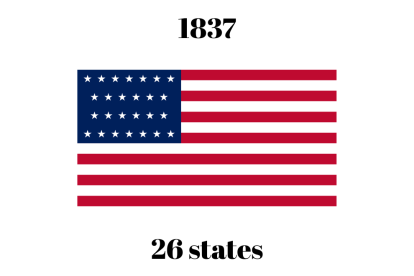
1837 flag featuring Michigan
1845: Florida
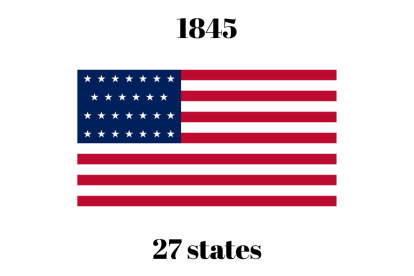
1845 flag featuring Florida
1846: Texas
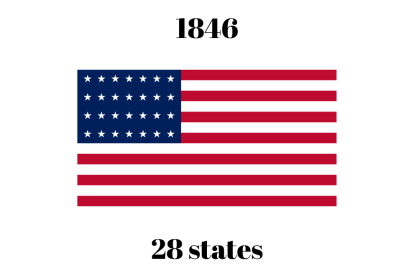
1846 flag featuring Texas
1847: Iowa
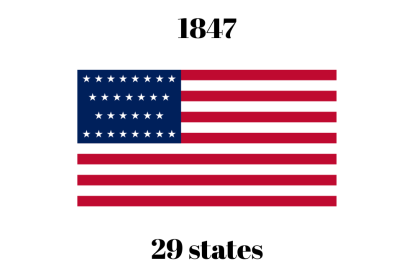
Flag featuring Iowa
1848: Wisconsin
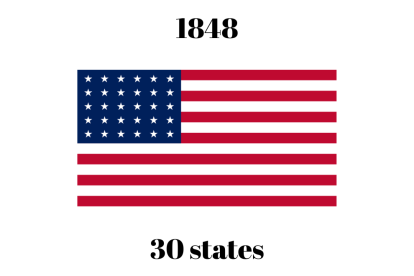
American flag, 1848
1851: California
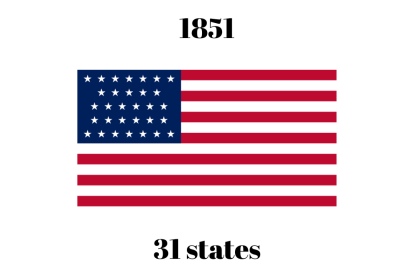
1851 flag with California
1858: Minnesota
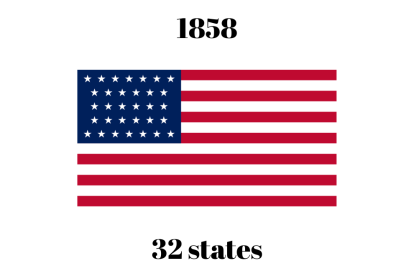
1858 flag featuring Minnesota
1859: Oregon
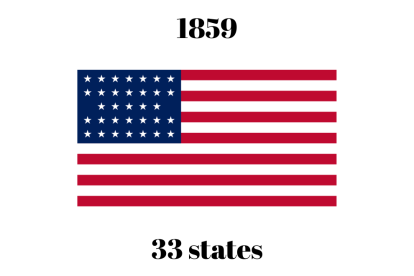
1859 flag featuring Oregon
1861: Kansas
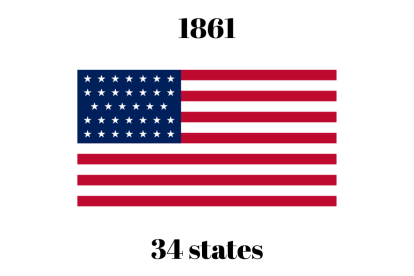
1861 flag featuring Kansas
1863: West Virginia
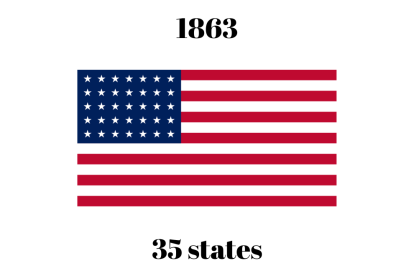
Flag featuring West Virginia (1863)
1865: Nevada
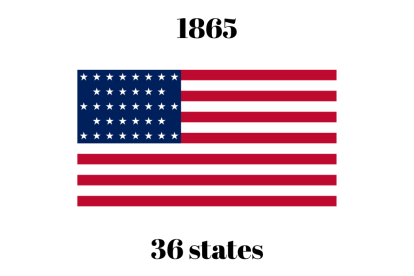
1865 flag featuring Nevada
1867: Nebraska
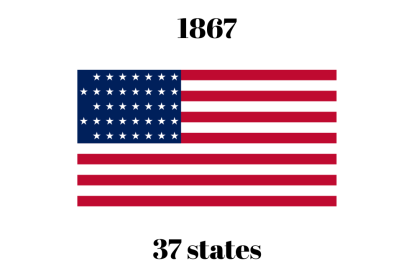
1867 flag featuring Nebraska
1877: Colorado
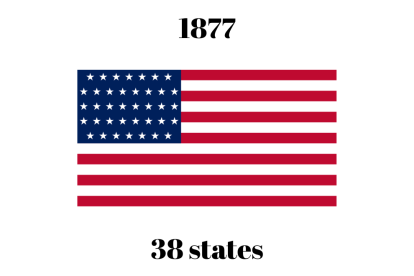
1877 flag following Colorado's admission
1890: Idaho, Montana, North Dakota, South Dakota and Washington
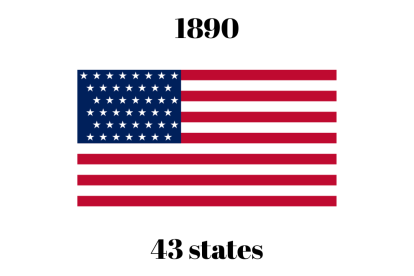
1890 flag following the admission of Idaho, Montana, North Dakota, South Dakota and Washington
1891: Wyoming
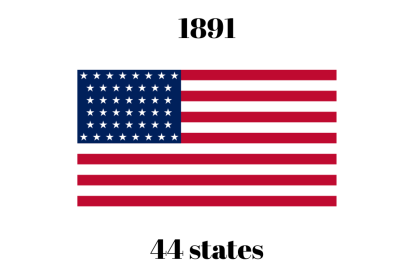
1891 flag
1896: Utah
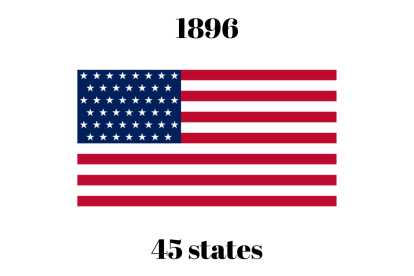
1896 flag with Utah
1908: Oklahoma, the first star of the 20th century
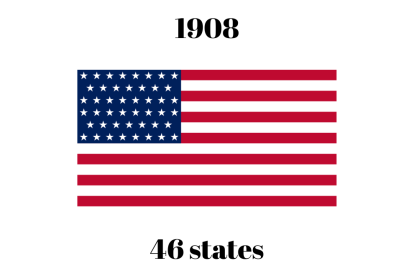
First flag of the 20th century featuring Oklahoma
1912: Arizona and New Mexico
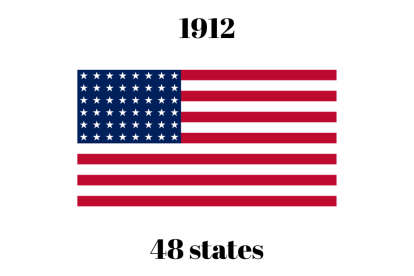
Arizona and New Mexico on the 1912 flag
1959: Alaska
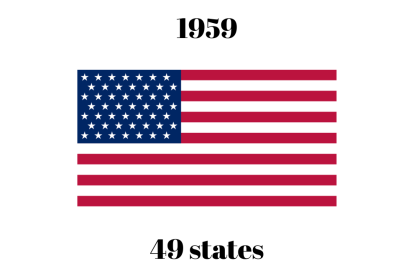
1959 flag featuring Alaska
1960: Hawaii rounds out the list... for now
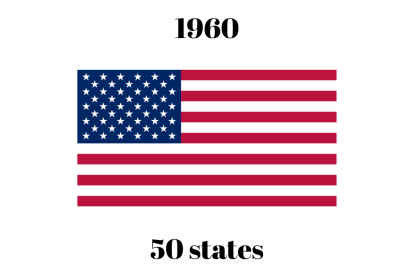
American flag since 1960 following Hawaii’s admission
The Confederate flag for the U.S. that never was
It was based on the Southern Cross in blue, on a red background, with 13 stars representing the states that flew it.
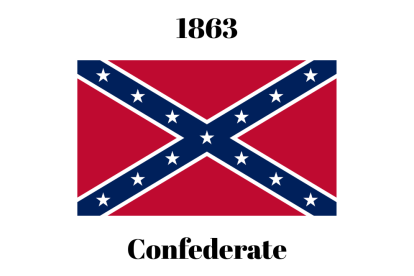
Confederate flag
LATEST