Pitbull teams up with AI to teach civic education with Digital Founding Fathers
The educational project that combines pop, history and technology was announced by Digital DNA Labs.
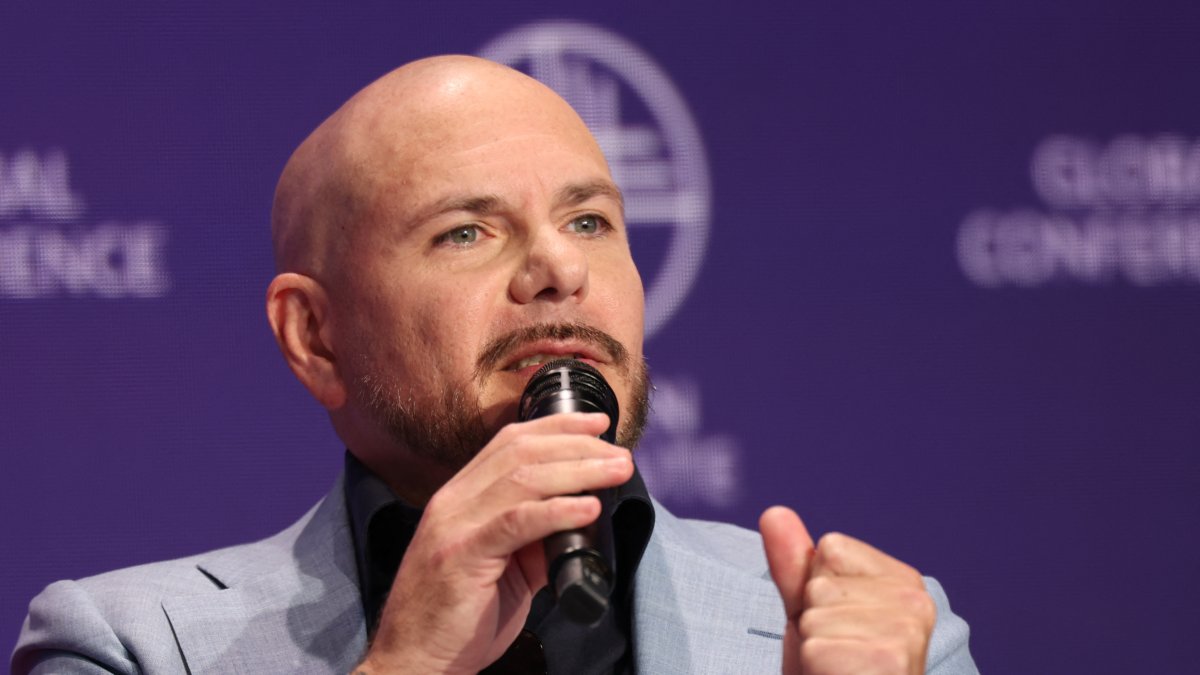
Musician Armando Christian Perez, better known as Pitbull (File).

Cuban-born American artist Pitbull has announced a partnership with the company Digital DNA Labs to develop an artificial intelligence-based educational program that seeks to teach civics education in schools through digital recreations of historical figures such as George Washington.
As explained by Jason Inasi, CEO of the company, the system allows students to interact with virtual versions of the Founding Fathers as if on a video call.
"It's like having a FaceTime video call with one of the Founding Fathers," Inasi said in statements to Just The News.
The project features the participation of the artist, whose real name is Armando Perez, known worldwide as Pitbull.
Civic education in crisis: Low levels of knowledge in the U.S.
The initiative arises in a context of concern about the low level of civic knowledge in the country.
According to a survey cited in the program's launch, 70% of Americans failed a basic civics test, while only half could correctly identify the power responsible for creating laws.
Likewise, the 2022 NAEP national assessment showed that only 22% of eighth graders achieved a proficient level in civics.
Artificial intelligence applied to history teaching
The educational program is currently being tested in charter schools in Florida, where, according to its developers, it has had a positive reception.
Inasi explained that the development of the system involved extensive historical reconstruction workusing artificial intelligence.
"We have consulted historical archives, used reliable sources and recreated George Washington, including his voice and way of speaking at the time," he said.
The goal, according to the company, is for students to be able to interact with historical figures in an immersive and educational way.

Society
Battle for educational funding in Florida: School voucher system enters its most critical phase
Diane Hernández
More accessible learning outside the classroom
According to Digital DNA Labs, many students feel difficulty participating in class, especially when asking questions in front of their peers.
The system would allow students to interact from home with educational content and resolve questions in a more flexible environment.
Civic education and celebrations for the nation's 250th birthday
The launch of the program coincides with the preparations for the 250th anniversary of the United States, a date that has spurred various educational and cultural initiatives related to the country's history.
The Department of Education and other institutions have promoted "patriotic education" programs focused on founding principles, the Declaration of Independence and U.S. constitutional history.
Organizations such as the America 250 Civic Education Coalition work alongside dozens of entities to develop educational materials on citizenship and government.
The use of artificial intelligence in history education adds to a broader debate about how history is taught in U.S. schools.
A model that could expand
For now, the program is in pilot phase in Florida, although its developers have already begun talks with schools and education authorities in other states to expand its implementation.
"We are talking to school boards and governors to expand this solution," Inasi said.
The company has also invited parents and educational communities to apply to incorporate the program in their schools.
With this initiative, artificial intelligence enters the classroom with a proposal that mixes entertainment, history and civic education, at a time when knowledge about the U.S. political system is at the center of public debate.
LATEST