United States, greatest sports power in history
The Olympics, the NCAA, and the five major professional leagues: the key factors that define the Stars and Stripes country as the king of sports.
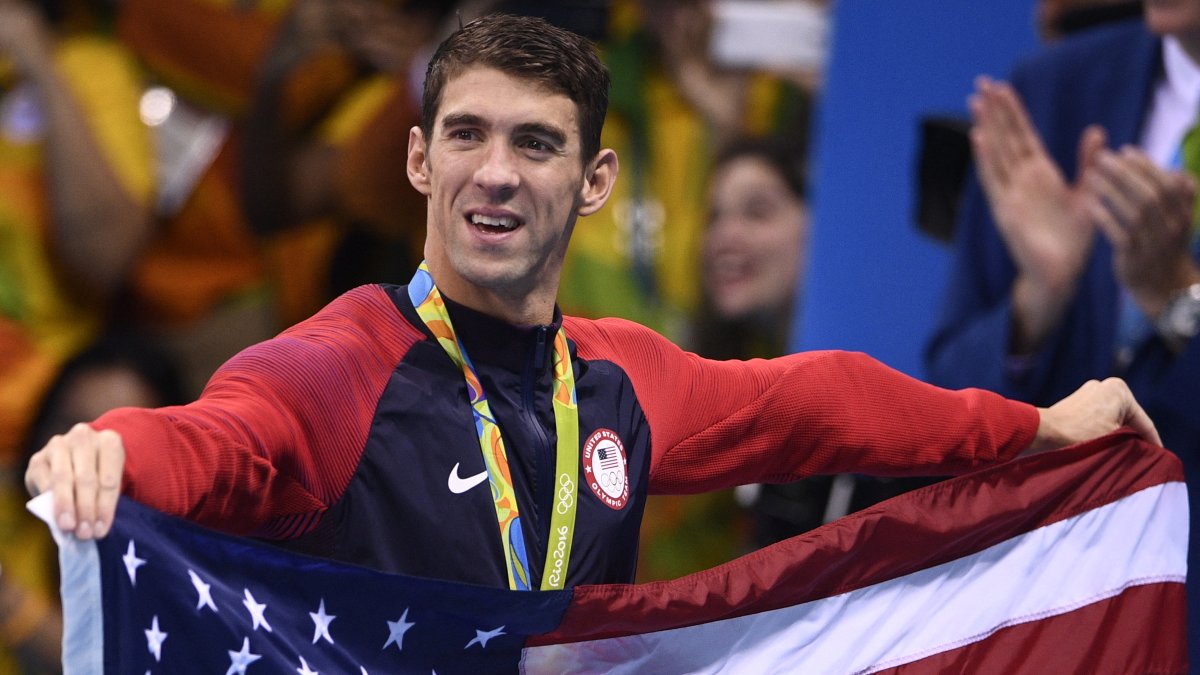
Michael Phelps, the athlete with the most Olympic medals in history. File photo

If the international sports landscape were likened to a chessboard, there would be no doubt which country would be represented by the king. Backed by an unparalleled record of medals, championships won, and records set over the course of its 250-year history, the United States has earned the right to be considered the greatest sports power in history. It is the piece that everyone tries to topple, but which no one has managed to checkmate. With institutional strength that is out of reach for its rivals, the American crown remains firmly on the square of victory.
It is the metropolis of global sports.
Absolute dominance at the Olympic Games
It is essential to start with the Olympic Games. In the most important sporting event on the planet, the United States stands as the absolute and undisputed dominant force. Its hegemony is not a matter of opinion, but a statistical reality: the 3,132 Olympic medals — whether in the Summer or Winter Games, as detailed by Team USA — won throughout history attest to its status. No country today — nor any of the great powers of the 20th century that have since faded— has even come close to matching its legendary record:
Team USA’s Olympic medals
- 1,105 gold.
- 878 silver.
- 786 bronze.
- 126 gold.
- 133 silver.
- 104 bronze.
Since the modern era of the Olympic Games began in Athens in 1896, the Stars and Stripes country has dominated virtually every edition: on 17 occasions, it finished as the country with the most medals. And when it comes to individual sports, it is also the leader in many of them: track and field, swimming, basketball, tennis, boxing, and golf, among others.
It’s also worth noting the Paralympic Games, where Team USA is the undisputed champion: in total, 2,706 medals, comprising 951 gold, 904 silver, and 851 bronze, including those won in both the Summer and Winter Games.
The United States’ combined Olympic and Paralympic tally stands at 5,838 medals.
The NCAA, the backbone
To understand American success in sports, you have to look back to where it all began: the National Collegiate Athletic Association (NCAA). It is there that future stars begin to carve out their athletic futures, where local talent is honed, and which acts as a magnet for international athletes. It functions as a covert professional development league. Universities serve as high-performance centers funded by multimillion-dollar budgets to bring out the best in each athlete.
In addition to physical and technical development, the NCAA focuses on helping each athlete adopt a competitive spirit and a culture of winning. But this is always done with respect and psychological support, without resorting to the physical exploitation of the individual.
Despite being the first step in an athlete’s career, the NCAA — which administers the athletic programs of more than 1,100 universities in the United States — is capable of filling stadiums with tens of thousands of people to watch its competitions, regardless of the sport. It is the springboard to the professional level.
NFL, NBA, MLB, NHL, and MLS: Defining characteristics and commercial powerhouses
On the other hand, the American sports landscape is structured around its five major professional leagues: the National Football League (NFL), the National Basketball Association (NBA), Major League Baseball (MLB), the National Hockey League (NHL), and Major League Soccer (MLS). Not only do they represent the pinnacle of athletic performance in the country, but they also constitute an entertainment oligopoly that captivates and thrills millions of fans from coast to coast on a near-daily basis.
Beyond the strictly athletic aspect, these leagues operate as colossal commercial machines that generate billions of dollars annually, transforming sports into a profitable industry built on contracts, marketing strategies, sponsorships, and image rights. Each league’s brand is exported to every corner of the globe.
Phelps, Jordan, Lochte, Lewis, Williams, Brady, Woods, Biles...: The titans of American sports
The world of sports has a clear historical dominant force, and that is the United States. Over the decades, the country has forged an unparalleled competitive ecosystem, capable of producing athletes who not only dominate their disciplines but completely redefine them, evoking names that transcend the game itself and become cultural icons.
There are many American athletes who have shone or continue to shine throughout their professional careers and who have made the country the global benchmark, the greatest sporting power in history.
Some of these examples include Michael Phelps, Michael Jordan, Ryan Lochte, Katie Ledecky, Serena Williams, Simone Biles, Tiger Woods, Jack Nicklaus, Carl Lewis, Allyson Felix, Mark Spitz, Tom Brady, Natalie Coughlin, Jenny Thompson, Ray Ewry, Bill Russell, and Carl Osburn, among others. Each in their own era, each in their respective discipline, each in their own way. Deep down, they all share the same DNA: the relentless ambition of a titan. All of them, brimming with athletic achievements.
LATEST