GAESA’s goal: The battle to undermine the economic power of the Castro regime
Washington is stepping up pressure on the military conglomerate that dominates strategic sectors of the Cuban economy, while international scrutiny of its structure and operations is growing.
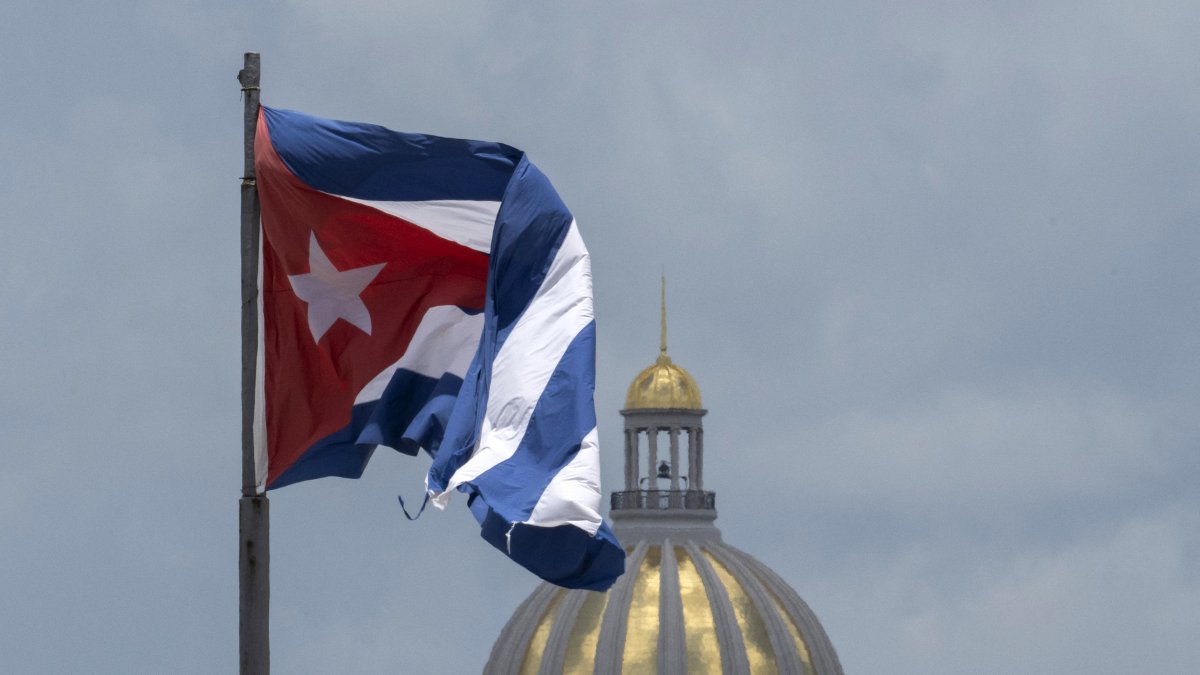
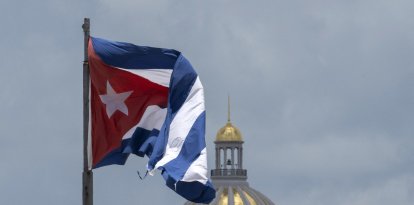
The Cuban flag flies over Havana’s Malecón, with the Capitol in the background (Files)

For decades, the debate over Cuba has centered on the embargo, sanctions, and the lack of economic reforms. However, investigative journalism, expert reports, and recent U.S. sanctions have shifted the focus to an entity that many consider the true center of the regime’s economic power: GAESA.
The strategy promoted by Secretary of State, Marco Rubio, is based on a clear premise: as long as that conglomerate remains intact, any economic opening will ultimately strengthen the military elite rather than the Cuban people.
GAESA: The state within the state
It does not appear on the ballot. It does not participate in public debates. It does not present audited financial statements nor is it accountable to the Cuban Parliament. However, its influence over the national economy far exceeds that of any ministry.
The Grupo de Administración Empresarial S.A. (GAESA), controlled by the Revolutionary Armed Forces, has over the years become Cuba’s leading business conglomerate, with a presence in strategic sectors such as tourism, finance, foreign trade, port logistics, remittances, free trade zones, retail, and a significant portion of the country’s real estate infrastructure. Various studies estimate that controls between 40% and a substantial portion of the Cuban economy, although there are no transparent official figures.
According to numerous analysts, GAESA eventually evolved into a veritable "state within a state," with financial autonomy and the ability to concentrate resources without independent oversight mechanisms.
Washington’s new strategy: Stop sanctioning symbols and target the financial heart
The Trump administration has significantly altered its approach.
Instead of merely sanctioning individual officials, the strategy promoted by Marco Rubio directly targets the business network that financially sustains the regime.
In May 2026, Washington announced direct sanctions against GAESA, its CEO, and companies linked to the mining sector. Subsequently, in June, it expanded the measures against financial and logistics entities linked to the conglomerate, including Rafin, Banco Financiero Internacional, and Almacenes Universales.
Rubio justified the measure by stating that the goal is to prevent foreign currency generated by tourism, foreign investment, or exports from continuing to fuel the regime’s power structures rather than benefiting the population.
"The heart of the kleptocratic system"
The U.S. narrative maintains that profits from international tourism, hotel chains, remittances, and numerous strategic businesses do not flow transparently into the state budget but instead end up being managed by a small military circle.
It is precisely this structure that Washington aims to weaken.
The investigations that changed the conversation
In recent years, numerous journalistic investigations and academic studies have documented the expansion of GAESA.
The reports have shown how the conglomerate gradually extended its influence from the tourism sector to virtually all activities capable of generating foreign currency.
Hotels, ports, airports, banks, real estate firms, importers, foreign-currency stores, financial companies, and logistics chains gradually came to depend on structures managed by the military holding company.
For many experts, this economic concentration ultimately sidelined even civilian ministries, turning GAESA into the island’s de facto administrator of foreign currency flows.

The Cuban economy under a military monopoly
Critics of the model argue that one of Cuba’s greatest structural problems lies not solely in international sanctions, but in the enormous economic concentration.
When virtually all profitable sectors are controlled by a single corporate structure linked to the military apparatus, incentives for competition, innovation, and transparency disappear.
Profits remain highly centralized while the private sector continues to face restrictions on access to imports, financing, or international markets.
This model, according to various economists, limits the national economy’s capacity for growth and reduces the development potential of independent small and medium-sized enterprises.
Sanctions are already having an impact
Some international companies have reviewed their operations in Cuba following the tightening of sanctions, especially those with commercial ties to entities linked to GAESA. Reuters reported that hotel chains and other operators have modified or reduced their presence due to the new sanctions framework and the risk to companies that maintain relationships with designated entities.
Washington has also warned that foreign companies providing significant material support to sanctioned entities may face additional measures under the new sanctions regime.
Society
The empire of privilege is crumbling: The heirs of the Cuban regime who ended up in the US
Diane Hernández
The big question
Marco Rubio’s argument is based on a simple premise: without the revenue managed by GAESA, the regime would lose a significant portion of its financial capacity and economic control.
His critics, on the other hand, argue that tightening sanctions could further exacerbate the economic and humanitarian crisis facing the Cuban people, while also affecting foreign investment and sectors such as tourism.
The debate, therefore, no longer revolves solely around the embargo or reforms. It centers on a fundamental question: Is it possible to transform the Cuban economy without first dismantling the business network that controls a large portion of the country’s foreign exchange and strategic sectors?
Beyond the political debate, the name GAESA is no longer known only to specialists; it has taken center stage in the discussion about Cuba’s future. The strategy promoted by Rubio seeks to strike at the financial core of the system, based on the conviction that the military conglomerate is the regime’s main economic pillar.
Whether this strategy will succeed in weakening the power of the ruling elite or, on the contrary, will exacerbate the economic hardships of the population remains an open question. What seems indisputable is that the international focus has shifted: from ideological slogans to the corporate network that controls a decisive portion of the island’s resources.
LATEST