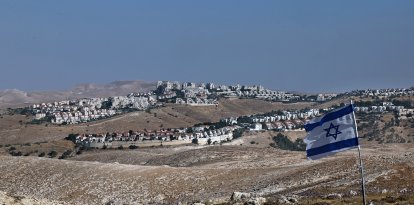
Israel, Lebanon sign US-brokered framework agreement to restore Lebanese sovereignty to southern part of country
“We have put the train back on the tracks and going in the right direction,” said Yechiel Leiter, Israeli ambassador in Washington. “Final destination? Peace between our two countries.”
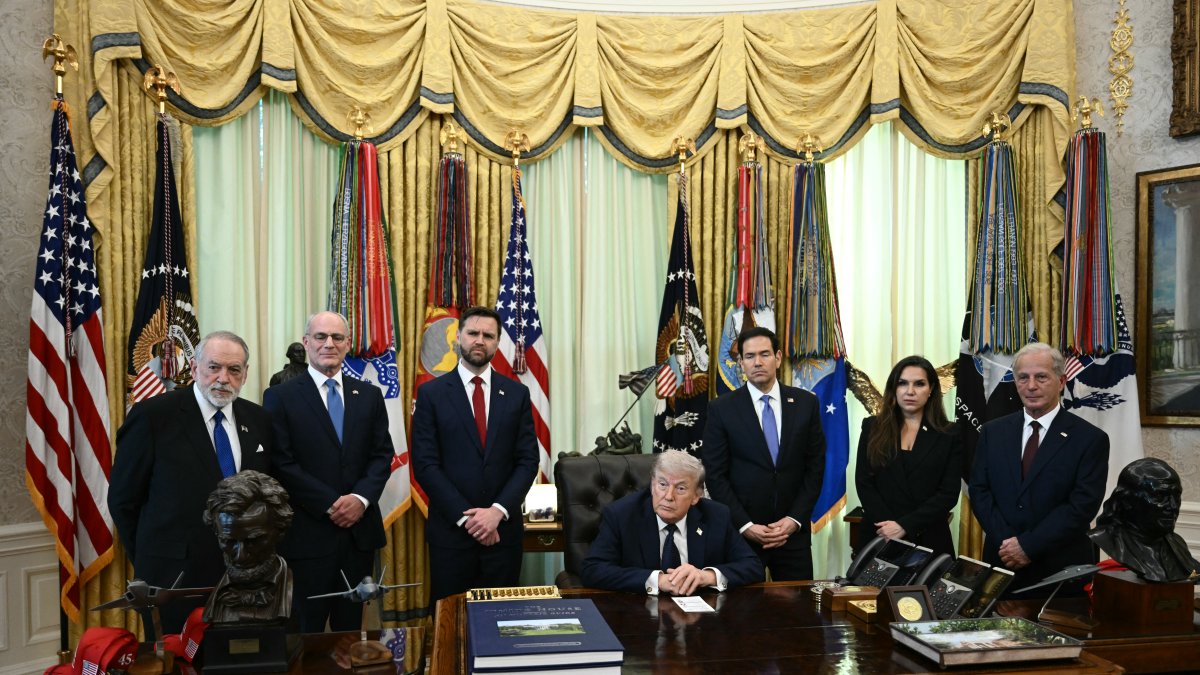
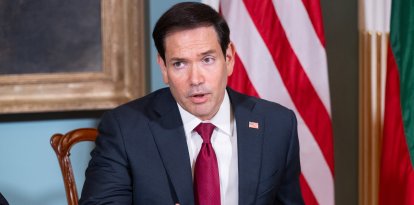
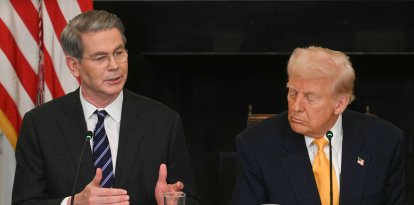
(L-R) US Ambassador to Israel Mike Huckabee, Israel Ambassador to US Yechiel Leiter, JD Vance, US President Donald Trump, Marco Rubio, Lebanon Ambassador to the US Nada Hamadeh Moawad and US Ambassador to Lebanon Michel Issa (Files)

Israel, Lebanon and the United States signed a framework agreement and security annex on Friday aimed at removing the Iran-backed Hezbollah terrorist group from southern Lebanon and laying the groundwork for broader political cooperation between the neighboring countries.
“It’s the beginning of the beginning. There’s a lot of work ahead,” U.S. Secretary of State Marco Rubio said after the signing ceremony.
In a later statement, he called it “a bold decision” of Israel and Lebanon to come together.
The agreement followed five rounds of talks in Washington, including an unexpected fourth day of negotiations this week after discussions stalled on Thursday over final wording.
Rubio called the framework an important first step toward future negotiations between Israel and Lebanon.
He blasted Hezbollah as “Iran’s most dangerous proxy,” responsible for dragging Lebanon into war and plotting attacks against Americans. He said that it also supports “drug trafficking networks that fuel violence in our hemisphere and outside the United States and directly threatens American citizens” globally.
“The first step sometimes is the hardest one, but it’s important,” Rubio said at the agreement signing. “Hopefully we’ll have many more of these conversations and make real tangible progress, so that the people of both of these countries can be hopeful about the future, a future of peace, a future of prosperity, a future of mutual coexistence.”
World
The United States bombs military targets in Iran following an armed attack in the Strait of Hormuz
Andrés Ignacio Henríquez
Israeli Prime Minister Benjamin Netanyahu called the agreement “a great achievement” for the Jewish state.
“We are maintaining the original security zone outside the range of anti-tank missiles,” Netanyahu said. “We are not allowing Hezbollah to enter there, nor the population. It is being maintained, and the most important thing is that Israel says, ‘Our security comes first.’”
Under the agreement, Hezbollah would withdraw, or be removed, from designated pilot zones that would then be transferred simultaneously from Israeli military control to the Lebanese Armed Forces.
The phased process would continue until Lebanon assumes responsibility for the south, although Israeli officials have said an expanded security zone will remain along the border.
The agreement begins with two pilot zones recommended by the Israel Defense Forces, according to Israeli officials.
One is south of the strategic Litani River, outside the recently established security zone known as the Yellow Line, while the other is north of the Litani, with a small portion extending into the expanded security zone.
Rubio also announced the launch of a trilateral Military Coordination Group for Lebanon, along with $100 million in humanitarian aid contributions to support Lebanon, with the United Nations. He also said that there would be $30 million in reimbursements for the Lebanese Armed Forces to help in its mission.
Nama Hamadeh, Lebanon’s ambassador to the United States, echoed Netanyahu’s sentiment.
“The trilateral framework we signed today is the first step on the road to restoring Lebanese sovereignty and territorial integrity, securing a permanent and final cessation of hostilities,” she said.
Hamadeh added that it will enable “our people to go back to the land” and let “all Lebanese to live in peace, security and prosperity.”
Yechiel Leiter, Israeli ambassador to the United States, complimented Hamadeh. “You and your team set an example for patriotism to your country,” he said. “You fight like a lioness.”
Leiter pointed to his stunning remarks at the outset of talks this week in which he warned of the dangers of the memorandum of understanding signed by the United States and Iran and the potential opening it gave Tehran to derail peace between Israel and Lebanon.
“With a lot of hard work, we have put the train back on the tracks and going in the right direction,” Leiter said. “Final destination? Peace between our two countries. Real peace, where both countries will live in security, where Israel’s and Lebanon’s sovereignty will be respected, honored and protected.”
In response to a question from JNS, Leiter told reporters after the announcement that those comments at the start of the week were directed to Washington “to make it very clear, and they did so during the course of these talks, that Iran will be kept out of the Lebanon equation that we’ve achieved through this framework agreement.
“I think it’s a tremendous accomplishment,” he told JNS.
During the ceremony, Leiter credited “the resilience of the people of Israel, and especially the residents of our northern Galilee,” who have been hit constantly by Hezbollah, along with the courage of the IDF, for making the agreement possible.
He told reporters that talks this week were “intense” and “difficult,” but the agreement signed Friday “will allow for the achievement of a full peace agreement between our two countries.”
Israel is at war with Hezbollah, not Lebanon, he reiterated.
“The agreement facilitates Israel’s continued presence in a security zone until such time that the Lebanese army is strong enough and supported enough by the United States in order to assume full responsibility over Lebanese sovereignty,” Leiter said. “This will be a staged and performance-based move forward to the degree that the Lebanese army performs in dismantling and disarming Hezbollah.”
“We will proceed with additional pilot zones and the ultimate determination of an internationally recognized, secure and agreed-upon border,” Leiter said.
He added that Lebanon’s sovereignty “is not going to be expressed fully as long as Hezbollah is occupying their country.”
“These are hostile occupiers of Lebanon,” he said. “They need to go out.”
Israel will not fully withdraw until “we have completely neutralized Lebanon from terrorism” and “not before that,” according to Leiter.
In the meantime, there will be no timeline placed on getting the job done, “because there are other factors that are malign influencers that could cause a delay,” he said.
“It really depends on the Lebanese army,” he said. “It depends on the support the Lebanese army gets from the United States, and we think it’s going to be solid.”
“The IDF’s freedom of military action will be maintained throughout the security zone to eliminate threats of any kind,” a senior Israeli diplomatic official said.
Recent statements from Lebanese officials gave Leiter confidence, the envoy said, that “confidence-building measures,” including changes in the language of laws that criminalize recognition of Israel and contact with Israelis, are coming.
“We want to get in our car in Tel Aviv and take a drive up to Beirut,” Leiter said. “We want Beirut to come down and take a drive to Tel Aviv. That’s where we’re going.”
LATEST