Marco Rubio follows through on his warning, expands sanctions against Cuban military’s economic empire
The secretary of state announced new measures against entities linked to the GAESA conglomerate and against companies involved in the exploitation of mineral resources in Cuba. The decision intensifies the offensive launched by the Trump administration in May to financially strangle the economic structures that sustain the regime in Havana.
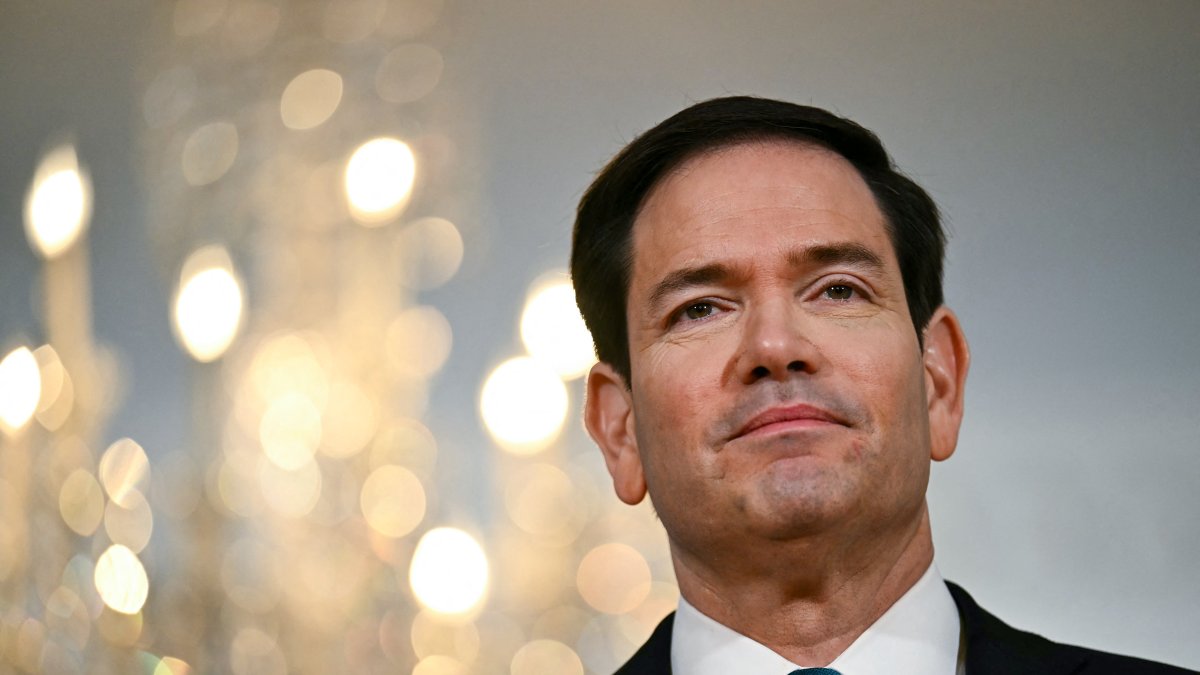
Secretary Marco Rubio photographed in Washington.

Secretary of State Marco Rubio announced on Tuesday a new round of sanctions against entities linked to the Cuban military conglomerate GAESA and against companies involved in the exploitation of the island’s mineral and metal resources, in an escalation of pressure by the Trump administration on the communist regime in Havana.
In a post on X, Rubio stated that “the situation in Cuba is devolving” because the regime continues to prioritize political control over the basic needs of the population.
"The Cuban military-controlled conglomerate GAESA has persistently served as the main vector for regime elites to steal the island’s few resources," wrote the secretary of state.
">The situation in Cuba is devolving as the island’s corrupt, brutal and anti-American Communist regime continues to prioritize its own total control over the freedom, opportunity and basic wellbeing of the Cuban people.
— Secretary Marco Rubio (@SecRubio) June 23, 2026
The Cuban military-controlled conglomerate GAESA has…
According to Rubio, the resources managed by these companies are diverted toward repressive activities, espionage and anti-American operations, rather than being allocated to infrastructure, education, electricity generation or social programs for Cubans.
The U.S. secretary of state also reported that the new designations include entities associated with the movement of money and physical assets within the GAESA network, as well as companies linked to the exploitation of mineral and metal reserves for what he described as “ill-gotten profit.”
The warning also extends to third countries. “Anyone providing services to these sanctioned actors is at risk of being sanctioned themselves,” Rubio stated, while calling on foreign banks and international companies to immediately freeze any activity with the designated entities.
Society
The empire of privilege is crumbling: The heirs of the Cuban regime who ended up in the US
Diane Hernández
A foreseen offensive
The new measures come just over a month after the Trump administration imposed additional sanctions against some of the main economic structures controlled by the Cuban regime.
On May 7, Rubio announced restrictions against companies linked to GAESA and against a joint venture associated with the Canadian mining company Sherritt, which shortly thereafter announced its withdrawal from Cuba.
On that occasion, the secretary of state indicated that the White House would continue to expand the designations.
“Additional designations can be expected in the following days and weeks,” Rubio said at the time—a warning that is now beginning to materialize with the addition of new entities to the sanctions list.
The strategy is backed by an executive order signed by President Donald Trump that expands Washington’s ability to sanction specific sectors of the Cuban economy and punish foreign banks or companies that facilitate transactions with military-controlled enterprises.

The goal: Target GAESA
The conglomerate operates in strategic sectors such as tourism, retail, transportation, construction, logistics, finance and foreign exchange management, which has allowed it to become one of the most powerful business structures on the island.
The Trump administration maintains that a large portion of the revenue entering Cuba ends up under the control of this business network and benefits the ruling elite rather than reaching the general population.
During the May announcement, Rubio stated that GAESA is “designed to generate income not for the Cuban people, but only for the benefit of its corrupt elite.”

Politics
Maximum pressure against Cuba: the United States extends sanctions against the regime's leadership and intelligence apparatus
Andrés Ignacio Henríquez
GAESA holds more than $18 billion in assets
An investigation published by The Miami Herald, based on leaked documents, estimated that the conglomerate had accumulated approximately $18 billion in assets as of early 2024, a figure comparable to the Cuban state’s own level of spending.
With the new sanctions, Washington seeks to hinder these companies’ access to the international financial system and increase the cost for any foreign entity that maintains commercial relations with the economic network controlled by the Cuban military.
LATEST