Cuba is running out of tourists: A 58% drop in visits exacerbates the foreign exchange crisis and exposes the chaos
International tourism is plummeting on the island as power outages, fuel shortages and the loss of connectivity strike one of the country’s main economic engines and keep the population on the brink of survival.
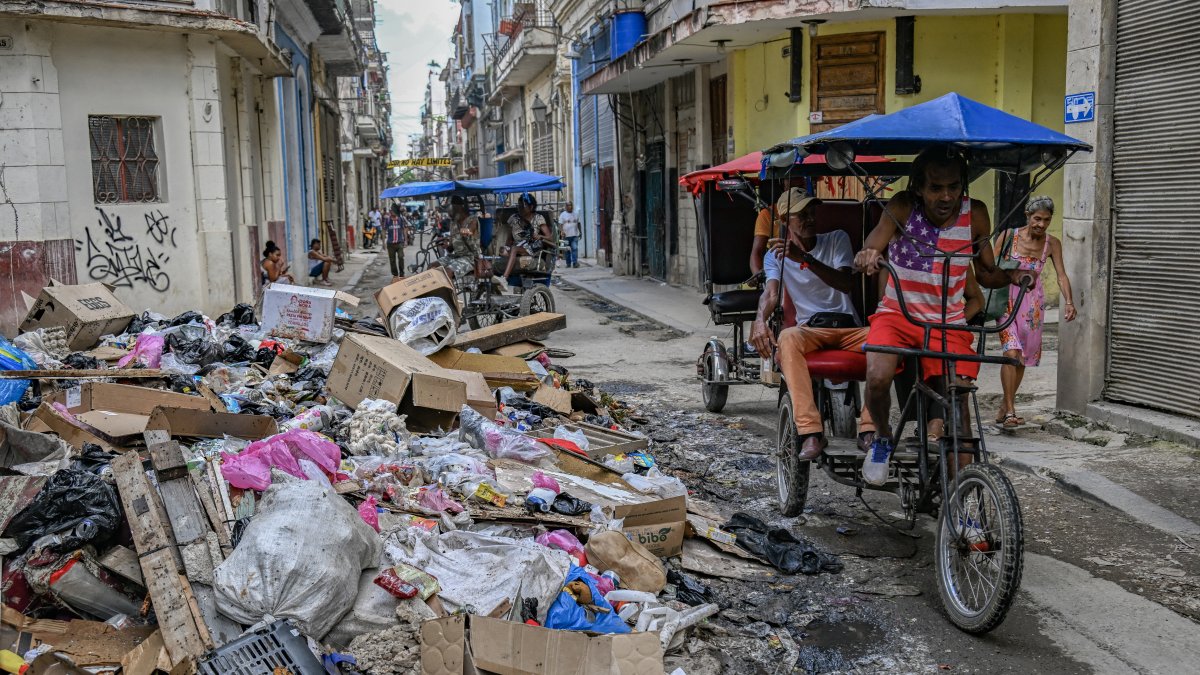
People live amid piles of trash in the heart of Havana (File photo)

The economic crisis facing Cuba showed further signs of deterioration in 2026. Between January and May, the island received just 359,491 international visitors, a figure representing a 58.4% drop compared with the same period the previous year and confirming the sharp decline in one of the country’s main sources of foreign exchange.
The data from the state-run National Office of Statistics and Information (ONEI) reflect a critical situation for a sector that for decades was presented by the regime's authorities as one of the pillars of the national economy and a key tool for driving recovery after years of recession.
In May alone, 30,883 foreign tourists entered Cuba, a figure well below that recorded in previous years and reflecting the sustained deterioration of the tourism sector.
Widespread decline in major markets
The decline affects virtually all source countries for tourists.
Canada, historically the main market for Cuban tourism, contributed 126,239 travelers during the first five months of the year. The United States recorded 25,572 visitors, and Russia, another market that had gained prominence in recent years, accounted for just 21,136 tourists.
All three countries experienced sharp declines compared to 2025, a trend that was also replicated in the rest of the source markets, where declines ranged from 50% to 70%.
The decline also affected Cubans living abroad. Between January and May, 60,874 people from this segment arrived, 39% fewer than during the same period last year.
Nearly empty hotels
The lower number of visitors had a direct impact on hotel occupancy.
During the first quarter of 2026, room occupancy stood at just 12.9%, one of the lowest levels recorded in decades. The figure reflects the magnitude of the crisis facing a tourism infrastructure built to receive millions of visitors each year.
The situation is particularly concerning considering that Cuba welcomed 4.6 million tourists in 2018 and 4.2 million in 2019. In contrast, in 2025, the country barely managed to exceed 1.8 million foreign visitors, far short of official targets, the data shows.

Opinion
Criminalization of hunger: police violence against Cuban mothers demanding food for their children
Food Monitor Program
Blackouts and fuel: The other face of the crisis
Behind the tourism collapse lies an increasingly decisive factor: the energy crisis.
Fuel shortages and constant outages in the national power grid have led to the cancellation of flights, operational difficulties for hotels and tourism services, and a growing perception of instability among potential visitors.
The situation continues to deteriorate. According to data from the state-owned Unión Eléctrica (UNE), more than 60% of Cuban territory will be affected by blackouts during peak demand hours.
To meet an estimated demand of 3,100 megawatts, the system has only 1,215 megawatts of effective generation capacity, resulting in a shortfall of nearly 2,000 megawatts.
Currently, several thermoelectric units remain out of service due to breakdowns or maintenance, while more than 100 distributed generation plants cannot operate due to a lack of fuel. In addition, floating plants and fuel oil power plants have also stopped supplying energy to the system.
An impact that extends to tourism
Prolonged power outages have hit industrial production, water supply and every aspect of daily life. In Havana, for example, the production of communion wafers for Catholic celebrations has been severely limited because the equipment needed for their production cannot run continuously for several hours.
The situation has forced church authorities to ration distribution to ensure supplies reach the country's various dioceses.
This is just one example of the many hardships Cuban citizens face.
Cuba loses ground to the Caribbean
While Cuba faces one of the worst moments in its tourism industry, other Caribbean destinations continue to consolidate their recovery.
Resorts such as Punta Cana in the Dominican Republic and Cancún in Mexico, maintain high levels of occupancy and international demand, driven by improved air connectivity, operational stability and infrastructure investments.
The difference reflects Cuba’s growing difficulty in competing in the regional tourism market amid an increasingly deep economic, energy and logistics crisis.

Fewer foreign exchange earnings and greater social pressure
The collapse of tourism represents a severe blow to an economy that increasingly depends on foreign exchange inflows from the tourism sector, remittances and the export of professional services.
The decline in visitors means less revenue for hotels, restaurants, transportation, businesses and the regime itself, at a time when the country is facing fuel shortages, inflation, supply problems and an unprecedented electricity crisis.
Social unrest continues to grow. Pot-banging protests and neighborhood demonstrations have become more frequent in various parts of the island, where demands for electricity, water and better living conditions are multiplying as blackouts become more frequent.
With half-empty hotels, a collapsed energy infrastructure and an economy in need of foreign currency, Cuba faces one of the most complex scenarios in recent decades, with no clear signs of recovery in the short term.
LATEST