ANALYSIS
Samuel Alito and a book fueling speculation: the unknown factor that could reshape the Supreme Court
While journalists close to the Supreme Court do not seem entirely convinced of the judge’s possible retirement, it is a possibility that remains on the table and could impact both the judicial system and the polls.
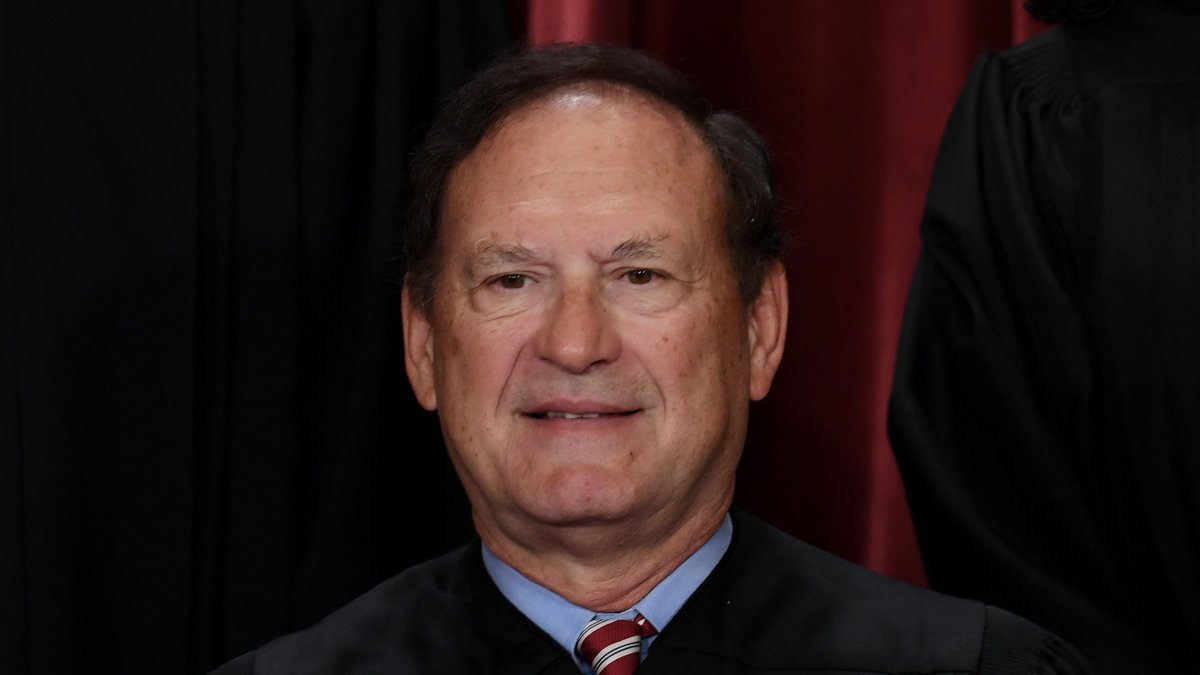
Samuel Alito in 2022/ Olivier Douliery

Is a vacancy coming up on the Supreme Court? All signs point to Samuel Alito. The conservative justice, a key figure in the conservative majority, may be considering retirement after nearly two decades on the bench.
Currently, Alito is the second-oldest justice on the court, behind only Clarence Thomas. He was nominated in 2005 by President George W. Bush and is currently 76 years old. Since 1970, the average retirement age for justices has been 79.
During his tenure on the court, he wrote the majority opinion in Dobbs v. Jackson Women’s Health Organization, a ruling that overturned Roe v. Wade and Planned Parenthood v. Casey, returning to the states the authority to legislate on abortion. Other notable opinions of his include Burwell v. Hobby Lobby Stores, Inc. and McDonald v. City of Chicago.
While journalists close to the Supreme Court do not seem very convinced of a possible retirement, it is a possibility that is on the table and could impact both the judicial system and the polls.
Signs Fueling Speculation About Alito
Speculation about a possible retirement by Alito began when he announced the release of his first book: ‘So Ordered: An Originalist’s View of the Constitution, the Court, and Our Country’. While there is nothing unusual about a Supreme Court justice publishing a book while in office, what was striking was the date chosen for the publication.
The book is scheduled to be released on October 6, just days after the start of another Supreme Court term. Therefore, many speculate that Alito plans to retire and embark on a book tour.
In recent weeks, several influential lawmakers, such as John Thune and Chuck Grassley, have stated that Senate Republicans are already considering the possibility of a Supreme Court retirement before the end of the year.
Even President Donald Trump spoke on the matter in an interview with Maria Bartiromo of Fox News: “In theory, it's two — you just read the statistics — it could be two, could be three, could be one. I don't know. I'm prepared to do it. But when you mention Alito, he is a great justice.”
The memory of Ginsburg remains fresh
In addition to the book, another factor to consider is the November election, in which Republicans could lose control of the chamber responsible for deciding Supreme Court nominations: the Senate.
With the case of Ruth Bader Ginsburg still fresh, Alito may have incentives to retire at a relatively young age, ensuring both the ability to enjoy life as a former judge and the peace of mind that his seat will be filled by someone of his own legal ideology.
Ginsburg, a Supreme Court justice since 1993, faced significant pressure to retire during the administration of Barack Obama, when Democrats held a majority in the Senate. However, she decided to remain on the bench. The progressive justice died unexpectedly in October 2020, just weeks before the presidential election between Donald Trump and Joe Biden.
Despite the proximity to the election, since Republicans held a majority in the Senate, Trump and Mitch McConnell moved quickly to fill Ginsburg’s vacancy with a conservative justice, who ended up being Amy Coney Barrett. Since then, the court has been composed of a 6-3 conservative majority.
“Elections have consequences,” said McConnell, then the Republican majority leader in the Senate, regarding Barrett’s nomination. In 2016, following the death of Justice Antonin Scalia, McConnell blocked President Obama’s nomination of Merrick Garland, arguing that the Supreme Court vacancy should be decided by the next president. Since Republicans controlled the Senate, Garland’s nomination expired and Trump ultimately filled the vacancy in 2017 with Neil Gorsuch.
Conflicting Reports on Alito’s Future
Reports regarding whether Alito will retire or not are contradictory. For the time being, the justice has not personally stepped forward to dismiss or confirm any of the rumors, further fueling speculation.
Recently, sources close to the Supreme Court told ABC News that neither Thomas nor Alito plan to retire in the coming months. Additionally, Fox News Digital reported that Alito “will not leave his post this term and is in the process of hiring the rest of his staff for the next one.”
While the conservative justice’s intentions remain unclear, the fact that Fox News Digital mentions “this term” does not rule out the possibility that he might retire before the start of the next one—precisely when his book is scheduled for release.
However, CBS News’s chief legal correspondent, Jan Crawford, offered a different account. According to her sources, Alito does not plan to retire “this year,” which would also include the court’s next term.
Crawford was joined by Mollie Hemingway, author of the book ‘Alito: The Justice Who Reshaped the Supreme Court and Restored the Constitution’, recently spoke with Megyn Kelly and addressed the possibility of Alito’s retirement: “They've been doing this for about a year, and I keep telling people I don't actually see that happening. I don't know for sure anything is possible. But the reporting that that just came out from Fox News and also Jan Crawford at CBS, it matches with my understanding as well. He's not inclined to retire, and, people should be prepared for that.”
The electoral impact of Alito’s departure: The boost Republicans need?
In addition to a major impact on the Supreme Court, Alito’s potential departure could have ripple effects on the midterm elections. "f we did have a Supreme Court vacancy obviously that would be a galvanizing issue for Republicans," said John Cornyn, a Texas senator and member of the Senate Judiciary Committee.
Republican strategist Brian Darling spoke to the same outlet. For him, a vacancy on the Supreme Court could serve as an “October surprise” for Republicans.
"An October surprise is when some issue comes up that people aren’t expecting that completely changes the debate. That clearly is something that would be welcomed by the Trump administration going into the midterms," he noted.
Who could replace Samuel Alito on the Supreme Court?
If Alito’s retirement were to materialize this year, Trump would have the opportunity to nominate a new justice to the nation’s highest court. If that happens, the Republican would join the select group of presidents who have nominated four justices, alongside Richard Nixon, Harry Truman, Warren Harding, Benjamin Harrison , and Grover Cleveland. In other words, the last president to have made that many nominations left office in 1974.
As with any other process leading up to a potential Supreme Court justice’s retirement, the dance of names begins many months in advance.
Some of the names circulating in conservative media outlets combine youth with a legal philosophy similar to Alito’s, focused on interpreting the Constitution according to its original text and historical context.
- Andrew Oldham: the judge on the U.S. Court of Appeals for the Fifth Circuit was nominated to that position by President Donald Trump in 2018. A Harvard University graduate, he served as editor of the prestigious Harvard Journal of Law and Public Policy. In addition to practicing law in private practice, he served as an advisor to Texas Governor Greg Abbott and was even a law clerk for Alito. He has been an adjunct professor at the University of Texas School of Law since 2019 and is a member of the Federalist Society.
- Neomi Rao: Since 2019, Rao has held the seat vacated by Brett Kavanaugh when he was nominated to the Supreme Court. The judge on the U.S. Court of Appeals for the District of Columbia Circuit is a member of the Federalist Society and another strong contender to succeed Alito on the court. Before joining the bench and during the first Trump administration, she headed the Office of Information and Regulatory Affairs (OIRA), a key agency in the president’s deregulation agenda. After working briefly as a reporter, she attended the University of Chicago Law School and later taught at George Mason University. Between 2001 and 2002, she served as a law clerk for Justice Clarence Thomas.
- Amul Thapar: another member of the Federalist Society, he has served as a judge on the U.S. Court of Appeals for the Sixth Circuit since 2017. Previously, he served as U.S. Attorney for the Eastern District of Kentucky and as a judge for nine years on the U.S. District Court for the Eastern District of Kentucky. The son of Indian immigrants, he studied law at the University of California, Berkeley.
- James Ho: Born in Taiwan, Ho graduated from the University of Chicago Law School. In addition to practicing in private practice, he worked in the Civil Rights Division and the Office of Legal Counsel at the Department of Justice under the George W. Bush administration. He served as a law clerk for Clarence Thomas and, in 2008, succeeded Ted Cruz as Texas’s attorney general. He currently serves as a judge on the U.S. Court of Appeals for the Fifth Circuit, a position to which he was nominated by Trump. He is also a member of the Federalist Society.
- Kyle Duncan: the latest name among Alito’s potential successors argued two cases before the Supreme Court, including Burwell v. Hobby Lobby Stores, Inc. In 2018, President Trump nominated him to serve as a judge on the U.S. Court of Appeals for the Fifth Circuit, a position he holds to this day. Previously, he worked at the Becket Fund for Religious Liberty, an organization that defends religious freedom. He has been a member of the Federalist Society since 2012.
LATEST