ANALYSIS
September: A nail-biting month on Capitol Hill ahead of midterm campaign kickoff
Members of both chambers of Congress return next Monday following the Labor Day recess (House of Representatives) and the summer recess (Senate), and face a packed agenda to move forward key bills such as the FISA reauthorization, the Farm Bill, new sanctions against Russia and Iran, and the third reconciliation package, in addition to making another attempt to pass the SAVE Act.
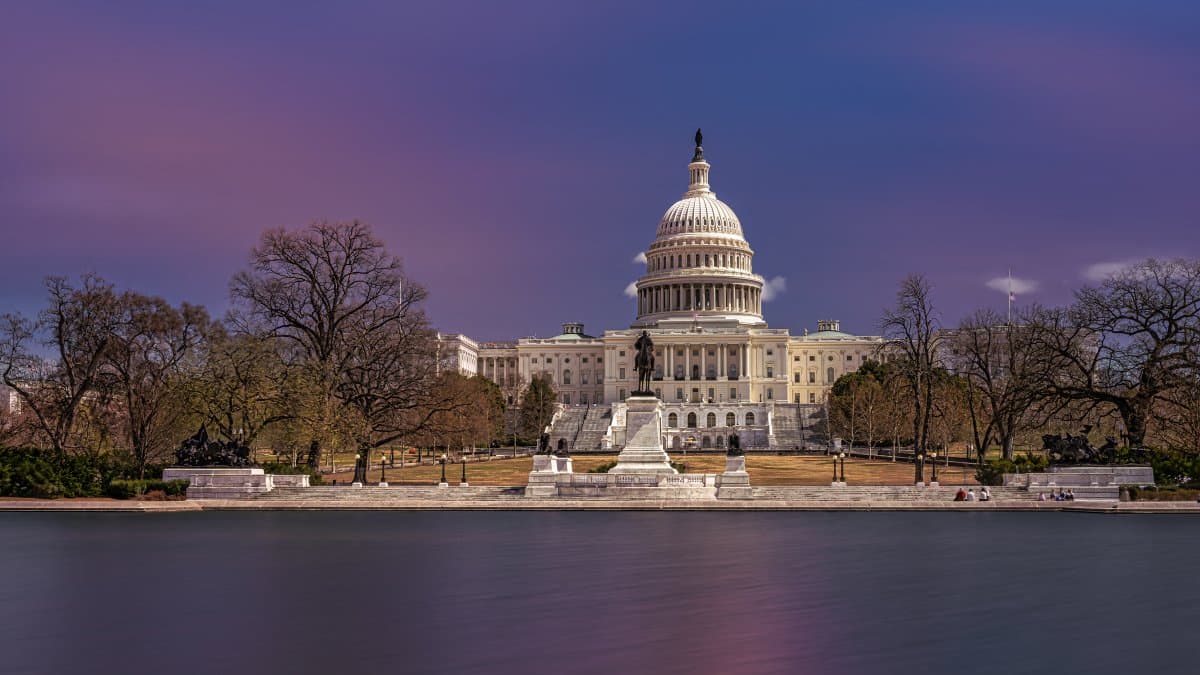

Next Monday, the final sprint of the legislative session before the midterms kicks off on Capitol Hill. Following the Labor Day recess for the House of Representatives and the summer recess for the Senate, lawmakers have little time before the midterm campaign hiatus to push through pending bills or try again—with little chance of success, barring a surprise—to fulfill the hopes of Donald Trump and Republican leaders to pass measures such as the SAVE Act.
Amid a tense pre-election atmosphere, members of Congress from both parties will try to finalize legislation already in the pipeline, such as the FISA reauthorization, the Farm Bill, new sanctions against Iran and Russia (sponsored by Lindsay Graham before his sudden death), and the third reconciliation package.
Three weeks of work for the Senate, just one for the House
To that end, the Senate—where the GOP is finding it most difficult to push through the legislation Trump most wants—has three weeks following a recess that began on Aug. 7. The House, however, will see little activity next week and on Thursday, Oct. 1, before diving headfirst into the midterm election campaign. For the last two weeks of September, representatives will be in their congressional districts.
That said, avoiding a government shutdown is no longer an immediate priority, thanks to Congress having already passed a temporary budget resolution that keeps the federal government funded through Dec. 11.
This pushes much of the final budget negotiations to after the elections, when the current Congress could reconvene during a lame-duck session. In the meantime, attention is focused on various foreign policy and national security initiatives, as well as appropriations for fiscal year 2027.
These are the bills that will shape the agenda on Capitol Hill ahead of the 2026 midterms
1. H.R. 5334 — Sanctions against Russia and Iran
The bill, dubbed the Lindsey O. Graham Sanctioning Russia and Iran Act of 2026, is likely the initiative with the best chance of swift passage. The Senate passed the bill on Aug. 7 by a vote of 86 to 11, introducing changes that the House of Representatives must now consider.
The text expands sanctions against Russia and Iran and provides for the possibility of imposing tariffs of up to 100% on certain countries that purchase Russian oil or gas. The House has scheduled consideration of the amendments approved by the Senate for Sept. 14.
2. H.R. 9495 — Pentagon budget for 2027
The Department of Defense Appropriations Act, 2027 establishes funding for the Department of Defense for the fiscal year beginning Oct. 1. The House Appropriations Committee approved it and referred it to the full House on June 26.
The Senate also lists the bill among the active appropriations initiatives for 2027, but the bill is facing some difficulty in securing the consensus needed to move forward.
3. H.R. 9310 — National security and immigration
The Department of Homeland Security Appropriations Act, 2027 was reported by the House Appropriations Committee on June 12.
Funding for border and immigration operations will be one of the main battlegrounds between Republicans and Democrats during budget negotiations and, given the pre-election period we are in, will serve as a litmus test for both parties on one of the most sensitive issues for voters.
4. H.R. 8595 — State and international security
The appropriations bill for the State Department and national security-related programs reached an advanced stage in the House, where it was passed in July. The bill affects funding for U.S. diplomacy, international programs and other areas of foreign policy.
Its future will be closely tied to negotiations on Ukraine, the Middle East, foreign aid and the Trump administration's priorities.
5. H.R. 7567 — Farm, Food and National Security Act of 2026 (Farm Bill)
The current authorization for farmer and commodity support programs expires on Sept. 30. The House has already passed its own version of the bill, while the Senate is working on a draft. Lawmakers are considering both a new five-year bill and a temporary extension to prevent these programs from collapsing.
6. H.R. 3633 — Digital Asset Market Clarity Act
The bill seeks to establish a clear regulatory framework for the cryptocurrency and digital asset market. A procedural vote is scheduled; if it passes, it could lead to several days of debate. However, significant differences remain among lawmakers regarding ethical safeguards, anti-money laundering measures and the treatment of stablecoins.
7. Reauthorization of Section 702 of FISA
Another urgent matter is the reauthorization of Section 702 of FISA, the foreign intelligence surveillance powers that have been expired for months. The Senate needs to pass a new version quickly. So far, there is no single dominant bill that has garnered a consensus.
8. Third budget reconciliation package
Valued at approximately $95 billion and focused primarily on defense, agricultural aid and election security, it has made progress in the House but is met with skepticism by several Republican senators. Its passage before the midterm elections is considered, for now, unlikely.
9. S. 1383 — SAVE America Act
The Safeguard American Voter Eligibility (SAVE) Act / SAVE America Act appears in the House as S. 1383, after being completely stalled in the Senate—one of the main points of contention between the Republican majority leader in the Senate, John Thune, and Trump. The House passed its own version on Feb. 11, 2026, by a razor-thin margin of 216-215.
The legislation seeks to require documentary proof of citizenship to register to vote in federal elections, in addition to introducing voter ID requirements. It is one of the top campaign priorities for Donald Trump and the Republicans, but it has little chance of passing before the midterms
10. S. 4632 — Mechanism to prevent future government shutdowns
The Prevent Government Shutdowns Act of 2026 aims to establish a mechanism for automatic temporary funding when Congress fails to pass spending bills on time. The bill was introduced in the Senate and placed on its calendar on June 1. It also has a bipartisan group of sponsors.
However, its immediate importance has diminished after Congress passed the resolution keeping the government open through Dec. 11. Its main significance now is political: it could become one of the proposals to reform the budget process after the election.
🛠 Do you think there is an error in this article?
Recommendations



LATEST