Prosperity 250 Summit: The Principles That Made America Great
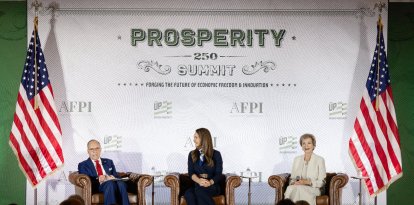
To highlight the principles that have made the country great and discuss policies to strengthen the economy and secure long-term prosperity, the America First Policy Institute (AFPI) and Unleash Prosperity hosted the “Prosperity 250 Summit.”
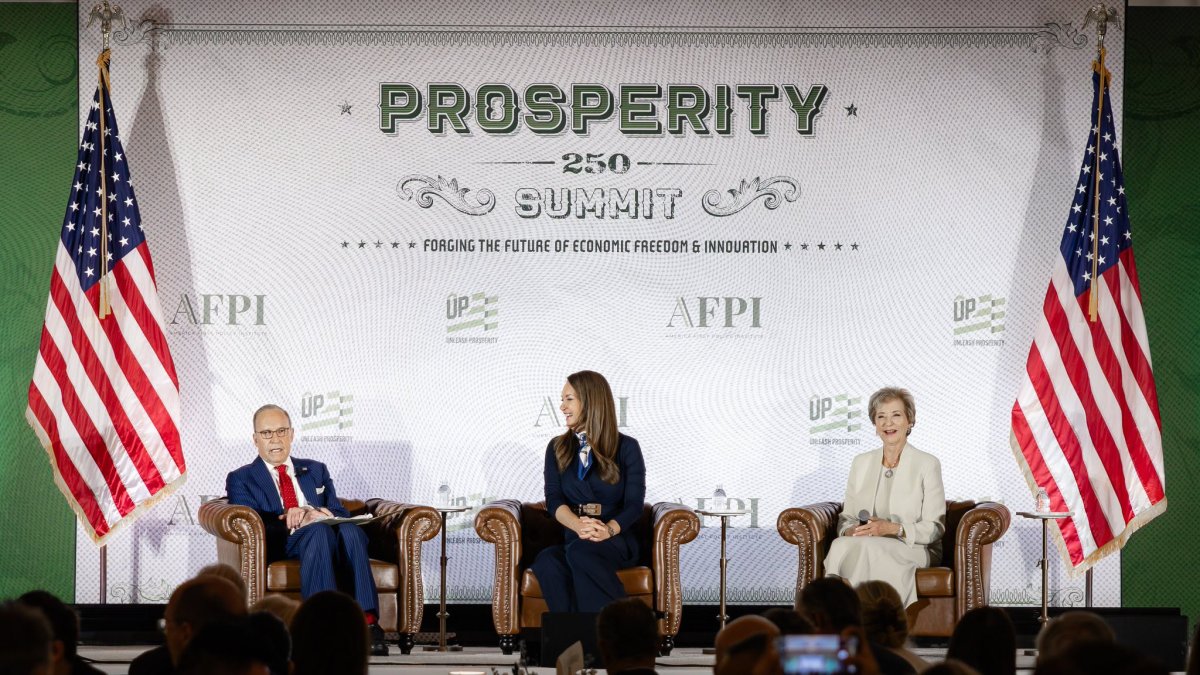
Photo courtesy of AFPI
To mark the 250th anniversary of the United States, the America First Policy Institute (AFPI) and Unleash Prosperity hosted the Prosperity 250 Summit. During the event, participants examined the factors that have driven America’s growth and prosperity, as well as the policies needed to preserve that model in line with the legacy of the Founding Fathers, with the goal of ensuring that future generations continue to benefit from the opportunities offered by an economy based on free enterprise and individual effort.
The various panels addressed topics ranging from constitutional issues, the economy, and entrepreneurship to specific areas of public policy and some of the recent measures taken by the Trump Administration. During the summit, business leaders, government officials, public policy experts, and financial sector leaders analyzed proposals aimed at boosting economic growth and preserving America’s prosperity for future generations.
The Importance of the Constitution
The day began with an address by Jonathan Turley, one of the country’s most prominent legal scholars and a professor at George Washington University, who reflected on the Constitution’s central role not only in shaping the nation, but also in preserving America’s freedom and prosperity for the future.
"When people talk to me, come to speeches and say, 'you know what, I love the Constitution, I love reading it.' I know they've never read the Constitution, only because no one enjoys reading the Constitution... You want to really read a beautiful constitution, try any of the French constitutions. They had plenty of experience, they failed so often, but they were beautifully written. Our Constitution is designed to survive, and it has. It's a very practical and frank document. We can't change it."
The professor said, adding that the free-market principles that emerged with the founding of our country are equally important and that economic freedom is essential.
Low Taxes
In another panel, Dr. Arthur Laffer, director of Unleash Prosperity, former economic advisor to President Trump, and a living legend in the field of economics, spoke about one of what he considers the key drivers of prosperity: low taxes. The renowned economist went further, emphasizing the importance of moving toward a flat tax system.
"What I'd like our party to do is focus on the dream. The North Star. We want a low-rate, broad-based flat tax. Literally a low-rate, broad-based flat tax, with no exemptions, no exclusions, no emissions, no credits, no breakups, nothing. And, the lowest possible rate to provide the least incentive for people to evade, avoid, or otherwise not report taxable income, and that should be the dream."
Insisting on the importance of thinking big, Laffer said, "If we wanna win, do it with good economics all the way. Don't be afraid of the North Star. Do the right thing."
Showing the audience charts illustrating the historical relationship between lower tax rates for high-income taxpayers and an increase in tax revenue from that group, Laffer emphasized:
"If you raise tax rates on the rich, you will hurt income, you will get less tax revenues, and you will destroy the poor... Don't go after those rich ones, they know how to shelter their income, they know how to move their locations, they know how to hire lawyers."
Work as a Source of Wealth and Happiness
The conversation then turned to the fundamental role of work in society, not only in driving overall prosperity but also in shaping individual happiness and purpose.
Michael Faulkender, AFPI co-chair for American Prosperity and former deputy secretary of the U.S. Department of the Treasury, reflected on the incentives for wealth creation, emphasizing the role of voluntary exchange in the economy and noting that such transactions benefit both parties involved.
“When I go to work, someone voluntarily pays me because the value they derive from the work I do is greater than the resources they are providing in exchange. That’s the opposite of what intergenerational dependence on the government creates, isn’t it? When overly generous social programs are implemented, they actually discourage the creation of the economic goods and services on which we all depend to meet our daily needs.”
And on a much deeper and more personal aspect of the importance of work, he said:
“We need to come back to these much more fundamental issues and values about what it means to live a good life—having purpose, contributing to your community, rather than just being a recipient of benefits.”
The America First agenda is grounded in biblical principles
To conclude the afternoon, several members of the Trump Administration addressed key issues. Brooke Rollins, founder of AFPI and Secretary of the U.S. Department of Agriculture, reflected on how the principles of the America First agenda are rooted in biblical foundations, as understood by the nation’s Founding Fathers. As she explained, everything from private property rights to border security relates to precepts found in the Bible.
The secretary also spoke about the importance of the major changes underway at the Department of Agriculture and how they relate to national security.
"The reason the one Big Beautiful Bill was so important to rural America and to agriculture as a national security issue, is that it was the largest investment in rural America in history, and the understanding of how important it is that we produce our own food in America, the ultimate energy source for humans is food... If we don't get that right, if we continue to consolidate, especially with foreign-owned agriculture companies, which has been happening over and over again, if we continue to allow foreign countries to buy our farmland, then we will lose freedom as we know it."
Protecting the Environment While Growing the Economy
Finally, Lee Zeldin, Administrator of the U.S. Environmental Protection Agency, spoke about the damage that the Biden Administration’s radical green agenda had caused to the economy, and how that course has since been corrected.
"We came in and inherited an agency that believed that in order to protect the environment, you would have to suffocate out of existence entire sectors of our economy. The Trump Environmental Protection Agency (EPA), believes strongly that we can do both, we can protect the environment and grow the economy at the same time."
Zeldin also explained that, following an internal reorganization of the agency, the size of the workforce has been reduced by approximately 25% compared to when they took over. He added that, as part of this restructuring process, approximately $30 billion in previously committed spending was canceled or cut.
The event also featured Secretary Linda McMahon, AFPI founder and Secretary of the U.S. Department of Education; Larry Kudlow, AFPI Chairman of the Board, Chair for American Prosperity, and Fox Business host; Steve Moore, AFPI Senior Fellow, Co-Chair of the Save America Coalition, Principal at Unleash Prosperity, and former senior economic advisor to President Trump; Greg Sindelar, AFPI President and Chief Executive Officer; and Dr. Kevin Hassett, Director of the National Economic Council of the United States and former senior advisor and Chairman of the White House Council of Economic Advisers during the first Trump Administration, among others.
LATEST