Trump rejects Strait of Hormuz tariffs, demands Oman align with Western powers
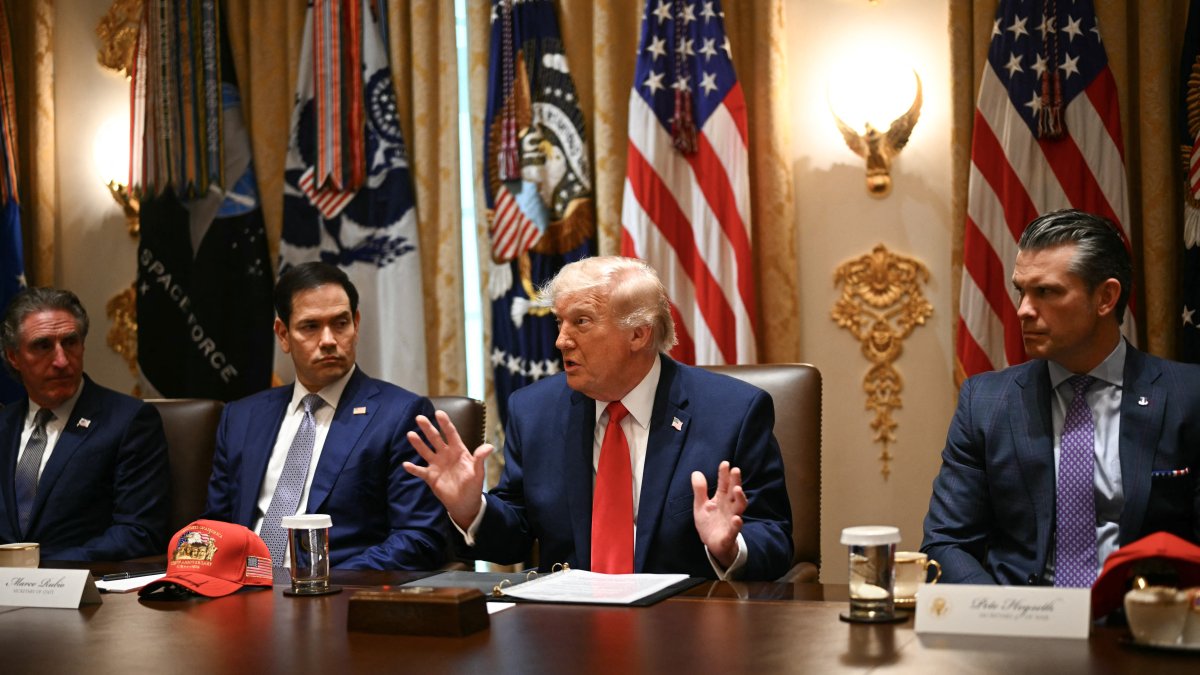
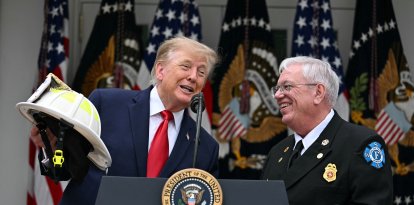
President Trump during his cabinet meeting on Wednesday.

The White House's strategy to restore free transit in the Strait of Hormuz, one of the main arteries of global energy trade, has entered a phase of maximum firmness.
President Donald Trump bluntly dismissed a proposal that sought to delegate to Oman and Iran the power to jointly levy a transit fee or toll on commercial vessels crossing the strategic strait.
The U.S. president's warning sets an unequivocal stance toward his partners in the Middle East regarding Washington's tolerance of any kind of bilateral agreement with the Iranian theocracy.
During a cabinet meeting held on Wednesday at the White House, the president was asked about the talks that, according to international press reports, delegates from Oman and Iran had been holding.
The presidential response reflected the administration's determination to secure supply routes, pointing out to reporters that the Gulf state must abide by international rules or face severe reprisals.
Defense of international law in Gulf waters
The full reopening of the maritime passage, through which approximately 20% of the world's crude oil transits, remains the central axis of the negotiations aimed at ending the hostilities that began three months ago.
The Islamic regime proceeded with the effective blockade of the canal at the end of February, following the joint defensive operations executed by the United States and Israeli forces. Despite the validity of a temporary cease-fire decreed in April, subject to the normalization of navigation, the flow of vehicles continues to be severely restricted.
The commercial paralysis in the area has caused a sustained increase in the prices of hydrocarbons in international markets.
The logistical impact extends beyond the energy sector; the Food and Agriculture Organization of the United Nations (FAO) issued preliminary warnings regarding the risk of a transnational food crisis resulting from the stagnation of cargo ships at the Arabian Peninsula approaches.
Faced with this juncture, the U.S. president reaffirmed the fundamental principles governing his government's foreign policy on navigational sovereignty.
"The Strait has to be open to all," he told the Cabinet. "These are international waters. No one is going to control it. We are going to monitor it. We will monitor it, but nobody is going to control it. That is part of the negotiation we have," he stressed.
The limit of diplomacy with regional mediators.
The presidential pronouncement alters Oman's traditional position as a historical broker in the region.
The sultanate, which is not part of the signatory countries of the Abraham Accords promoted by the Trump administration, has historically operated as a discreet channel of communication between Western governments and the Persian regime, facilitating discussions concerning the nuclear inventory and peacemaking mechanisms.
However, journalistic revelations originally published by Bloomberg News regarding deliberations to establish a shared tariff framework collided with the economic deterrence strategy promoted by the State Department.
US diplomacy backed the line drawn by the Executive, disseminating pronouncements through its official channels to ratify that the security of global supply lines is not subject to financial concessions that benefit Tehran's coffers.
The determination shown by Trump exposes the priority given by his administration to the economic security of American citizens and Western democracies in the face of logistical blackmail by authoritarian regimes.


LATEST