ANALYSIS
Too old? What would happen if Alvin K. Hellerstein, the 92-year-old judge leading the trial against Nicolás Maduro, is unable to continue to lead the proceedings
A federal trial like Maduro's in the SDNY often drags on due to its complexity. In that context, "The issue of age cannot be ignored," said Shira Scheindlin, a former federal judge in New York.
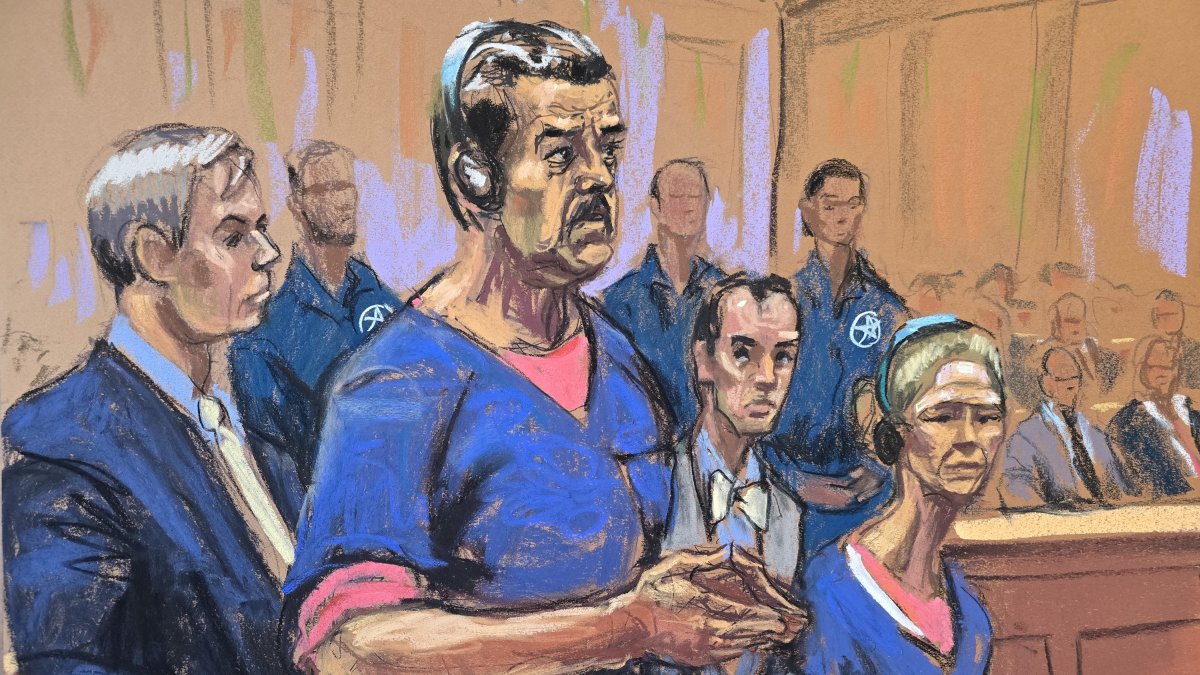
Sketch of the trial of Nicolás Maduro

Alvin K. Hellerstein, the federal judge handling the case against the Venezuelan ex-dictator Nicolás Maduro in the Southern District of New York (SDNY), is 92 years old and is known for having handled numerous high-profile prosecutions throughout his career.
However, due to his advanced age, some observers doubt that he is the most suitable figure to lead a potentially lengthy trial against the former president, who faces serious charges of narcoterrorism conspiracy, conspiracy to import cocaine into United States, possession of machine guns and destructive devices, and conspiracy to possess them.
Long trial puts judge's age under scrutiny
A federal trial such as Maduro's trial in the SDNY on the aforementioned charges is usually very long due to its complexity, international evidence, witness protection, politically charged motions and the volume of documents. In that context, "The issue of age cannot be ignored," Shira Scheindlin, a former federal judge in New York, told AFP.

Politics
Maduro returns to court in New York as his defense tries to invalidate trial
Víctor Mendoza
"This case may not go to trial for at least a year and maybe two years. By that time, he would be either 93 or 94," Scheindlin mentioned. "I have no doubt that he would be fit to try the case tomorrow. But the case will not be tried tomorrow," she added.
Born in 1933, Hellerstein graduated from Columbia University and was nominated in 1998 by then-President Bill Clinton as a judge for the Southern District of New York, where he has handled numerous high-profile cases.
What would happen if Hellerstein is unable to remain at the trial helm
If Judge Alvin Hellerstein finds himself unable to continue the trial against Nicolás Maduro, the case is neither canceled nor disappears. Everything is regulated by Rule 25 of the Federal Rules of Criminal Procedure (FRCP Rule 25), which allows any other judge in the same district to continue and conclude the trial, provided that he certifies that he has fully familiarized himself with the file.

Politics
State Department downgrades risk of travel to Venezuela from Level 4 to 3
Virginia Martínez
In practice, given the enormous complexity of the Maduro case, it is very likely that the new judge will declare a mistrial and the trial must be restarted from scratch to avoid future appeals for violation of due process.
However, if the judge becomes unable before trial, the case is automatically reassigned pursuant to Rule 17of the SDNY Business Division Rules, which provides that, in the event the magistrate is unable to proceed with the trial, the Assignment Committee transfers pending cases by lot to other active judges or visiting judges.
A judge familiar with the chavismo case
Maduro's next court appearance is scheduled for Thursday, when he is due to appear before the judge along with his wife, Cilia Flores, who also faces serious federal charges.

Since 2011, Hellerstein has been in charge of the drug trafficking trial against Hugo El Pollo Carvajal, former military intelligence chief of Venezuela, a case in which Maduro was included in 2020.
The magistrate has already ruled against another of those involved in this file. In 2024 he sentenced former Venezuelan general Cliver Alcalá to 21 years and eight months in prison, a decision that marked one of the most relevant moments within this complex case.
A judge marked by firm decisions and clashes with the powers that be
Last year, moreover, he blocked an attempt by the Trump Administration to deport alleged Venezuelan gang members without a judicial hearing.
In a landmark 2015 decision, the magistrate ordered the U.S. government to release numerous photographs documenting abuses against detainees in Iraq and Afghanistan.
He was also at the forefront of the trial in which French bank BNP Paribas was found liable in October for aiding and abetting atrocities in Sudan. The jury found that the bank should pay $20.75 million to the victims.
LATEST