Maduro returns to court in New York as his defense tries to invalidate trial
The former Venezuelan leader is trying to get a federal court to dismiss drug trafficking charges amid disputes over funding for his defense.
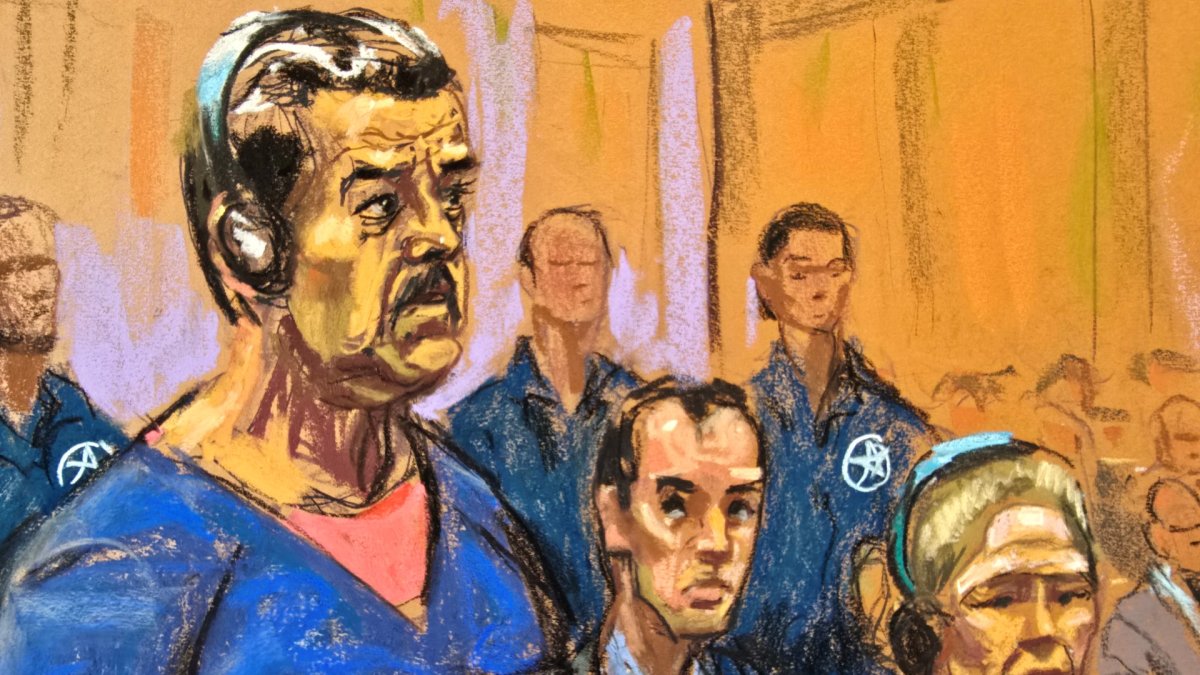
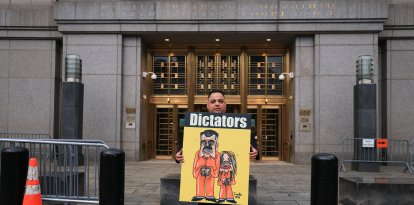
Illustration of Maduro in court.

Nicolas Maduro returns to the dock on Thursday. The ousted Venezuelan dictator will seek to have drug trafficking charges against him dismissed before a New York court.
One of the key issues in the trial is expected to be the payment of fees for Maduro and his wife, Cilia Flores. In past filings, the former president's lawyer, Barry Pollack, asserted that his client would not be able to afford his defense due to the Trump Administration's sanctions.
Caracas wants to cover Pollack's fees. However, the sanctions target both Maduro and the Venezuelan government. The latter was willing to pay the defense lawyer of the person it continues to consider as its legitimate president, but first it should obtain a license from Washington.
Pollack argued in a court filing that such authorization violated Maduro's constitutional right to legal representation, according to AFP. He also demanded that the case be dismissed on procedural grounds.
Maduro, who ruled Venezuela since March 2013, was ousted in a special operation on January 3. Throughout those years he was accused of fraud in the elections of his two re-elections, as well as drug trafficking. The Trump administration even targeted him as the leader of a high-ranking Venezuelan cartel called the Cartel of the Suns.
Security is expected to be reinforced this Thursday around the court, as it was when Maduro first appeared. Heading the case is Alvin Hellerstein, a 92-year-old judge renowned for his long career on the bench.
Maduro's confinement: no internet and 15-minute phone calls
He is only allowed to communicate by phone with his family and lawyers, for a maximum of 15 minutes per call, according to that source.
"They are very well, strong, very well, with a lot of spirit, with a lot of strength," Nicolas Maduro Guerra, son of the deposed president, said Monday. "We are going to see a slim president, an athlete, exercising every day," added the also deputy.
World
What does it mean when the US lowers its travel advisory for Venezuela to level 3?
Virginia Martínez
The question of fees
The 63-year-old Maduro pleaded not guilty to drug trafficking charges and claimed he is a "prisoner of war" at a hearing on Jan. 5.
He is accused of having allied with guerrilla movements, mainly in Colombia, considered terrorists by Washington. He is also accused of partnering with criminal cartels to ship tons of cocaine to the United States.
According to his lawyer, the Treasury Department's Office of Foreign Assets Control (OFAC), responsible for applying the sanctions, granted him licenses on January 9 to receive payments for the defense of Maduro and his wife. However, Pollack said OFAC then issued an amended authorization preventing him from receiving such payments.
Society
FBI includes Aníbal Canelón Aguirre on list of ten most wanted fugitives for cybercrime
Virginia Martínez
He added that his team had filed an appeal with that office and would eventually file a formal complaint with the court, arguing that Maduro cannot afford an attorney by other means.
Prosecutors responded in a court filing that even if the constitutional rights of Maduro had been violated, the dismissal of the indictment would be excessive.
Venezuela is governed on an interim basis by Delcy Rodriguez, Maduro's former vice president since 2018 but who now works in collaboration with the White House. This month, the United States re-established diplomatic ties with Venezuela, in a sign of a thaw in the relationship following Maduro's ousting.
LATEST