Miami defines its political future: Historic runoff and special elections in Florida
The state has experienced numerous special elections to fill vacancies caused by appointments, deaths or new political projects.

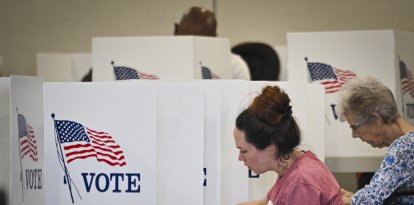
A polling place in the Miami community (File).

Although 2025 is a year of less overall election activity in Florida, the state has seen numerous special elections to fill vacancies caused by appointments, deaths or new political projects.
Several of those vacancies arose because state lawmakers accepted cabinet posts after Donald Trump returned to power, or left office to run for other positions. The result has been a "game of seats" between state House and Senate, and also in local spheres, that is keeping Florida politically active.
What will be decided Tuesday, Dec. 9?
This Tuesday, Dec. 9, features at least two statewide special elections, plus a crucial local election in the city of Miami.
- Florida Senate District 11 to replace Blaise Ingoglia, who left her seat after being appointed state finance director.
- Florida House District 90 (Florida House District 90) to fill the seat vacated after the death of Rep. Joseph Casello on July 18, 2025.
- In addition, the city of Miami is holding a runoff election for mayor, following a first round with 13 candidates in which none won an outright majority.
Here are the highlights of each race.
Senate District 11: Vacancy due to Ingoglia's promotion
The District 11 seat, which covers Hernando, Sumter, Citrus and northwest Pasco Counties, became vacant when Blaise Ingoglia was appointed state chief financial officer in mid-2025.
In the Republican primary held on Sept. 30, Ralph Massullo Jr. (Lecanto physician and former state representative) won a landslide victory over his internal rival, with percentages close to 78-81% in the district's various counties.
His Democratic opponent in the Dec. 9 general will be Ash Marwah, a retired engineer and businessman residing in The Villages.
House of Representatives District 90: One vacancy due to death
Florida House District 90, which includes parts of Palm Beach County, such as parts of Delray Beach, Boynton Beach and surrounding areas, was left without a representative following the death of Joseph Casello on July 18, 2025.
To fill that seat, the special election this Dec. 9 will feature:
- Rob Long (Democrat), Delray Beach commissioner.
- Maria Zack (Republican), businesswoman and activist.
- Karen Yeh (independent/nonpartisan), local businesswoman.
The winner will hold the seat until the next regular election.
Politics
"We’re going to redistrict": DeSantis confirms he will convene special legislative session on new electoral maps in Florida
Luis Francisco Orozco
Miami elects new mayor: Closely watched, high-tension runoff
In Miami, after a first round on Nov. 4 with 13 candidates, none got more than 50% of the vote. The two contenders who advanced to the runoff are: Eileen Higgins (Democrat), a former Miami-Dade County commissioner, who got about 36% of the vote in the first round, and Emilio T. González (Republican), the former Miami city manager, with about 19-20% of the vote.
Here's what you need to know about the candidates and their plans for Miami
Proposes expanding the Miami Commission from five to nine members to improve representation and pledges to be a full-time mayor, in addition to replacing the city manager. She has criticized recent immigration measures as "inhumane" and emphasizes the need for a more ethical and transparent government.
Emilio González, a retired colonel and former city administrator, presents himself as an experienced manager who wants to correct structural flaws in the government. His main focus is to reform the permit system, which he considers dysfunctional. In housing he argues that the concept of "affordable" is distorted and calls for a more realistic approach that benefits essential workers. He opposes expanding the Commission, betting on "better commissioners, not more."
He also proposes strong flood measures, using parks as water reservoirs, and says the city can absorb a $100 million fiscal impact if it moves forward with state tax reform. He would also replace the city manager and says he wants to "make Miami great again."
The runoff will take place this Tuesday, Dec. 9, 2025. Polls will be open from 7 a.m. to 7 p.m. For unofficial voter turnout (early voting) so far, click here.
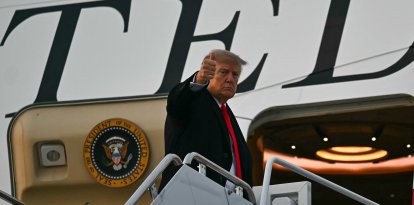
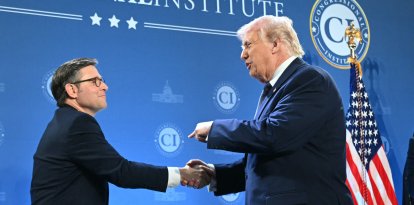
This showdown has ended up reflecting - even though the race is officially non-partisan - a symbolic fight between parties: Emilio González has public backing from President Trump and the state Republican apparatus; Higgins, meanwhile, has the support of national Democratic figures and the local Democratic electorate.
A Higgins victory would mark a milestone: she would be the first Democratic mayor of Miami in nearly 30 years, as well as the first woman and the first non-Hispanic to assume that office in a majority-Hispanic city.
A city on the brink: Miami's big urban and climate challenges
In addition, as a coastal city, Miami is on the front lines of some of the country's most serious climate challenges. Recurrent flooding, sea level rise, extreme heat events, aging infrastructure and high housing costs make for a complex picture that demands strategic decisions.
Achieving a balance between urban growth and climate resilience has become an inescapable priority: the development, zoning, transportation and adaptation policies implemented today will shape the city Miami will be for decades to come.
2025 in Florida: Beyond business as usual
This special election cycle is part of a larger pattern in 2025. As a compiled overview of elections shows: several vacancies have been generated by cabinet appointments, deaths or resignations to seek other offices.
For example, state House Districts 3 and 32, and Senate District 19, held special elections in June; other districts have been reconfigured.
This makes 2025 an unusual year: although there is no general election for governor or president, multiple replacements have kept Florida in a very active political dynamic.
Politics
DeSantis picks veteran Jay Collins as his next lieutenant governor: “A patriot who has dedicated his life to serving our country”
Emmanuel Alejandro Rondón
Two frequently asked questions about high political offices in Florida
- Will there be a special election to replace former Sen. Marco Rubio?
Not before Nov. 3, 2026. Rubio left his seat to take over as secretary of state in the Donald Trump administration. Until then, Gov. Ron DeSantis temporarily appointed Attorney General Ashley Moody to take his place. Voters will choose in 2026 who will complete the term, with primaries scheduled for Aug. 18, 2026.
- Can Ron DeSantis run for governor again in 2026?
No. After being elected in 2018 and reelected in 2022, DeSantis reaches the two-consecutive term limit allowed by state law and will leave office in January 2027. However, the regulations do not prevent him from running again in the future: if another governor completes a term, DeSantis could return in an eventual 2030 bid.
What to watch Dec. 9: Why this election matters
The outcome in Senate District 11 and House District 90 may alter the small partisan balance in the state legislature, depending on the outcome.
In Miami, the mayoral change could be an early indication of political trends ahead of the 2026 midterm elections, especially with regard to the Latino vote and local power.
In an atypical year, these special elections allow voters to have a voice in the face of important changes, even without a traditional election cycle.
LATEST