Marco Rubio's anti-communist foreign policy realignment
Rubio has emerged as one of the MAGA movement’s most resilient figures, going from pariah to respected member of an evolving Republican Party, and then becoming one of its most revered figures in the second Trump administration.

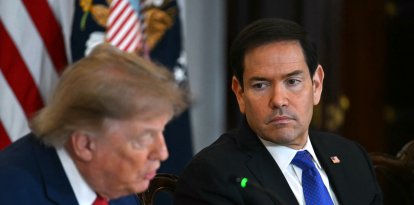
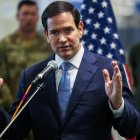
Secretary of State Marco Rubio, in a file image
I supported then–Florida House Speaker Marco Rubio when he defeated one of the biggest “switch-hitters” in politics, Governor Charlie Crist, for the Republican nomination for the U.S. Senate in 2010, at the height of the Tea Party era.
The Bush machine in Florida vehemently opposed Rubio when he ran for president in 2016. Although I was a staunch Donald Trump supporter, I also felt Rubio had every right to compete, and the sense of "wait your turn" that surrounded Jeb Bush's inevitable candidacy was offensive.
Because Rubio came out of Miami-Dade politics, he has always been a strong anti-communist, particularly with respect to Cuba and the Western Hemisphere, which is why I’ve always liked him. Now, Rubio is fulfilling his potential by skillfully implementing President Trump’s America First foreign policy as Secretary of State.
Drawing on his impressive résumé, Rubio has taken a determined interest in halting the advance of communism in the Western Hemisphere — something no administration since Reagan has undertaken — with much damage left to undo from the recent past. The Biden regime supported governments in Latin America almost exclusively for their adherence to the woke agenda, even when doing so harmed U.S. national security interests.
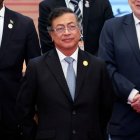
It didn’t matter if a regime like that of Xiomara Castro in Honduras raised drug money to gain power and freely allowed planes carrying narcotics from Venezuela to land in her country. As long as she repeated the right liberal slogans, she remained in the good graces of the Biden regime. Colombian President Gustavo Petro staged photo ops with former President Joe Biden to discuss his efforts to combat climate change. Meanwhile, Colombia remains a haven for cocaine production, yet Petro was able to undermine U.S.-backed cocaine interdiction policies with impunity — so long as he posed for cameras and praised lofty globalist goals.
Politics
Trump announces end of financial aid to Colombia: “Petro is an illegal drug leader”
Williams Perdomo
The Biden regime also installed a puppet government in Guatemala, one it knew would do little or nothing to stem the flow of migrants. Former Guatemalan President Alejandro Giammattei was ignored by the Biden administration — particularly by Homeland Security Secretary Alejandro Mayorkas and Secretary of State Antony Blinken — when he sought help with his country’s migration crisis. The Biden team was too busy plotting a color revolution to remove Giammattei and replace him with moderate globalist Bernardo Arévalo, the current president.
Under the Trump administration, those priorities have been reversed. President Trump and Secretary Rubio have not hesitated to confront entrenched, corrupt leaders across Latin America. They have challenged the regional status quo. Where fiery presidents like Javier Milei of Argentina and Nayib Bukele of El Salvador were once derided as radicals and authoritarians, they are now embraced by the Trump administration as the answer to communism in the region — a movement gaining momentum as more right-of-center parties rise throughout Latin America.
Milei and Bukele have emerged as counterweights to the region's communist bulwark, Venezuelan dictator Nicolás Maduro. Maduro, as well as his predecessor Hugo Chávez, have turned Venezuela - once the most prosperous country in South America - into a backward and helpless nation with a barely functional socialist system. They have been allowed to persist for decades, taking over from Cuba to become the region's principal malign actor, but a more aggressive approach led by Rubio has left them reeling.


Under Rubio, South American drug gangs, including Venezuela's infamous Tren de Aragua, have been designated as terrorist entities, allowing them to receive the full weight of the federal government. As a result, an extremely popular bombing campaign targeting narco-boats affiliated with the Venezuelan regime has been initiated. The traffickers are beginning to understand that there will be significant consequences if they continue their behavior against U.S. national security interests.
While previous secretaries of state obsessed over “nation-building” in Middle Eastern hellholes and bringing democracy to illiterate cave dwellers, Rubio focuses on stopping drugs, refugees, and leftist ideologies emanating from Latin America. Rubio understands that the United States cannot be great again unless the Americas become great again. If Latin America is allowed to rot and decay, the repercussions will be felt acutely in the United States.
When Latin American countries are strong and prosperous, they will have the money to fund law enforcement that can interdict drugs without U.S. resources going to those ends. Those countries under pro-freedom leadership will also be able to provide jobs for their people at home, rather than creating conditions that inevitably lead to migrants fleeing in search of greener pastures. Rubio understands the holistic nature of public policymaking throughout the region and is acting accordingly.
As the hemisphere reshapes itself under the Trump administration’s direction, Rubio will be remembered as the architect of policies that redefine entire continents. Rubio has emerged as one of the MAGA movement’s most resilient figures, transforming from pariah to respected Republican leader, and now, in Trump’s second term, into one of its most revered statesmen. He will almost certainly become president or vice president one day.
LATEST