Plan to end partial government shutdown clears key Senate passage and reaches the House of Representatives
The partial shutdown, now entering its third day, has disrupted approximately 78% of federal government operations after Congress failed to send the remaining budget appropriations bills to Trump's desk by the Jan. 30 deadline.

U.S. Senate
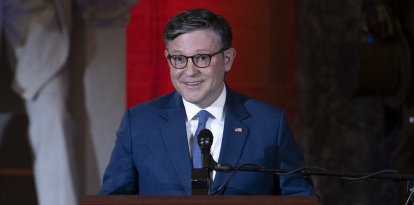
A bipartisan Senate deal aimed at ending the ongoing partial government shutdown cleared a major procedural step late Monday when the House Rules Committee approved the Senate-negotiated deal with the White House, meeting minimal resistance from Republicans on the panel. The proposal still faces a crucial procedural challenge on the House floor via a so-called "rule vote," which requires a simple majority to enable debate and a final vote. Since House votes often split along party lines, Republican House Speaker Mike Johnson will need near-unanimous backing from lawmakers in his party to move the measure forward.
The partial shutdown, now entering its third day, has disrupted approximately 78% of federal government operations after Congress failed to send the remaining budget appropriations bills to President Donald Trump's desk by the Jan. 30 deadline.
Room for further bipartisan negotiations
Previously, House lawmakers had approved a bipartisan package of spending bills aimed at funding the government through the end of fiscal 2026 on Sept. 30. That effort collapsed after Democrats opposed the plan as a bloc, citing objections to Trump's aggressive immigration enforcement actions in Minneapolis. Senate Democrats also subsequently withdrew their support, protesting funding provisions for the Department of Homeland Security (DHS) following the shooting death of a second U.S. citizen at the hands of immigration agents in Minneapolis.

Politics
Government shutdown: Trump demands House Republicans approve spending deal to avoid more political chaos
Emmanuel Alejandro Rondón
In response, Trump ordered the removal of Customs and Border Protection (CBP) personnel from the city—the agency whose agents were involved in the shooting—and replaced top officials leading the enforcement operation. However, Democrats are pushing for additional restrictions, including warrant requirements, to further limit the actions of federal agents in the area.
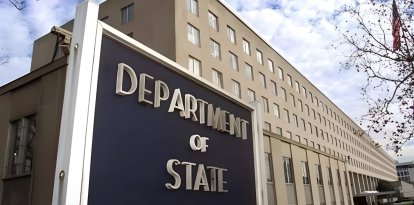
According to several media outlets, under the compromise now moving forward, funding would be restored for agencies caught in the political stalemate, including the departments of War, Health and Human Services, Transportation, Housing and Urban Development, Labor, and Education, while DHS funding would remain at current levels for an additional two weeks. Such a short-term extension would seek to provide room for further bipartisan negotiations toward a longer-term funding agreement.
LATEST