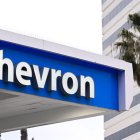
A senior Department of State official says that the recent operations authorized for Chevron in Venezuela will not benefit Nicolás Maduro
The company maintains that its permanence on Venezuelan soil serves as a counterweight against adversary powers attempting to acquire strategic assets.

Nicolás Maduro

The Trump administration restored Chevron Corp.'s ability to extract oil in Venezuela, on the condition that Nicolas Maduro's dictatorship does not profit from those operations. A senior Department of State official confirmed to VOZ that, although the specific details of the permits cannot be made public, all activities are structured to prevent the regime from receiving revenue from the sale of crude oil. "While we can't talk about specific licenses, the US government would not allow the Maduro regime to benefit from the sale of oil," he said.
Two sources close to the deal also indicated to The Wall Street Journal that no royalties or taxes would be paid to Venezuela. The contracts have been specifically designed to prevent Chavismo from receiving funds, a non-negotiable principle for Republicans most adamant in their rejection of Maduro.
Political tensions and energy warnings
Chevron's return to Venezuela has not been without controversy. Sectors of the conservative movement have expressed concern about the geopolitical implications of this move. Laura Loomer, an activist close to the MAGA movement, warned that it could facilitate China's access to Venezuelan oil resources and weaken U.S. energy influence in the region.
However, Chevron has argued that its presence in Venezuela serves as a counterweight to adversarial actors seeking to control strategic assets. That reasoning has been echoed by senior Trump administration officials, according to people familiar with the discussions.
Maduro resorts to crude oil diversion
LATEST