US and El Salvador announce the release of 10 Americans kidnapped by Maduro following a swap with the Venezuelan regime
The agreement involves the return to Venezuela of more than 200 migrants who had been detained in El Salvador on accusations of belonging to the Tren de Aragua criminal organization.

Alleged members of the Tren de Aragua in the CECOT

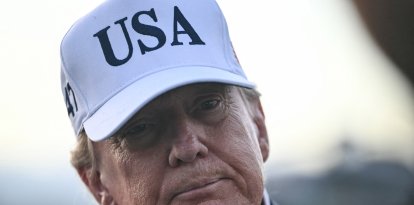
Ten U.S. citizens who were imprisoned in Venezuela were released this Friday and are on their way home as part of an international agreement promoted by President Donald Trump that also contemplates the deportation of hundreds of Venezuelan migrants from El Salvador.
Secretary of State Marco Rubio confirmed the release and thanked both Trump and Salvadoran President Nayib Bukele for their decisive participation in the negotiations. "Today, thanks to President Trump’s leadership and commitment to the American people, the United States welcomes home ten Americans who were detained in Venezuela (...) Every wrongfully detained American in Venezuela is now free and back in our homeland," Rubio stated.
El Salvador and Bukele: key piece in the exchange
From his official account, President Nayib Bukele also confirmed the operation. "Today, we have handed over all the Venezuelan nationals detained in our country, accused of being part of the criminal organization Tren de Aragua (TDA)... We carried out this exchange in return for a considerable number of Venezuelan political prisoners (...) as well as all the American citizens it was holding as hostages," he wrote.
Bukele described the agreement as the result of a negotiation "with a tyrannical regime" and stressed that it was possible thanks to the joint efforts of his and Trump's administrations. He also informed us that those released will make a brief stopover in El Salvador before their final return to the United States.
Migrants, minors and political prisoners: the terms of the agreement
The agreement contemplates the return to Venezuela of 238 migrants who had been deported by the United States and subsequently detained in El Salvador under accusations of being part of the Aragua Train. They were being held in the Terrorism Confinement Center (CECOT), the Salvadoran mega-prison built by the Bukele government to confront organized crime.
In addition, seven minors were transferred who the Chavista regime considers "kidnapped" by U.S. authorities, as their parents had been detained or deported after crossing the border into Mexico.
As part of the same agreement, a group of 251 Venezuelans was sent directly from Houston to Caracas, among them seven of the 32 children that Chavismo claims are being held illegally in the US.
At least 80 Venezuelan political prisoners were also released, including well-known opposition figures such as Goyo Graterol (Primero Justicia), William Dávila (former deputy), Ángel Aristimuño (Un Nuevo Tiempo), and political analyst Alejandro Narváez. However, opposition leaders have warned that the list could also include common prisoners, which they consider to be a maneuver by the regime to make up the figures and dilute international pressure.
Maduro seeks legitimacy with the operation
The regime of Nicolás Maduro used for months the detention of U.S. citizens as a pressure card against Washington. The repatriation of the migrants allows the dictator to reinforce his internal narrative, in which he denounces the treatment received by Venezuelans in El Salvador and presents himself as a defender of their rights.
Despite multiple international accusations of electoral fraud and repression, Maduro tries to project himself as an interlocutor capable of negotiating directly with the United States. According to opposition figures, the candidate Edmundo Gonzalez won the 2024 presidential elections by a margin of more than double the number of votes against Maduro. However, after proclaiming himself the winner, the dictator ordered the arrest of more than 2,000 people, mostly low-income youths, and forced into exile several opposition leaders, including Gonzalez, now a refugee in Spain.
Politics
Trump Administration warns its citizens not to travel to Venezuela ‘for any reason’
Agustina Blanco
Previous meetings and other releases
In one of those talks, the special envoy raised the need for Venezuela to accept back the deported migrants, which laid the groundwork for the agreement finalized this week.
LATEST