Barron Trump to launch his yerba mate company in May
President Donald Trump's youngest son is one of the five directors of SOLLOS Yerba Mate Inc, a startup incorporated in Florida last December that will launch energy drinks based on the famous South American-born yerba mate.
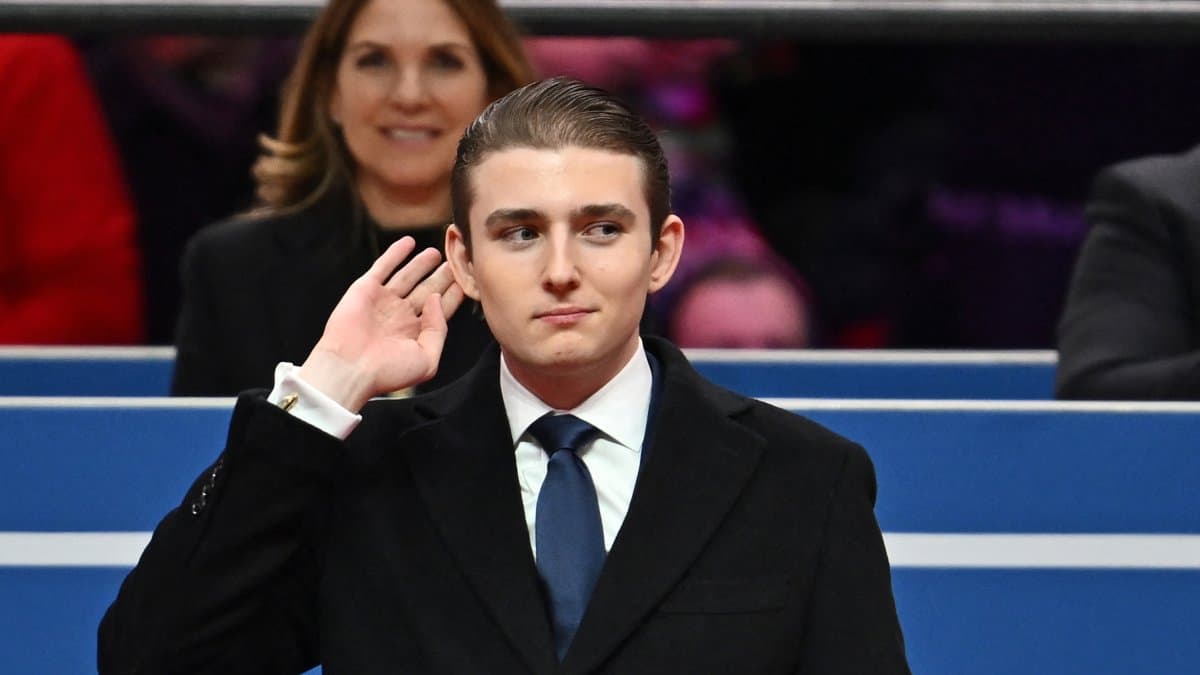

Barron Trump, the son of President Donald Trump, is set to follow in his father's footsteps as an entrepreneur and launch his yerba mate company in May.
According to the New York Post, Barron Trump, 20, is one of five directors of SOLLOS Yerba Mate Inc., a yerba mate-based energy drink startup that plans to go public in May 2026. The company's Instagram account already launched its main objective in one of its first posts: "The company aims to capture the vibrant lifestyle of South Florida with its products."
The young Trump and his partners' proposal is to offer an energizing alternative to coffee and other high-caffeine energy drinks, using as a base yerba mate, a bitter herbal infusion with origins in South America, especially Paraguay, Argentina and southern Brazil.
Mate originated with theGuaraní culture, an indigenous people still in use today who consumed Ilex paraguariensis, the scientific name for mate, as an infusion, food and currency.
Currently, the countries that consume the most yerba mate in per capita terms are Paraguay, Uruguay, Argentina, and Brazil (the southern region), each with its own particularities. In Paraguay, catalogued as the historic king of mate by historians, both mate with hot water and tereré, a more refreshing version with cold water, ice and different medicinal herbs to combat the intense Paraguayan summer, are consumed. In Argentina, Uruguay and southern Brazil, although tereré is also consumed with water or juice, the most popular is the hot drink with the famous guampa and bombilla, with Argentina and Uruguay being the countries where yerba mate is most produced and consumed per person.
Contrary to South America, Barron Trump and its associates will not sell mate in the traditional way as is done in South America, but through energy drinks, and its first flavors will be pineapple and coconut, in line with the identity the company seeks to project: "A lifestyle beverage brand that represents a lifestyle, based on yerba mate and natural and functional ingredients."
A peer business
According to the New York Post, the company was incorporated in Florida last December and is also registered in Delaware. Along with Barron, the other directors are Rodolfo Castello, Valentino Gomez, Stephen Hall and Spencer Bernstein, who serves as chairman of the board. Hall is listed as vice chairman.
Bernstein and Hall are not new faces in the life of the U.S. president's youngest son: both were his classmates at Oxbridge Academy in West Palm Beach, Florida. In other words, this is a venture built on bonds of trust that have been in place for years.
The company, moreover, has already taken its first steps in the capital markets. According to documents filed with the Securities and Exchange Commission of the United States, SOLLOS raised US$1 million from private investors.
More business than politics
Barron Trump's move fits the profile he has been building in recent months. He is currently a sophomore at New York University's Stern School of Business, and all indications are that he will look to dabble heavily in the business world rather than the political arena.
The mate company is not his only project. Barron was involved in founding World Liberty Financial, the cryptocurrency platform he launched with his father Donald and brothers Don Jr. and Eric. His personal assets would be around $150 million, according to reports. However, the president's son has a large portfolio of cryptos and tokens that could bring his fortune to around $525 million.
Now, Barron decided to enter an item with ample growth, that of energy drinks. According to available projections, the global energy drinks market moved between $85 billion and $90 billion in 2025 and is projected to exceed $125 billion before 2030.

🛠 Do you think there is an error in this article?
Recommendations


LATEST