ANALYSIS
Mamdani efforts to unwind 50 years of NYC investment in Israel Bonds can’t be ignored, ADL says
“Policy evolution is legitimate. Policy exceptionalism aimed solely at the Jewish state is not,” Jonathan Greenblatt told JNS.

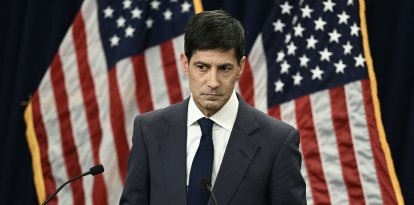
New York mayor-elect Zohran Mamdani (C) places his hand on a Quran

A fight over whether New York City should invest in Israel has brought into stark relief a conflict between two of its most powerful elected officials: the mayor and the comptroller, who is charged with managing $294.6 billion in pension funds on behalf of some 750,000 teachers, firefighters and police officers.
Big Apple comptrollers have, for the past five decades, invested in Israel Bonds, which are issued by the Israeli government through the Development Corporation for Israel. Mark Levine, the city’s new comptroller, said during his 2025 campaign that he would restore the city’s investment in the bonds, which lapsed under his predecessor.
At a press conference on Wednesday, New York City Mayor Zohran Mamdani told a reporter that “I’ve made clear my position, which is that I don’t think that we should purchase Israel bonds.”
“We don’t purchase bonds for any other sovereign nation’s debt, and the comptroller has also made his position clear,” Mamdani said. “I continue to stand by mine.”
The mayor has long been a proponent of the movement to boycott Israel. The city’s prior comptroller, Brad Lander, who is Jewish and progressive and was a key ally of Mamdani’s during the latter’s campaign, is running for Congress in the city’s 10th congressional district against Rep. Dan Goldman (D-N.Y.), who is pro-Israel.
During Mamdani’s campaign for governor, Lander served as a critical bridge between the Muslim, longtime anti-Israel activist and progressive Jewish communities, many of which supported Mamdani in the 2025 election.
When Lander took office as New York City comptroller in 2022, the city had nearly $40 million invested in Israel Bonds. By the time he left, the bonds had matured, and the city did not reinvest the proceeds in Israel.
Goldman’s campaign noted in a recent “fact check” of Lander that the latter, as comptroller, said that the city raised pension fund investments in Palantir—which contracts with U.S. Immigration and Customs Enforcement—and the Israeli weapons company Elbit, since “no one would want a situation where what I was doing was using my own personal politics to decide what companies we were and weren’t going to invest in, like that would be a violation of fiduciary duty and a bad way to construct a portfolio.”
“Brad Lander justifies his investments in ICE contractors and Israeli weapons manufacturers by citing his fiduciary duty as comptroller, which requires him to keep his personal politics out of financial decisions,” Goldman’s campaign stated on Jan. 14. “Yet when he runs for political office, he touts his decision to divest from Israel bonds and fossil fuels, as he has repeatedly done. Which one is it?”
At issue in New York City is a tiny fraction of the pension funds invested by the comptroller, perhaps as important symbolically as they are financially.
In fiscal year 2025, the New York City comptroller had $294.6 billion in assets under management, representing the pension funds of city teachers, firefighters and police officers.
“The fact that the first pension-related position advanced by Mayor Zohran Mamdani would unwind more than 50 years of Israel Bond investments—while similar investments remain commonplace among public pension systems across the United States—cannot be ignored,” Jonathan Greenblatt, CEO and national director of the Anti-Defamation League, told JNS.
The decision whether to invest in Israel Bonds sends an important message, according to Greenblatt.
“Policy evolution is legitimate. Policy exceptionalism aimed solely at the Jewish state is not,” he told JNS. “We hope this decision does not signal a shift toward discriminatory BDS-aligned investment policies that create a toxic environment for all Jewish New Yorkers.”
Levine, the current comptroller, has focused on the pragmatic benefit of investing in Israel Bonds. “Israel bonds have performed very well, and they continue to be investment grade rated,” he told the Financial Times, so his “fiduciary responsibility is to make investment decisions based on that record of performance.” (JNS sought comment from Levine.)
According to the paper, Israel’s 10-year dollar bonds, which have higher risk, yield about 5.2%, compared with roughly 4.2% for U.S. Treasury Bonds.
“For nearly five decades, apart from the last four years, New York City has consistently invested in Israel bonds as a strong and steady investment and a smart financial decision,” Dani Naveh, president and CEO of Israel Bonds, told JNS.
“Over the past two years, we have seen a significant surge of more than $1 billion in Israel Bonds investments by local governments and municipalities nationwide, reflecting strong bipartisan support and broad confidence in this sound choice,” Naveh said. “We look forward to the resumption of these investments by New York City.”
In 2025, Israel Bonds sold more than $2 billion globally, it said.
LATEST