Senate confirms Trump advisor Stephen Miran as new Fed member
Miran, who will not leave his White House post as head of President Trump's Council of Economic Advisers, will be the first executive branch official to join the Fed since 1935.

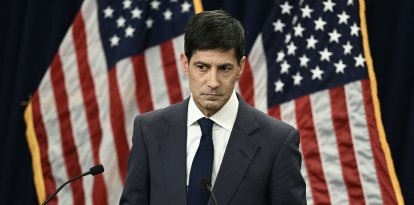
Council of Economic Advisers Chairman Stephen Miran, in a file image

President Donald Trump scored a quick political victory Monday with the Senate confirmation of Stephen Miran, his top economic adviser, as the newest member of the Federal Reserve Board (Fed). The vote ended very even, 48 to 47, and came just hours before the central bank begins a pivotal two-day meeting at which it will discuss a possible interest rate cut.
According to The Wall Street Journal, Miran's appointment is the second-fastest confirmation in more than 25 years and allows him to fill the seat vacated by Adriana Kugler after her surprise resignation in August. The move was described by experts as a strategic win for the White House, as Miran will not resign from his current position as chairman of Trump's Council of Economic Advisers. Instead, he will take an unpaid leave of absence, making him the first executive branch official to join the Fed since 1935.


Politics
Trump calls for the resignation of Federal Reserve Governor Lisa Cook, accused of fraud
Williams Perdomo
Miran himself assured at his confirmation hearing that he will act independently and that his role at the meeting will not change the outcome. However, the new governor will be able to present economic projections that could influence market expectations. Some analysts anticipate that he could advocate for a more aggressive interest rate cut, aligning with President Trump's stance.
Miran's nomination has also generated harsh criticism. Former officials from both parties warned that Miran's dual role at the Fed and the White House could call into question the central bank's independence. "It was a very bad signal not to resign the position in the administration," warned Eric Rosengren, a former Boston Fed president. Harvard economist Greg Mankiw, who chaired the Council of Economic Advisers under President George W. Bush, compared the arrangement to the idea of an attorney general taking a temporary leave to serve as a justice on the Supreme Court and added, “I see it as part of the overall Trump strategy of bringing monetary policy more under White House control,” reported the WSJ.
Miran, who has a PhD in economics from Harvard, has been critical in the past of staff swaps between the Fed and the executive branch and has repeatedly questioned the monetary policy of Jerome Powell. His criticisms have coincided with Trump's calls for aggressively lowering interest rates, as opposed to the more cautious approach of the current central bank leadership.
LATEST